600-mile EV road trip shows charging has finally improved
▼ Summary
– Over half of prospective EV buyers surveyed by AAA cited public charging infrastructure as a key concern, but recent improvements show a significant shift.
– A 600-mile road trip in an Audi e-tron in 2026 used A Better Route Planner to find reliable chargers, resulting in a near-flawless experience with no lines and working stations.
– The only minor issue was a non-working card reader at a Circuit Électrique station, which was resolved by downloading their app and loading funds.
– In contrast, a 2023 trip to Maine involved multiple charger failures, forcing the driver to move stalls and call customer service three times.
– The U.S. DC fast charger count has more than doubled since 2023, with reliability improving from 85% to the mid-90s on Paren’s index.
Over half of American drivers surveyed by AAA last year flagged public EV charging infrastructure as a major hurdle to going electric. That skepticism has been well-earned. After a particularly frustrating road trip in 2023, I even drafted an EV fast-charging “bill of rights” , a list of seven fixes the industry desperately needed. Fast forward to today, and the contrast is striking.
On a recent 600-mile drive to Montreal, I experienced something I hadn’t dared to expect: a near-flawless charging experience. One minor hiccup aside, everything worked.
We originally planned to take our Kia EV9, which boasts nearly 300 miles of range. But with its air conditioner in the shop, we defaulted to our Audi e-tron , a capable vehicle, but one that maxes out at around 220 miles per charge. That gap didn’t matter. The e-tron handled the journey without issue, proving that rangemaxxing isn’t essential for stress-free travel.
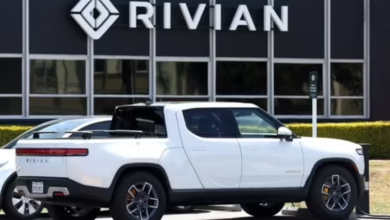
For route planning, I turned to A Better Route Planner (ABRP) , an app now owned by Rivian. It optimizes charging stops based on everything from weather and temperature to battery degradation. I didn’t use a Bluetooth OBD reader, yet the app’s predictions were impressively accurate. Our first recommended stop was a Rivian charger near Lebanon, New Hampshire.
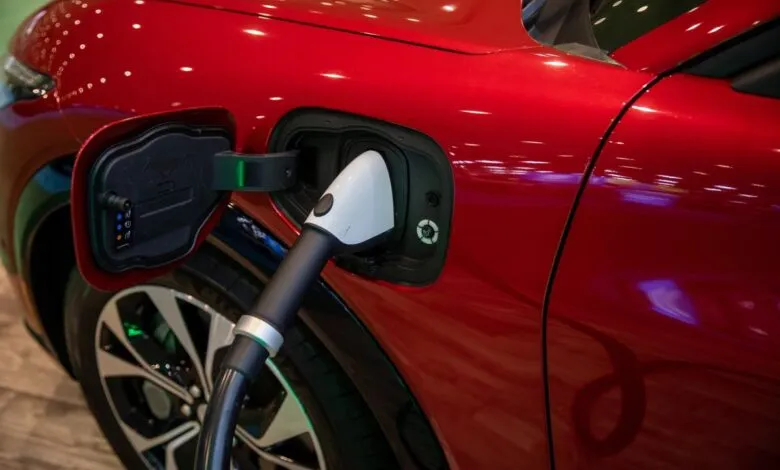
That stop was a revelation. Six 300-kilowatt stalls, all operational, with no waiting. Plenty of nearby food options and a grocery store made the 20-minute charge feel productive. The charger accepted my credit card directly , no app gymnastics required , and delivered over 140 kilowatts, roughly the e-tron’s maximum. We hit the same station on the return trip with identical results.
The only hiccup came at a Circuit Électrique station just outside Montreal. The card reader was dead, so I downloaded the app and loaded 20 Canadian dollars. After that, it worked fine. In hindsight, that stop was unnecessary; the hotel charger handled our needs for the week. But with kids needing a break and my wife wanting coffee, we’d have plugged in anyway.
Each session lasted about 20 minutes, seamlessly blending with lunch or rest stops. The total time spent charging was comparable to our wait at U. S. border control on the way home.
Contrast that with 2023. That summer, we drove the same Audi e-tron to Maine , a 350-mile round trip. The car could have made it on a single charge, but the hotel lacked an EV charger. So we planned a mid-trip top-up. Despite using ABRP to avoid unreliable stations, the experience was miserable. The first charger broke immediately after plugging in. Moving to a second stall triggered a cascade of problems: the first charger never properly ended the session, so the second wouldn’t start without a call to customer service. At another stop, the network’s app claimed two of four plugs worked , but only one actually did. In seven hours of driving, I called customer support three times. Imagine if gas stations operated like that.
My experiences are anecdotal, but the data backs them up. In July 2023, the U. S. had roughly 32,000 DC fast chargers, many locked behind Tesla’s proprietary network. Today, that number has more than doubled, and most of Tesla’s network is open to all EVs. Reliability has also climbed. According to Paren’s reliability index, successful charging sessions and reduced downtime have pushed reliability from 85% to the mid-90s since last year. Tesla still leads, but competing networks are closing the gap fast. That competition is driving improvements across the board.
Gaps remain, and chargers still break. But new stations are added monthly, and broken ones are repaired far more quickly than before. It’s not perfect , but it’s genuinely better than I thought possible. Someone should tell the holdouts what they’re missing.
(Source: TechCrunch)