Qualcomm unveils Snapdragon Reality Elite and toolkit for AI glasses
▼ Summary
– Qualcomm unveiled Snapdragon Reality Elite, a mixed reality chip with up to 60% higher GPU performance and 48 TOPS NPU, and START, a turnkey smart glasses toolkit for manufacturers.
– CEO Cristiano Amon said Qualcomm is working on over 40 AI wearable designs, including jewelry, earbuds, pins, and watches.
– Snapdragon Reality Elite supports 4.4K per-eye resolution at 90 fps and powers standalone headsets or tethered optical-see-through glasses.
– START bundles a hardware module, software platform, and three reference designs, with first partners Inspecs and O’Neill; Qualcomm invested $10 million in Inspecs.
– Qualcomm aims to supply the foundational silicon layer for a fragmented smart glasses market, mirroring its smartphone strategy, but the claims are forward-looking and unverified by independent benchmarks.
Qualcomm has introduced two new products aimed at cementing its role as the go-to chip supplier for the next generation of computing devices that could eventually replace the smartphone. The first is Snapdragon Reality Elite, a mixed reality chip platform featuring significantly enhanced AI capabilities for headsets and tethered glasses. The second is START, a white-label toolkit that provides eyewear manufacturers with a nearly complete smart glasses design, allowing them to brand, customize, and ship products without building the underlying technology from scratch.
These announcements were accompanied by remarks from CEO Cristiano Amon, who told CNBC that Qualcomm is currently developing over 40 different AI wearable devices, including jewelry, camera-equipped earbuds, pins, and watches. “I think there’s going to be a lot of experimentation with different form factors,” Amon said. He noted the common thread as “something that you wear, something that is with you all the time, something that can see the world around you.”
Snapdragon Reality Elite delivers up to 60% higher GPU performance, 30% higher CPU performance, and 160% higher NPU performance compared to the previous XR2+ Gen 2 platform. The chip’s neural processing unit is rated at 48 TOPS, sufficient to run a 3-billion-parameter language model at 45 tokens per second on-device, according to Qualcomm. The platform also offers up to 20% longer battery life and runs up to 12 degrees Celsius cooler under identical workloads.
The display capability supports 4.4K per-eye resolution at 90 frames per second, a modest improvement over the XR2+ Gen 2’s 4.3K per-eye figure. Qualcomm claims the chip enables better head and hand tracking, along with improved see-through performance. These enhancements are critical for reducing motion sickness and eye strain, which have historically limited how long users can comfortably wear mixed reality headsets.
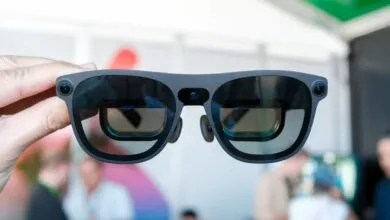
Reality Elite is designed to power two device categories. The first is standalone video-see-through headsets that overlay digital content onto a camera feed of the real world, similar to the Meta Quest. The second is lightweight, tethered optical-see-through glasses that blend digital imagery directly into the wearer’s field of view.
Among the first products using the platform are XREAL’s Project Aura, the Android XR glasses shown at Google I/O with a 70-degree field of view and binocular displays, and an upcoming device from Play for Dream. Qualcomm has not disclosed pricing for the platform or a timeline for when consumer devices will hit retail shelves.
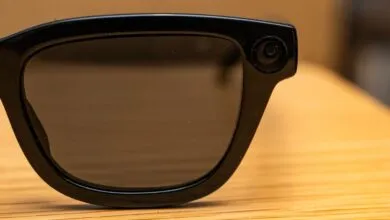
START, which stands for Scalable Turnkey AI-Ready Toolkit, offers a different route to market. It bundles a hardware module built on Qualcomm’s AR1+ chip with a software platform, companion iOS and Android apps, an AI cloud solution, and three white-label reference designs. These designs cover an audio-and-camera configuration similar to Meta’s Ray-Ban smart glasses, a monocular display variant, and a binocular display variant.
The program’s first partners are eyewear manufacturer Inspecs and O’Neill, owned by TitanFlex. Qualcomm has also made a $10 million strategic equity investment in Inspecs, subscribing for 7.5 million new shares at £1 each. This investment signals that Qualcomm is not merely licensing silicon but taking a financial stake in the supply chain that will manufacture and distribute these devices.
The strategic logic is clear: traditional eyewear companies have the design expertise, retail distribution, and consumer trust to sell smart glasses as fashion accessories, but they lack the chip architecture, AI software, and sensor integration to build the technology themselves. START is Qualcomm’s attempt to bridge that gap, mirroring the reference design program it used in the early 2010s to help manufacturers build smartphones on its Snapdragon platform. Qualcomm says START will expand beyond smart glasses to other form factors in the future, though it has not specified which.
The competitive landscape is crowded and accelerating. Meta has sold over seven million pairs of Ray-Ban smart glasses and commands roughly 82% of the market, with annual production capacity being expanded to 10 million units by the end of 2026. Snap launched its $2,195 Specs AR glasses this week. Apple is reportedly testing multiple frame designs for a possible 2027 launch. Google is shipping Android XR audio glasses this autumn with Samsung, Warby Parker, and Gentle Monster. Qualcomm silicon already powers many of these devices, but the company is now building the full stack rather than waiting for partners to assemble it themselves.
What Qualcomm is betting on is that none of those companies will dominate the category alone. If the smart glasses market fragments like the smartphone market did, with dozens of manufacturers building on a shared platform, the company supplying the foundational silicon layer captures value regardless of which brand wins. That is the same bet Qualcomm made with mobile phones, and Amon’s 40-device pipeline suggests the company sees the transition accelerating faster than the public market does.
The claims remain largely forward-looking, however. The 48 TOPS figure and performance percentages are Qualcomm’s own, measured against its own previous generation, and no independent benchmarks have been published. The 40 AI wearable designs Amon referenced are in various stages of development, not shipping products.
Whether the smart glasses category actually becomes large enough to justify Qualcomm’s investment depends on consumer adoption that has so far been limited to Meta’s ecosystem and a handful of developer-focused devices. The company is placing a structural bet that the transition away from smartphones is inevitable, but the timeline remains anyone’s guess.
(Source: The Next Web)