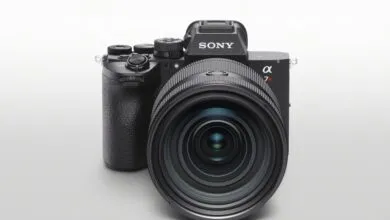
Sony a7R VI Unveiled With Stacked 66.8MP Sensor, 30 FPS Bursts
▼ Summary
– Sony’s a7R VI features a new fully stacked 66.8-megapixel sensor, enabling 30 fps bursts with 14-bit RAW and 5.6 times less rolling shutter than its predecessor.
– The camera includes an upgraded 759-point AI autofocus system with enhanced tracking for partially obscured, distant, or small subjects.
– It offers composite RAW modes via Imaging Edge Desktop, including Pixel Shift Multi Shooting that produces up to 265.8-megapixel images.
– Hardware improvements include a brighter 9.44-million-dot EVF, up to 8.5 stops of IBIS, illuminated buttons, and a new SA series battery.
– Video capabilities include 8Kp30 with reduced rolling shutter, 4Kp120, and 32-bit float recording via the XLR-A4 handle, with pricing at $4,499 (U.S.) from early June.
Sony has finally taken the wraps off the Sony a7R VI, marking a major evolution in its high-resolution mirrorless lineup. This isn’t just another incremental update; the a7R VI redefines what the R series can do by fusing massive resolution with blistering speed.
The headline feature is a brand-new fully-stacked 66.8-megapixel Exmor RS sensor. This is the first entirely new imaging chip for the R series since the a7R IV debuted back in 2019. The jump from 61 to nearly 67 megapixels is notable, but the real story is the shift from a standard backside-illuminated design to a fully stacked architecture. This change unlocks a new level of performance that was previously reserved for Sony’s flagship a1 line. The a7R VI can now capture full-resolution 14-bit RAW files at an astonishing 30 frames per second. That’s three times faster than its predecessor, with roughly 5.6 times less rolling shutter. Photographers also get completely blackout-free shooting and a Pre-Capture mode for capturing split-second action.
While it doesn’t quite match the a1 II’s near-zero rolling shutter and 50-megapixel sensor, the a7R VI represents a massive leap forward for the R series. This new speed isn’t just from the sensor; it’s also powered by the Bionz XR2 processor, which Sony first introduced in the a7 V late last year.
Often, stacked sensors come with a trade-off in image quality, but Sony promises the R series’ hallmark imaging performance is not only preserved but enhanced. The a7R VI maintains a base ISO of 100 and now delivers 16 stops of dynamic range, up from 15 stops on the a7R V. It remains to be seen if Sony employs a Dual Gain Output (DGO) system, similar to what it used in the 33-megapixel stacked sensor of the a7 V, to achieve this impressive dynamic range.
Autofocus gets a significant upgrade too. The camera features an enhanced 759-point Real-time Recognition AF+ system. While the point count is the same, Sony promises better tracking for partially obscured, distant, or very small subjects. The AI-powered subject detection now covers humans, animals, birds, insects, cars, trains, and airplanes, along with an automatic subject selection mode.
For users who want even more resolution, the Pixel Shift Multi Shooting mode now supports composites up to 265.8 megapixels. This is built from four or 16 RAW images, each slightly shifted by the in-body image stabilization (IBIS) system. These composite RAW modes, along with HDR and Noise Reduction, require Sony’s Imaging Edge Desktop software.
The IBIS itself has been slightly improved, now offering up to 8.5 stops of shake correction in the center of the frame and seven stops at the periphery, up from eight stops on the a7R V.
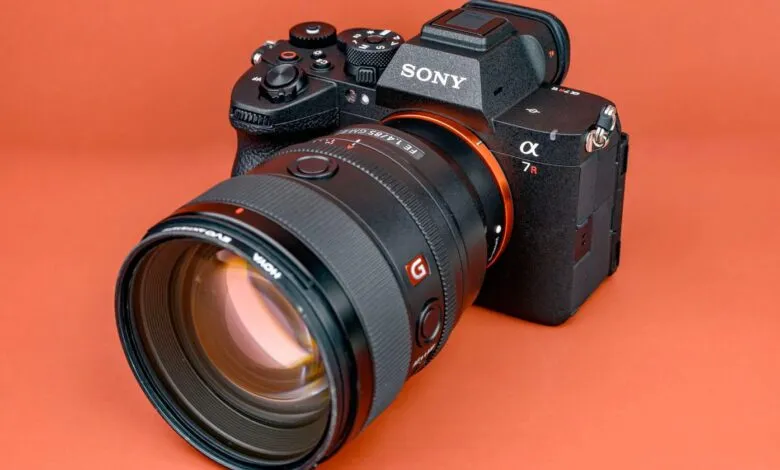
Hardware changes are also evident. The front grip has been redesigned to accommodate a new battery. Sony has retired the venerable Z battery in favor of a more cube-like SA series battery that offers higher voltage, more capacity, and health monitoring. The electronic viewfinder (EVF) is also new. While it retains the same 9.44-million-dot resolution, it is now three times brighter, covers the full DCI P3 color space, and is fully HDR-compatible with a 0.9x magnification and a 120p refresh rate.
The a7R VI is also the first Sony Alpha camera to feature illuminated buttons. The C3, Menu, C1, AF-ON, AE-L, Fn, Playback, and Delete buttons all glow white when activated, a welcome feature for nightscape and astrophotographers. The mode dial has also been tweaked, replacing the MR3 position with a new “*” position that allows users to save up to 30 different memory recalls for stills, video, and S&Q modes.
On the video front, the a7R VI makes significant strides. It records 8Kp30 video with much less rolling shutter than the a7R V, though it still introduces a slight 1.2x crop. 4K recording uses the full sensor width with 5K oversampling, and there is now a 4Kp120 mode, albeit with a minor crop. A new Dual Gain readout mode is available up to 4Kp30, promising enhanced dynamic range and image quality. For audio, the camera supports 32-bit float recording when paired with the XLR-A4 handle. It also features dual USB-C ports for simultaneous power and external recording, plus a tally lamp on the front.
The Sony a7R VI will be available in early June. It is priced at $4,499 in the United States and $5,999 in Canada. A new battery grip will launch alongside it, though its price has not yet been announced.
(Source: PetaPixel)