Samsung S26 Ultra’s screen made it unusable for me
▼ Summary
– The author switched from Samsung phones to a Pixel 10 Pro and found the Galaxy S26 Ultra’s display inferior after a side-by-side comparison.
– The Pixel 10 Pro’s display is significantly brighter (3,300 nits) than the S26 Ultra’s (2,600 nits), making it easier to use outdoors, especially for taking photos.
– The S26 Ultra’s Privacy Display feature, while novel, causes the author to experience migraines, eye pain, and nausea after a few minutes of use.
– The author suspects the Privacy Display, not low PWM dimming, is the cause of the health issues, since a Galaxy Z Fold 7 with the same PWM rate does not cause problems.
– The author concludes that the brightness issue is tolerable, but the migraine-inducing display makes it impossible to switch back to a Samsung phone.
I’ve spent years praising Samsung’s screens. For nearly six years, I carried a Galaxy in my pocket, and the display was always the standout feature. But after switching to a Pixel 10 Pro last year and recently spending time with my wife’s Galaxy S26 Ultra, I’ve realized I can no longer live with Samsung’s latest flagship display.
Brightness falls short
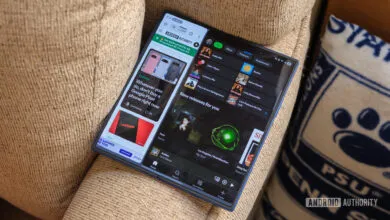
Side-by-side comparisons told me everything I needed to know. Outdoors, the Pixel 10 Pro is noticeably brighter than the S26 Ultra. The difference is far more dramatic in person than what a camera can capture. I used to believe that display brightness beyond 1,500 to 2,000 nits offered diminishing returns. I was wrong.
The S26 Ultra peaks at 2,600 nits, while the Pixel hits 3,300 nits. That 700-nit gap became obvious during a sunny holiday in the UK. Framing shots and seeing what I was photographing was simply easier on the Pixel. I wondered if the Privacy Display feature was to blame, since it reduces viewing angles even when turned off. But the Z Fold 7, which shares the same 2,600-nit peak on its cover screen, was equally hard to see outdoors. Still, the Privacy Display brings its own problems.
Privacy Display triggers migraines
On paper, Privacy Display feels like magic. I loved playing with it before the S26 Ultra launched. But after real-world use, I’ve discovered a serious downside: it gives me migraines.
I’ve had chronic migraines since age 13. Something about the S26 Ultra’s screen doesn’t agree with me. I’m not alone. Some customers have returned the phone due to eye strain, nausea, and other symptoms. There’s no hard proof that the Privacy Display is the culprit. It could be Samsung’s low PWM dimming. But here’s what I know: I’ve used many Samsung phones, and I still use a Galaxy Z Fold 7. The Fold 7 has the same PWM rate as the S26 Ultra, and it has never caused issues.
Every time I use my wife’s S26 Ultra for more than a few minutes, Privacy Display on or off, I start feeling ill. First, my eyes hurt and vision blurs. If I keep going, the familiar migraine symptoms arrive: nausea, fatigue, and neck stiffness.
Ultimately, the root cause doesn’t matter. If Samsung doesn’t fix this in future models, I won’t be switching back anytime soon. I could overlook the lower brightness. But I can’t ignore spending an entire day in a dark room after using a phone. When Google called the Pixel 10 Pro’s display the best in the world, many of us laughed. Now, after living with it, I think that statement holds more weight than I gave it credit for. At least compared to what Samsung is offering.
(Source: Android Authority)