Elizabeth Warren: AI Risks Could Spark Financial Crisis
▼ Summary
– Senator Elizabeth Warren warns of “striking” parallels between the current AI industry’s financial practices and the conditions that led to the 2008 financial crisis.
– She states that AI companies are borrowing heavily from opaque sources like private credit funds without traditional banking oversight to fund rapid spending.
– Warren argues that if these companies cannot quickly increase revenues, they will be unable to service their massive debts, risking a destabilizing financial collapse.
– She compares the situation to a risky climb, where AI’s financial ties to banks and pension funds mean a failure could topple many interconnected institutions.
– Warren’s proposed solutions include regulatory separation similar to the Glass-Steagall Act, a new digital regulator, and a refusal by Congress to provide industry bailouts.
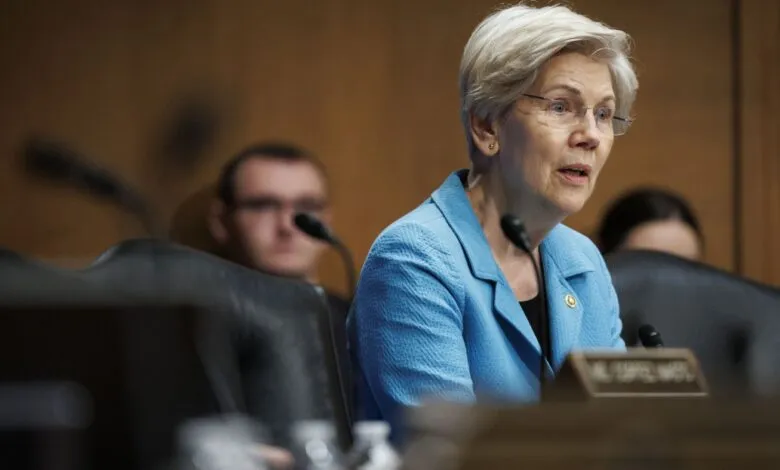
Drawing a direct line from the current trajectory of the artificial intelligence sector to the conditions that precipitated the 2008 financial meltdown, Senator Elizabeth Warren issued a stark warning about unchecked corporate borrowing and risky financial practices. At a recent policy event, the Massachusetts Democrat, a key architect of post-crisis financial reforms, stated she recognizes the signs of a dangerous bubble. She emphasized that while AI technology holds enormous potential, the industry’s fiscal behavior is creating a systemic risk that demands immediate congressional intervention.
A core concern is the disconnect between rapid spending and actual revenue growth. To fuel their expansion, AI firms are increasingly turning to opaque private credit funds and other non-bank lenders that operate outside conventional regulatory frameworks. Warren argued that this reliance on massive debt is unsustainable. If these companies fail to generate profits at the extraordinary pace their valuations assume, they will be unable to service their obligations. The situation is exacerbated by what she termed shady accounting strategies, which could mask underlying vulnerabilities until a sudden collapse prompts a widespread panic. This chain reaction, she cautioned, risks destabilizing losses in the financial sector, echoing the dynamics of 2008.
The risk is magnified by how interconnected the industry has become with the broader economy. Warren illustrated the point with an analogy, describing AI companies as climbers who have tied their survival ropes to a diverse array of institutions, including local banks, insurance funds, and pension funds. A single stumble could therefore pull down countless other entities. Her proposed remedy is straightforward, prevent the tethering in the first place. “Cut the rope. No rope for AI,” she stated, advocating for clear legal separation between high-risk AI ventures and the traditional financial system that supports everyday consumers.
This approach mirrors the intent of historic legislation like the Glass-Steagall Act, which erected walls between commercial banking and speculative investment. Warren’s policy vision extends further, calling for a dedicated new digital regulator with authority over antitrust, privacy, and consumer protection in the tech sector. Crucially, she insists that Congress must commit now to refusing any future government bailout for the industry. Establishing this principle of accountability is essential, she argued, to ensure that private companies bear the full consequences of their financial risks without passing the fallout to taxpayers. The goal is to harness innovation while proactively defusing the tinderbox before it ignites.
(Source: The Verge)