Can Apple’s New CEO Unlock Its Smart Home Future?

▼ Summary
– John Ternus, Apple’s new hardware lead, is reportedly spearheading a major push into smart home hardware, marking a shift from the company’s previous slow pace in this category.
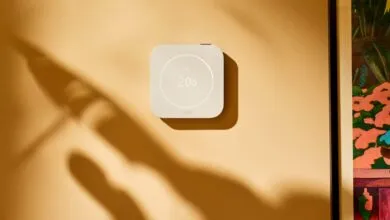
– Apple is rumored to be developing a “HomePad,” a smart display with facial recognition for shared home control, alongside dedicated security cameras, a doorbell, and a standalone sensor.
– The company is also exploring a home robot with a potential AI personality, moving beyond utility to companionship within the smart home.
– A unified homeOS software platform, expected to be AI-powered, is seen as crucial for tying these new hardware products together and improving the smart home experience.
– Several factors are converging for Apple’s push, including the Matter standard’s growth, resources freed from the canceled car project, and the anticipated arrival of a smarter, generative AI-powered Siri.
A decade after its initial foray, Apple appears ready to make a serious push into the smart home. With new leadership under John Ternus, the company is reportedly preparing a suite of hardware that could redefine its presence in a market long dominated by Amazon and Google. This strategic shift signals a potential renaissance for Apple Home, moving beyond a software platform to deliver integrated, privacy-first devices designed for the AI era.
For years, Apple has ceded ground in hardware while building its privacy-focused platform. Competitors have released dozens of smart speakers and displays, while Apple has offered only a handful. However, its investment in the Matter connectivity standard has spurred growth for third-party devices on its platform. The persistent absence of first-party Apple hardware, however, has left a gap. Rumors suggest Ternus, who once hesitated to invest deeply in this category, is now spearheading the development of a trio of home products to address this directly.
The centerpiece is rumored to be a smart display, internally called the “HomePad.” This device, potentially launching in two form factors, would feature a touchscreen, facial recognition, and presence sensing. It could solve a common smart home frustration by enabling shared control for all household members, moving beyond single-user phone dependency. A wall-mounted version and a speaker-based model are both in development.
Beyond a display, Apple is also said to be developing dedicated home security cameras, a video doorbell, and a standalone sensor. These devices would leverage Apple’s existing HomeKit Secure Video framework, ensuring visual data is processed with strong privacy protections. This local, private processing is crucial for the next phase of smart home evolution, where ambient awareness replaces simple voice commands. Physical sensors, including those with Ultra-Wideband technology, would feed data into a unified system for whole-home orchestration.
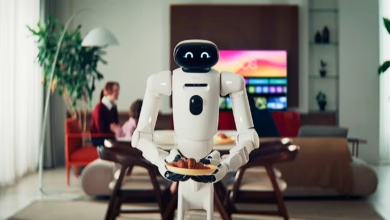
Perhaps the most intriguing rumor involves a home robot with a display on a robotic arm. Research suggests Apple is exploring imbuing such a device with personality, positioning it as a form of physical AI that offers both utility and companionship. This aligns with a broader industry shift toward more interactive and contextual home assistants.
Software unification is equally critical. A long-rumored merger of tvOS and HomePod software into a singular homeOS could be announced as soon as WWDC in June. This would create the software foundation for an AI-powered brain to manage the smart home. Updated hardware, including a new HomePod Mini and Apple TV, are also expected, with both rumored to gain a new chip capable of local command processing for faster, more private responses.
Several converging factors make this the right moment for Apple’s push. The Matter standard is finally delivering interoperability. Resources have reportedly been reallocated following the cancellation of the Apple Car project. Most importantly, generative AI is poised to transform smart home functionality. The obvious hurdle remains Siri. A smarter, more context-aware Siri is essential to glue this ecosystem together. While competitors have launched their own LLM-powered assistants, Apple has a history of entering categories late and defining them. The expectation is that it will follow this playbook once more.
For Ternus, the challenge now is execution. The foundational pieces, from privacy architecture to industry standards, are in place. The task is to assemble them into a cohesive, user-friendly experience that transitions Apple Home from a side project to a core priority. If he can channel the company’s relentless focus on integration and perfection, Apple may finally be ready to move into the smart home in a meaningful way.
(Source: The Verge)