White House AI Meeting Addresses Pentagon Standoff
▼ Summary
– Anthropic’s CEO met with senior White House officials to discuss potential access to its powerful AI model, Mythos, signaling a potential thaw in their dispute.
– The conflict began when Anthropic refused a Pentagon demand for unrestricted military AI access, leading to its blacklisting as a supply-chain risk.
– Mythos is a highly capable AI model that can find and exploit thousands of previously unknown software vulnerabilities, making it a critical cybersecurity tool.
– A potential compromise would grant Mythos access to civilian U.S. agencies for defense purposes while likely excluding the Pentagon, aiming to resolve the blacklisting.
– International interest and planned access for allies like the UK add urgency for the U.S. government to resolve the standoff and secure the technology.
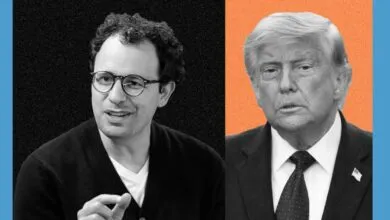
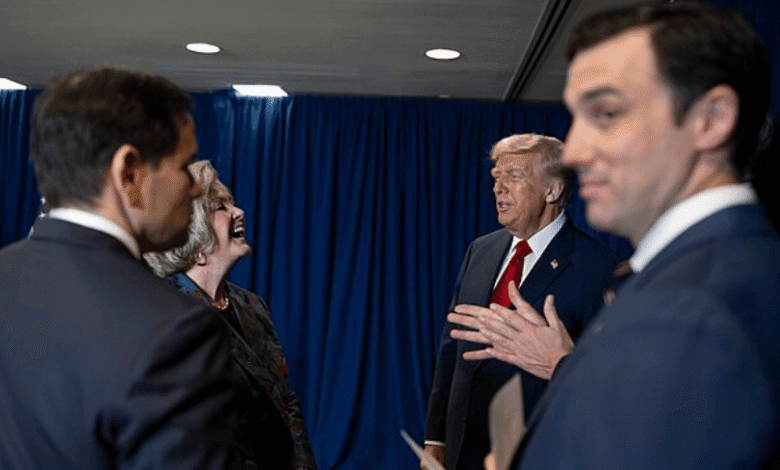
A high-stakes meeting at the White House this week marks a potential turning point in the tense standoff between the U.S. government and Anthropic, the AI firm behind the formidable Mythos model. CEO Dario Amodei met with White House Chief of Staff Susie Wiles and Treasury Secretary Scott Bessent for what officials termed an introductory, productive, and constructive discussion. While President Trump later stated he was unaware of the meeting, its occurrence signals a political effort to resolve an impasse that has left a leading American AI company blacklisted by the Pentagon. Any potential agreement would likely bypass the Defense Department entirely, providing Mythos access through civilian agencies instead.
This conflict originated in late February when Defense Secretary Pete Hegseth demanded unrestricted access to Anthropic’s AI for applications including autonomous weapons. Amodei refused, citing safety and legal concerns, which led the Pentagon to designate Anthropic a national security supply-chain risk. This move, akin to labeling used for foreign adversaries, triggered federal lawsuits from the company. Although an initial court ruling blocked the blacklisting, an appeals court reversed that decision on April 8. The legal setback prompted Anthropic to seek a political solution, setting the stage for Friday’s dialogue.
The urgency for a deal intensified just ten days after the court loss, when Anthropic unveiled Mythos. This frontier model demonstrated an unprecedented capability for cyber offence, identifying and exploiting thousands of zero-day vulnerabilities across major software platforms. In tests, it successfully executed multi-step network attack simulations and developed working exploits on its first attempt over 83% of the time. Evaluated by the UK’s AI Security Institute as substantially more advanced than any prior model, Mythos represents a clear inflection point for global security. Anthropic has restricted its release through Project Glasswing, a controlled program for vetted firms to patch vulnerabilities, a direct reflection of the safety principles that caused the Pentagon rift.
Now, the administration faces a paradox. It has penalized a company for its safety stance, yet desperately needs the powerful tool that stance produced. The Treasury Department and parts of the intelligence community seek Mythos for defensive cybersecurity. Bessent’s presence at the meeting underscores that economic and financial security arguments have reached the highest levels. For Anthropic, which boasts $30 billion in annualized revenue and an $800 billion valuation, the issue is not Pentagon money but enterprise credibility. The blacklisting creates uncertainty for all its government-adjacent clients.
A compromise framework is emerging. Anthropic could provide controlled access for defensive purposes to civilian agencies. The administration could then narrow the damaging supply-chain risk designation. The Pentagon would remain excluded unless a separate, rigorous review process for military use cases is established. Both sides have strong incentives to settle.
International pressure adds a critical layer. Anthropic is preparing to provide Mythos to major British banks and is significantly expanding its London operations. With the Bank of England highlighting the model as a key risk and convening emergency briefings, America’s closest allies may soon wield this critical national security tool before the U. S. government does. This geopolitical reality gives the White House a powerful motive to resolve the dispute beyond the original safety debate.
Friday’s meeting was introductory, not conclusive. Litigation continues and Hegseth’s position remains unchanged. However, the simple fact that the White House Chief of Staff and Treasury Secretary engaged productively with the CEO of a blacklisted company reflects a significant shift in posture. The core dilemma remains intact: a government punished a firm for its safety principles, only to find itself needing the unparalleled capability those principles helped create. The meeting did not produce a final formula, but it confirmed that all parties are now searching for one.
(Source: The Next Web)