India’s Emergent launches AI agent for coding tasks
▼ Summary
– Emergent, an Indian startup, has launched “Wingman,” a messaging-first autonomous AI agent that runs in the background to complete tasks across tools.
– The company, known for its “vibe-coding” platform, is expanding from helping users build software to enabling AI to operate and run business workflows.
– Wingman operates through chat platforms like WhatsApp and Telegram, autonomously handling routine tasks while seeking user approval for significant actions.
– The startup, founded in 2025, has raised $70 million and its vibe-coding platform is used by over 1.5 million monthly active users.
– The agent faces current limitations in handling ambiguous situations or workflows requiring substantial human judgment.
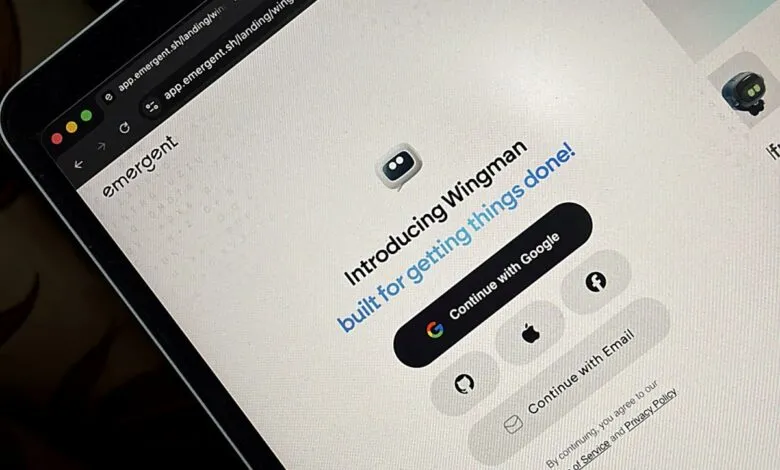
An Indian startup is expanding its focus from helping people build software to helping them run it. Emergent, the company behind a popular vibe-coding platform, has introduced a new product called Wingman. This tool is an autonomous AI agent designed to operate through familiar messaging apps, handling routine digital tasks in the background. The move places Emergent into a competitive and fast-growing segment of the AI industry focused on task automation.
The company first made its name with a platform that enables users, even those without a technical background, to create full-stack applications using simple language prompts. This approach, often called vibe-coding, positioned Emergent alongside tools like Cursor. Now, with Wingman, the startup is shifting from software creation to software operation. Co-founder and CEO Mukund Jha framed this as a natural progression. The goal is to evolve from software that merely supports a business to software that can actively help manage it.
Emergent’s existing platform has seen significant adoption, with over eight million builders using it to create and deploy applications. The company reports more than 1.5 million monthly active users. Founded just last year, the startup secured $70 million in funding this past January, achieving a $300 million valuation with support from major investors like SoftBank and Lightspeed Venture Partners.
Wingman is built for integration into everyday communication channels. Users can interact with the AI agent through platforms like WhatsApp, Telegram, and iMessage, assigning and monitoring tasks via chat. While the user communicates through these familiar interfaces, the agent works autonomously across connected tools such as email, calendars, and other workplace software. A key feature is its use of trust boundaries. The system can execute routine actions on its own but will request user approval for more significant or consequential steps, a design choice meant to alleviate concerns about full autonomy.
The launch arrives as autonomous agents become a central focus for tech companies. A race is underway to develop systems that can reliably complete tasks on a user’s behalf, with projects like OpenClaw gaining early traction and giants like Anthropic and Microsoft advancing their own agent-based systems. Emergent aims to stand out by deeply embedding its agent into the messaging platforms where people already conduct much of their work, avoiding the need for users to learn a new application.
Jha explained that this messaging-first strategy is rooted in observing current work habits. A substantial amount of professional activity, from making requests to sharing context, already flows through chat, voice, and email. The vision is that these will naturally become the primary interfaces for collaborating with AI agents as well.
Despite the ambitious vision, Wingman acknowledges the current limitations of the technology. Jha noted that the system, like its peers, can struggle with consistency in highly ambiguous scenarios, messy edge cases, or workflows that require substantial human judgment and nuance.
Access to Wingman is launching with a limited free trial, after which it will transition to a paid model. Existing users of Emergent’s vibe-coding platform will be able to access the new AI agent directly through their accounts.
(Source: TechCrunch)