Sony’s new 1440p OLED gaming monitor improves on first model
▼ Summary
– The author is a tech editor who reviewed the original InZone M10S monitor in 2024 and is now covering its successor, the M10S II, for The Verge.
– Sony is launching the updated InZone M10S II OLED monitor at the same $1,099.99 price, with improvements aimed at better justifying the cost.
– Key upgrades include a new WOLED panel for higher brightness, a dual mode for switching between 540Hz and 720Hz refresh rates, and the addition of black frame insertion (BFI) for motion clarity.
– The monitor also features a super anti-glare film, VRR support with anti-flicker tech, and updated ports including DisplayPort 2.1a.
– It enters a competitive market where rivals like LG and Asus offer similar specs at lower prices or with features like glossy screens.
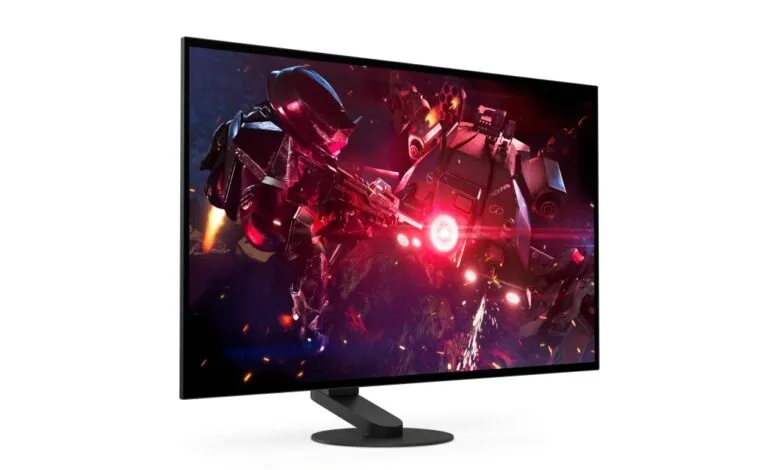
The gaming monitor landscape is fiercely competitive, and Sony is doubling down on its high-end offering with the launch of the InZone M10S II. This second-generation 1440p OLED display arrives later this year at the same $1,099.99 price point as its predecessor, but it brings a suite of meaningful upgrades designed to better compete in the premium segment. The original model, while impressive in its 480Hz refresh rate and compact stand, faced criticism for a high cost relative to its feature set. Sony aims to address that with this new iteration, which will be sold exclusively through its own online store.
Central to the improvements is the adoption of a fourth-generation WOLED panel from LG Display, utilizing Primary RGB Tandem technology. This panel promises higher brightness and contrast, positioning it closer to the performance of QD-OLED rivals. A key feature for competitive players is a dual mode refresh rate, allowing users to toggle between a 540Hz refresh rate at the native QHD resolution via DisplayPort and an astonishing 720Hz at a 720p resolution. This caters to gamers who prioritize raw speed for certain titles, even at the expense of visual fidelity. The panel also boasts an exceptionally fast .02-millisecond response time, a slight but measurable improvement over earlier OLED generations.
Perhaps the most significant addition is the inclusion of black frame insertion (BFI) for motion clarity, a feature absent from the first M10S. Sony claims its proprietary BFI algorithm mitigates the typical brightness loss associated with this technology, aiming to deliver a smoother image without as severe a penalty. When BFI is active, the monitor operates at a peak of 240Hz, with a black frame inserted between every other displayed frame to reduce perceived blur.
Other refinements include the retention of a matte screen coating, now enhanced with a new super anti-glare film for better reflection handling. The monitor supports variable refresh rate with Nvidia G-Sync compatibility and incorporates what Sony calls “extreme” anti-VRR flicker technology to minimize visual artifacts during frame rate fluctuations. Connectivity is robust, featuring a DisplayPort 2.1a port capable of UHBR13.5 speeds, an HDMI 2.1 port, and a built-in USB hub. The design carries over the distinctive disc-shaped stand from the original, with adjustments made to allow for a greater range of tilt.
Sony’s latest enters a market where compelling alternatives exist. LG offers a dual-mode QHD monitor with similar core display specs for $799.99, though with different design and port choices. A more direct competitor is the Asus Rog Swift OLED, which also retails for $1,099 and may appeal to users who prefer a glossy screen finish over a matte one. For those not requiring the absolute highest specifications, the barrier to OLED ownership is lowering dramatically. Alienware, for instance, recently unveiled a 27-inch 1440p QD-OLED monitor with a 240Hz refresh rate and a slim profile for just $350, signaling a new era of accessibility for the technology.
(Source: The Verge)