Roblox adds mandatory age verification for child safety
▼ Summary
– Roblox is implementing three mandatory age-based account tiers (Kids, Select, Standard) starting mid-May, segregating content and chat access by age group.
– This structural change follows lawsuits from at least eight US state attorneys general over child safety failures on the platform.
– Developers must pay a $5 monthly fee and verify their identity for their content to appear in the younger age-gated tiers.
– The system’s credibility is challenged as age-verified accounts were sold online for $4 and the required facial age scans have reportedly been bypassed.
– New parental controls in June will allow blocking specific games and managing chat access until a child is 16.
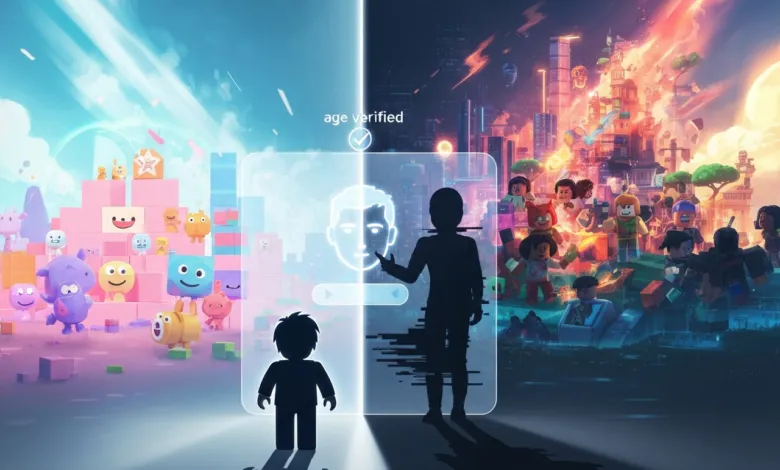
Beginning in mid-May, Roblox will implement a fundamental shift in how it manages its community, segmenting all users into three mandatory age-based account tiers. This restructuring, which creates distinct Kids (5-8), Select (9-15), and Standard (16+) experiences, represents the platform’s most direct response to mounting legal pressure and longstanding concerns over child safety. The move builds upon the facial age verification system rolled out globally in January, yet the integrity of that foundational technology faces immediate and serious challenges.
This new framework directly ties account privileges to the platform’s existing content maturity labels. Kids accounts are the most restrictive, with chat functions disabled by default and access limited to games rated Minimal or Mild. Users in the Select tier can engage with Moderate content and communicate with peers in a similar age range or with parent-approved contacts. Full platform access, including the ability to encounter Restricted content after age 18, is reserved for the Standard tier. Roblox states the global rollout will conclude by June. Crucially, any user who has not completed an age verification check by that time will default into a Kids-equivalent experience, making the process effectively mandatory for full platform use.
For the millions of creators on Roblox, this age-gating introduces significant new requirements. To have their experiences appear in the younger Kids or Select tiers, developers must now verify their identity, enable two-step authentication, and subscribe to a $5 monthly Roblox Plus membership. The company argues these hurdles prove a “long-term commitment to the platform” and encourage accurate self-rating of content. Roblox also states it will use AI moderation to monitor games in real-time, checking for alignment between a game’s rating and the activity within it. An additional safeguard involves allowing users aged 16 and over to “play new games first,” theoretically creating a buffer before younger audiences encounter freshly uploaded content.
The entire system’s credibility, however, hinges on the accuracy of its age verification. Since January, Roblox has required a facial age estimation scan from Persona to access chat features. The technology, which deletes biometric data after processing, reportedly achieved a mean absolute error of 1.4 years for under-18 users in certified testing. Yet this margin of error is significant within narrow age brackets, and the system’s vulnerabilities were exposed almost immediately. Age-verified accounts were listed for sale on eBay for as little as $4 shortly after the mandate began. Furthermore, Wired reported that the facial scans could be bypassed, a claim supported by widespread social media videos showing successful circumvention using photos and other methods.
The impetus for these changes is undeniably legal. Roblox is confronting lawsuits from at least eight state attorneys general, including those from Texas, Florida, and Louisiana, which accuse the platform of creating a dangerous environment that facilitated grooming and exposed children to explicit material. A federal multidistrict litigation was consolidated in California earlier this year. In this context, the tiered system appears less a voluntary safety upgrade and more a necessary structural defense.
New parental controls arriving in June aim to add practical value. These will allow parents to permanently block specific games and manage direct chat settings until a child turns 16, removing a previous loophole. A second feature enables parents to approve games outside their child’s default age bracket on an individual basis, accommodating scenarios like younger siblings playing with older ones.
Roblox reports that over half of its immense user base, which grew to 144 million daily active users by late 2025, has already completed age verification. The platform’s financial trajectory remains steep, with revenue reaching $4.9 billion in 2025. The new tiered structure undeniably creates a more segmented digital environment where a young child and a teenager will have profoundly different experiences. Whether the gates between them can hold against a $4 eBay bypass remains the critical test for the company’s safety claims and its legal defense.
(Source: The Next Web)