Crimson Desert Adds Intel Arc Support, Pearl Abyss Shifts Strategy
▼ Summary
– Crimson Desert, a game by Pearl Abyss, now successfully boots and runs on Intel Arc graphics hardware.
– The developer has reversed its previous stance and now officially supports Intel Arc for this game.
– The game is not yet fully optimized for these GPUs, with performance improvements still needed.
– This change in policy followed public pressure and feedback from the gaming community.
– The announcement specifically addresses the game’s current “boot” and basic functionality, not its peak performance.
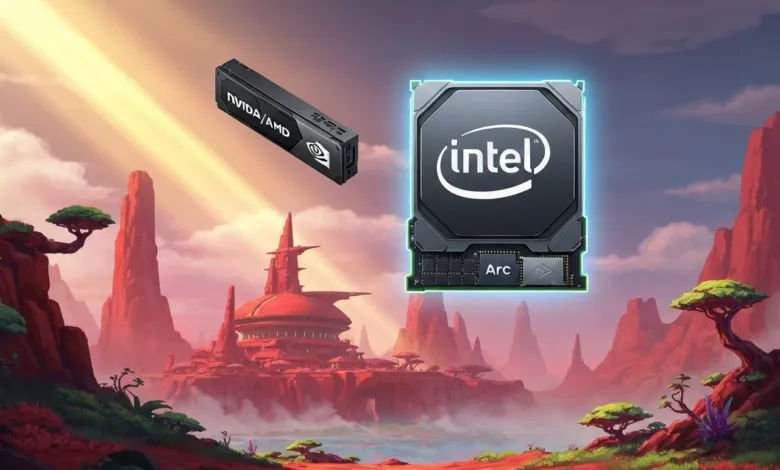
The upcoming action-adventure title Crimson Desert has officially expanded its hardware compatibility to include Intel Arc graphics cards. This marks a significant shift in strategy for developer Pearl Abyss, who previously indicated the game would not support Intel’s discrete GPU lineup at launch. While the game will now boot and run on Arc systems, the studio has clarified that full performance optimization for these cards is still a work in progress.
This move represents a notable strategic pivot for the South Korean developer. Initially, the focus was squarely on ensuring a polished experience for the dominant market share held by NVIDIA and AMD GPUs. The decision to broaden support suggests Pearl Abyss is responding to the growing, albeit still niche, adoption of Intel’s competing hardware. It acknowledges a segment of the PC gaming audience invested in the Arc platform.
The current state of support is best described as functional rather than finalized. Players can expect the game to launch and be playable on Arc systems, but they may not experience the same level of performance optimization or stability as those on established platforms. Pearl Abyss has committed to ongoing work, implying that patches and driver updates will be crucial in refining the experience post-launch. This phased approach allows the studio to meet a broader release window while continuing to tailor the game’s performance for Intel’s architecture.
For the PC gaming ecosystem, this development is a positive signal. More games offering native support for Intel Arc helps foster healthier competition in the GPU market, which can benefit consumers long-term. It also provides clearer options for gamers who have chosen Intel’s hardware. The situation underscores a modern reality of game development: post-launch support and continuous optimization are often just as critical as the initial release, especially when integrating newer or less common hardware configurations.
Ultimately, Pearl Abyss’s revised stance demonstrates a pragmatic and player-focused adjustment. By enabling access at launch with a promise of continued refinement, the studio balances broad accessibility with managing performance expectations. This approach could serve as a model for other developers navigating support for emerging hardware platforms.
(Source: Videocardz.com)