Agent-First Process Redesign: A Practical Guide
▼ Summary
– An agent-first enterprise model positions AI systems to operate processes while humans govern by setting goals and handling exceptions.
– AI agents, powered by generative AI, are expected to transform organizations and yield significant performance gains beyond traditional automation.
– Implementing AI agents effectively requires machine-readable process definitions and structured data, as legacy systems are not built for autonomy.
– A key risk for companies is that competitors will redesign their operating models faster, achieving nonlinear gains through agent-centric workflows.
– Automating routine tasks with AI improves operational efficiency and frees employees for higher-value strategic and creative work.
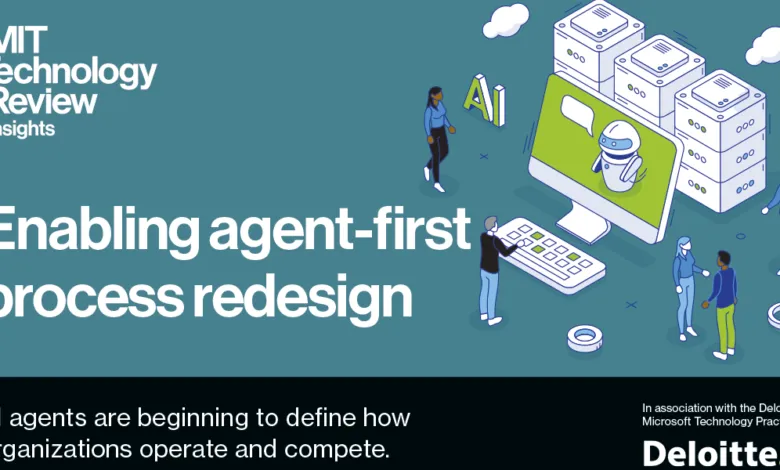
The future of enterprise efficiency lies in a fundamental redesign where AI agents manage core operational processes, guided by human oversight. This agent-first operating model positions autonomous systems as the primary operators, with people setting strategic goals, defining policy boundaries, and intervening for complex exceptions. According to Scott Rodgers, global chief architect and U.S. CTO of the Deloitte Microsoft Technology Practice, this requires a significant shift. “You need to shift the operating model to humans as governors and agents as operators,” he states.
This transformation is urgent. With corporate AI spending projected to surge over 70% in the coming two years, generative AI agents offer more than simple automation. They promise substantial performance improvements and enable a strategic redeployment of human talent toward innovation and higher-value work. Incremental, task-based automation is becoming obsolete; achieving breakthrough results demands processes built from the ground up for autonomous systems. Rodgers notes that legacy workflows are ill-suited for this, requiring new foundations like machine-readable process definitions, clear policy constraints, and structured data flows.
A major hurdle for many organizations is a lack of clarity on their own economic drivers, such as detailed cost-to-serve or per-transaction expenses. This opacity makes it difficult to identify and prioritize the agent deployments that would deliver the greatest return on investment, often leading to scattered, showy pilot projects instead of systemic change. To unlock true value, leadership must adopt a new perspective focused on orchestrated outcomes.
The competitive stakes are high. “The real risk isn’t that AI won’t work, it’s that competitors will redesign their operating models while you’re still piloting agents and copilots,” Rodgers warns. He emphasizes that nonlinear performance gains emerge when companies build agent-centric workflows supported by human governance and adaptive orchestration. In this redesigned environment, routine and repetitive tasks are handled automatically. This liberation of human effort boosts operational efficiency, enhances collaboration, accelerates decision-making, and modernizes the workplace while maintaining robust enterprise security.
(Source: MIT Technology Review)