Glass Chips and the Rise of “AI-Free” Branding
▼ Summary
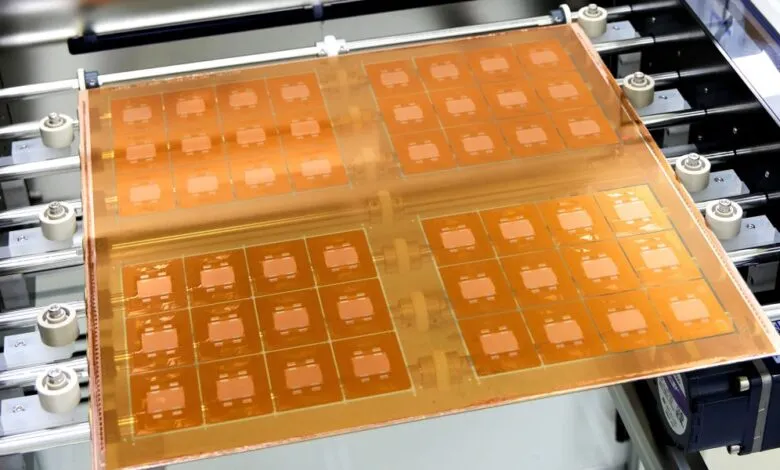
– A South Korean company, Absolics, is beginning production of special glass panels to enhance the power and efficiency of next-generation computing hardware.
– This glass technology, also pursued by companies like Intel, could significantly reduce the energy demands of chips in AI data centers and consumer devices.
– Organizations are racing to create a globally recognized “AI-free” logo to label products made solely by humans.
– Senator Elizabeth Warren is demanding answers after reports that the Pentagon granted Elon Musk’s xAI access to classified military networks.
– Scammers are using “AI face models” to create fake personas for romance scams, tricking victims in schemes known as “pig butchering.”
A new wave of specialized glass substrates is poised to transform the efficiency and power of next-generation computing hardware. Companies like South Korea’s Absolics and industry giant Intel are advancing this technology, which promises to significantly cut the energy consumption of chips found in everything from massive AI data centers to everyday consumer laptops and mobile devices. This innovation represents a critical step in managing the escalating power demands of modern electronics.
Beyond hardware, a fascinating cultural shift is underway in how we label technology. A global race has begun to establish a universally recognized “AI-free” logo. Various organizations are developing this label to certify products created entirely by human effort, responding to growing consumer demand for transparency and a human touch in an increasingly automated world. This movement coincides with campaigns like “QuitGPT,” which actively encourage people to step away from AI chatbots.
In the realm of national security, Senator Elizabeth Warren is demanding clarity on a concerning report. The Pentagon allegedly granted Elon Musk’s xAI access to its classified military networks, raising serious questions about data governance and oversight. This development highlights the complex intersection of private AI firms and state defense apparatus. Experts warn that the underlying chatbot technology could potentially be repurposed to assist in military targeting decisions, while separately, the Department of Defense faces its own technical hurdles in updating software for advanced fighter jets.
Meanwhile, a disturbing new scam is exploiting the allure of artificial intelligence to prey on people emotionally. Criminals are hiring real human models to serve as the “faces” for AI romance scams, using their photographs to create convincing fake profiles that build relationships and ultimately defraud victims. Known as “pig butchering” scams, these schemes slowly fatten up the target with affection before the financial slaughter. Survivors of these elaborate cons have begun speaking out to detail how the manipulative process works, from the initial contact to the devastating financial and emotional fallout.
(Source: Technology Review)