Continuous Glucose Monitoring Drove Me Crazy
▼ Summary
– Continuous glucose monitors (CGMs) are now available for use by people without diabetes.
– The author personally used two different over-the-counter CGM models, the Dexcom Stelo and Abbott Lingo.
– Applying the CGM sensor involves cleaning the skin and using an applicator with a visible needle.
– The process of sensor application can be an uncomfortable experience for the user.
– The article is a first-person account of using CGMs for general health and metabolism tracking.
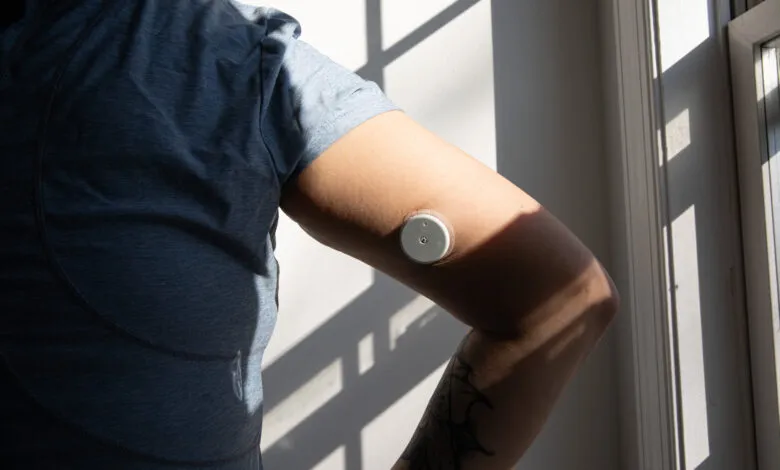
Living with a continuous glucose monitor fundamentally alters your daily experience. A little over a year ago, I was preparing to travel to a conference. My luggage was ready and my ride was en route, but a final task remained before I could leave for the airport. I opened a small alcohol swab and cleaned a patch of skin on the back of my arm. Next, I positioned a small applicator against the area, trying not to focus on the visible needle inside. I closed my eyes and pressed a button, hearing a distinct ka-thunk. I then repeated the entire procedure on my other arm.
I was now wearing two different over-the-counter continuous glucose monitors, or CGMs. The Dexcom Stelo was in my right arm, and the Abbott Lingo was in my left. These glucose biosensors are increasingly marketed not just to diabetics, but to the general public interested in optimizing metabolic health. The premise is compelling: by providing real-time data on how your body responds to food, exercise, and stress, you can make smarter lifestyle choices.
However, the reality of constant monitoring quickly became overwhelming. The promise of personalized health insights soon gave way to an obsession with the numbers on my phone. Every meal, snack, or beverage became a data point to analyze, leading to anxiety over seemingly minor glucose fluctuations. The pursuit of a “perfect” glucose curve felt less like empowerment and more like a stressful, full-time job of micromanaging my biology.
The experience revealed a significant gap between the potential of health wearables and the practical, psychological impact of living with them. While the technology offers fascinating glimpses into our physiological responses, it also risks fostering an unhealthy fixation, turning normal bodily processes into sources of stress. The data, without proper context or expert guidance, can be more paralyzing than helpful.
(Source: The Verge)