Stroke Recovery Implant Rewires Brain Function
▼ Summary
– Stroke is a leading cause of long-term disability, with many survivors experiencing persistent hand and arm impairments.
– Epia Neuro is a startup developing a brain implant and motorized glove system to help stroke patients regain hand function.
– The system detects brain signals for movement intent and uses AI and a glove to drive gripping motion, aiming to leverage neuroplasticity for rehabilitation.
– Unlike BCIs that control external devices, Epia’s approach is rehabilitative, intended to improve the brain’s native connections so function improves even without the glove.
– A major industry hurdle is scalability, requiring implants to be low-risk and easy to insert, which companies like Neuralink and Synchron are addressing with different surgical methods.
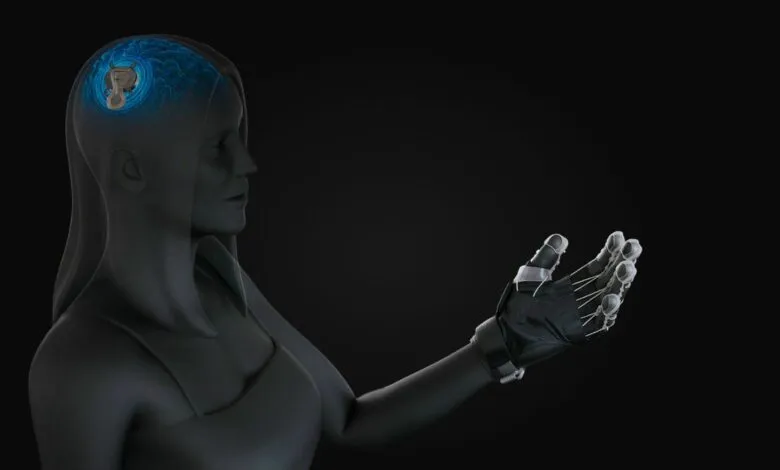
For the millions living with the lasting effects of a stroke, regaining hand function can be a monumental challenge. A new startup is pioneering a brain-computer interface designed not just to assist movement, but to actively rewire the brain for recovery. Epia Neuro, based in San Francisco, is developing a system that combines a skull-implanted neural sensor with a motorized glove, aiming to help patients restore their own gripping ability through targeted rehabilitation.
The field of neural interface technology is attracting significant attention and capital, with high-profile ventures like Neuralink and Merge Labs securing hundreds of millions in funding. While many projects focus on enabling control of external devices, Epia’s approach is fundamentally rehabilitative. The goal is to leverage the brain’s inherent neuroplasticity to rebuild the pathways for natural movement.
The core problem is widespread. Approximately two-thirds of stroke survivors contend with lasting impairment in their hands and arms. “These patients have very weak grip. It’s a very common problem,” explains Michel Maharbiz, Epia’s CEO and a UC Berkeley professor. “If you could just give them the grip back reliably, an enormous number of things would open up in their daily life.” This recovery can transform independence, affecting basic tasks from getting dressed to eating a meal.
Epia’s system works by detecting faint neural signals from an undamaged region of the brain when a patient intends to move their hand. AI algorithms interpret these signals, which are combined with data from sensors on the grip-assist glove to predict and execute a gripping motion. Over time, the system learns to associate specific brain patterns with the user’s desire to open or close their hand. Crucially, the repeated pairing of intention with physical movement is designed to strengthen new neural connections, potentially reducing dependence on the assistive device itself.
This addresses a key limitation after a stroke. Damage to the brain’s motor cortex can block movement signals from reaching the muscles, even though the intent to move remains. Epia’s technology seeks to create a new communication loop. “We can train the system to learn the user’s intent with regards to the function they’re trying to compensate for,” Maharbiz states.
Experts highlight the distinction between assistive and restorative neurotechnology. “A lot of brain-computer interfaces allow a person to type on a computer screen or to move a robotic arm to achieve a task,” notes David Lin, a critical care neurologist at Massachusetts General Hospital who advises Epia. “That’s different from a rehabilitative solution, where using that device in and of itself leads to plasticity of the brain, or changing of the brain and the connections to the spinal cord, so that once you take the glove away, the native function of the arm and hand gets better.”
A major challenge for the entire industry remains scalability and surgical risk. Widespread adoption requires procedures that are minimally invasive and safe. Companies are exploring different paths; Neuralink is developing a surgical robot for its implant, while Synchron has created a stent-like device that travels through blood vessels, avoiding open brain surgery. Epia’s disk-shaped implant requires a craniotomy, placing the broader viability of such approaches in the context of this ongoing race to develop the most practical and effective neural implant.
(Source: Wired)