The Ugly Beauty of a Future Classic
▼ Summary
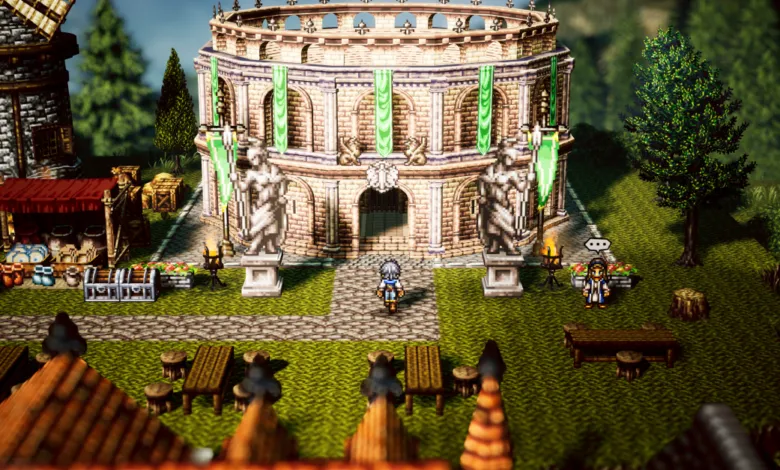
– The HD-2D art style, pioneered by Square Enix, combines modern 3D graphics and lighting with 2D pixel-art characters to evoke classic 16-bit games while feeling contemporary.
– It serves a dual purpose: creating original titles that distill a classic era’s essence, and providing a respectful, modernized format for remaking beloved older games.
– The style has been commercially and critically successful, seen as creating a “timeless” aesthetic that appeals to nostalgia while feeling fresh.
– Despite a shared technical foundation, HD-2D allows for significant visual variety, as demonstrated by differences in color palette and texture across various game titles.
– The approach represents an attempt to resolve a core tension in game design: honoring artistic and technical limitations of the past while creating work that remains appealing for modern audiences.
In the world of blockbuster video games, a familiar visual sameness often prevails, driven by the high financial stakes that encourage publishers to play it safe. This results in landscapes of interchangeable realism and character designs that blend together. Breaking this mold requires a bold artistic vision, and Square Enix’s HD-2D style has done exactly that. What began as an experiment has matured into a distinctive visual language, signaling which classic games are deemed worthy of revival and what new experiences should be received as instant classics.
The style originated from a simple yet powerful question: how could the beloved pixel art of the Super Famicom era be revived using contemporary technology? First realized in 2018’s Octopath Traveler, the approach combines the textured charm of 16-bit sprites with the depth and dynamic lighting of modern 3D environments. Developers used tools like Unreal Engine to place meticulously crafted 2D characters within worlds that feel expansive and alive on today’s screens. The goal was to create something that felt both nostalgically classic and thoroughly modern, a balance that resonated powerfully with players.
Its success was immediate. Following Octopath Traveler’s strong sales, Square Enix formally trademarked the HD-2D name, committing to this new aesthetic. The strategy then evolved. Instead of just sequels, the publisher applied the style to diverse projects like the tactical RPG Triangle Strategy and a remake of the cult classic Live A Live. This move transformed HD-2D from a novel quirk into a broader design philosophy. It became a method for crafting original homages that distill an entire genre’s spirit or for delivering respectful, visually stunning reimaginings of forgotten gems.
A key strength of the pixel art foundation is its unique capacity to engage the player’s imagination. As one producer noted, while some may see pixel art as dated, it actively creates room for personal interpretation, offering a creative freedom that more literal, hyper-detailed graphics often cannot. Interestingly, the HD-2D look is a synthesis of influences broader than just the 16-bit era, drawing visual inspiration from later PlayStation titles as well. This wider pool of references gives developers significant creative leeway within the style’s framework.
The technical definition is straightforward: pixel-art characters and monsters placed atop 3D backgrounds. The true artistry, however, lies in mastering the intangible “atmosphere that feels right.” This requires careful curation of color palettes, visual effects, and camera work. A skilled art director who intuitively grasps this sensibility is crucial for any project’s success. This explains the visual diversity seen across titles; the muted, diorama-like staging of Octopath Traveler differs greatly from the vibrant, almost maximalist color and detail of the Dragon Quest remakes. Each game finds its own balance between the “HD” clarity and the “2D” pixel texture.
This variety proves the style is not a rigid template but a flexible expressive method with ample room for growth. Critics often describe these games as “timeless,” a testament to the style’s careful deployment. It emerged from a creative tension many developers face: the desire to honor classic art forms while ensuring a product feels contemporary. HD-2D proposes an elegant solution to a fundamental challenge in game preservation and creation.
Video games are uniquely tethered to their technological moment, and aging tech can make past artistic choices seem awkward or limited. HD-2D represents a beautiful attempt to craft a perfect, enduring version of a game, one that honors the past without embarrassing the future. It seeks to flatter gaming history while aligning with modern expectations for polish and convenience. Ultimately, it cannot fully escape the relentless march of time and taste, but there is profound beauty in the attempt to bridge eras. In a landscape often criticized for homogeneity, HD-2D stands out precisely because it dares to look different, offering a compelling vision of how games can remember their past while speaking to the present.
(Source: The Verge)