Critical ISS Supply Mission Delayed, Breaking Schedule

▼ Summary
– A main engine problem on Northrop Grumman’s Cygnus XL spacecraft has delayed its scheduled delivery of 11,000 pounds of supplies to the International Space Station.
– NASA is evaluating backup plans to potentially still allow the spacecraft to reach the station, though not on the original timeline.
– The issue occurred during engine burns intended to adjust the spacecraft’s orbit for rendezvous, but all other systems are functioning normally.
– Unlike SpaceX’s Dragon, the Cygnus requires capture by the station’s robotic arm, which was to be performed by astronaut Jonny Kim.
– This is Northrop Grumman’s 22nd cargo mission under a NASA contract, with all but one previous mission having reached the station successfully.
A critical supply mission to the International Space Station has been postponed due to a main engine issue aboard Northrop Grumman’s Cygnus XL spacecraft, delaying the delivery of more than 11,000 pounds of essential cargo and scientific experiments. NASA confirmed on Tuesday that ground teams are actively exploring alternative strategies to eventually complete the rendezvous, though the original timeline has been disrupted.
The engine malfunction occurred early Tuesday during two planned orbital adjustment burns intended to align the spacecraft with the ISS. Although the engine shut down prematurely, all other onboard systems continue to operate normally. NASA has not yet provided further technical specifics regarding the engine anomaly but emphasized that a revised arrival schedule is currently under evaluation.
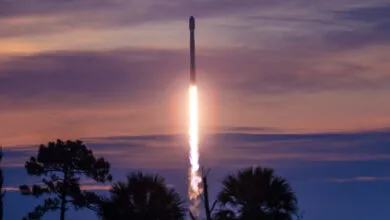
Launched Sunday evening from Cape Canaveral aboard a SpaceX Falcon 9 rocket, the Cygnus XL was programmed to execute a sequence of engine firings to raise its orbit and match the station’s altitude. Unlike SpaceX’s Dragon capsules, which dock autonomously, the Cygnus relies on capture by the station’s Canadian-built robotic arm. Astronaut Jonny Kim had been scheduled to operate the arm and secure the spacecraft as it approached within 30 feet of the complex before berthing it to the Unity module.
This mission represents Northrop Grumman’s 22nd resupply flight under a lucrative NASA commercial cargo contract, with all but one prior mission reaching the station successfully. The current flight carries added significance following earlier technical setbacks, including damage discovered on another Cygnus vehicle that was slated to launch earlier this year.
(Source: Ars Technica)