Lunar Gateway Modules Found Corroded
▼ Summary
– NASA promoted the Lunar Gateway as a platform for lunar exploration and deep-space habitation technology testing, but the project faced delays with its first module originally planned for 2022.
– In March, NASA Administrator Jared Isaacman announced the Gateway was “paused” to focus on the lunar surface, ending the project due to high costs and the desire to avoid watching Chinese astronauts on the Moon from orbit.
– During Congressional testimony, Rep. Suhas Subramanyam raised concerns about the cancellation of the HALO module, built by Northrop Grumman in his district.
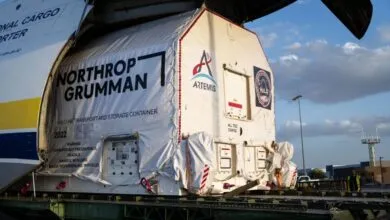
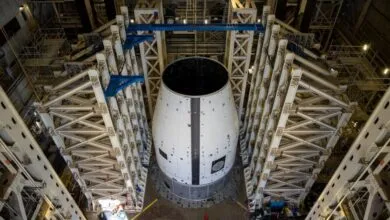
– Northrop Grumman is now pushing NASA to repurpose the HALO module for use on the lunar surface as part of the agency’s Moon base.
For a decade, NASA championed the Lunar Gateway as a cornerstone of its deep-space ambitions, envisioning a space station orbiting the Moon that would serve as both a scientific outpost and a proving ground for long-duration space habitation. The project was pitched as an essential stepping stone for future missions to Mars and beyond.
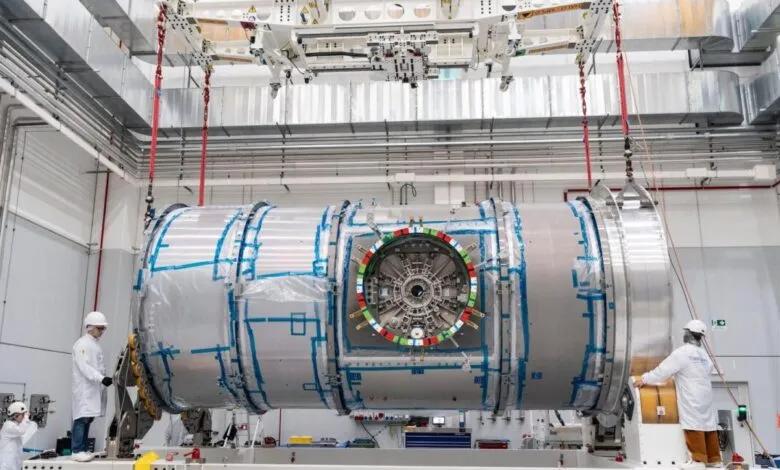
Like many ambitious space initiatives, the Gateway suffered from chronic delays. The first component, a power and propulsion module, was originally scheduled for launch in 2022. That timeline later slipped, with NASA deciding to launch it alongside the Habitation and Logistics Outpost (HALO) in 2024. An additional pressurized module, I-HAB, contributed by international partners, was expected to join the core in 2026.
Those launch dates have now passed without a single module reaching orbit. In March, NASA Administrator Jared Isaacman announced that the Gateway program was being “paused” to redirect the agency’s focus toward landing astronauts on the lunar surface.
The decision to shelve the Gateway is defensible on its merits. NASA and its partners were spending billions on a system that made reaching the Moon more complex, all while facing the prospect of watching Chinese astronauts walk on the lunar surface from orbit rather than joining them there.
But this week, a far more troubling reason for the Gateway’s cancellation emerged. It came to light during Congressional testimony.
Isaacman appeared before the US House Committee on Science, Space, and Technology to discuss NASA’s budget. During the hearing, Rep. Suhas Subramanyam of Virginia raised concerns about the impact on his district, which hosts major operations for Northrop Grumman, the primary contractor for the HALO module. “You’ve also canceled an order for the Habitation and Logistics Outpost,” Subramanyam stated. “Do you know what will happen to that large investment that was made?”
In the wake of Gateway’s cancellation, Northrop Grumman has been actively lobbying NASA to repurpose the HALO module for use on the lunar surface as part of the agency’s planned Moon base. The revelation that the modules themselves may be corroded adds a stark new dimension to the program’s failure, raising questions about the quality of work and oversight on one of NASA’s most high-profile projects.
(Source: Ars Technica)