Gateway manufacturer admits issue but omits “corrosion”

▼ Summary
– NASA Administrator Jared Isaacman testified that two habitation modules for the Lunar Gateway had corroded, causing initial doubt among observers.
– Northrop Grumman and the European Space Agency later acknowledged manufacturing irregularities and corrosion on their respective modules, HALO and I-HAB.
– The pressure vessel structures for both modules were manufactured by Thales Alenia Space, which also had similar issues with a module built for Axiom Space.
– Thales Alenia Space stated the corrosion is a “well-known metallurgical behavior” that will be fixed by the end of the third quarter of 2026.
– Thales cited a similar issue during International Space Station manufacturing, claiming its pressurized modules have exceeded their original lifespan.
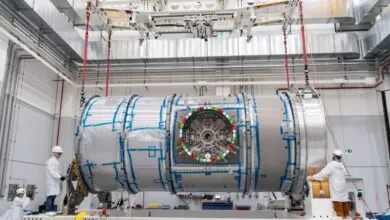
Last week, NASA Administrator Jared Isaacman dropped a bombshell during a congressional hearing, revealing that the two habitation modules built for the Lunar Gateway had suffered from corrosion. The statement, made before a House committee on Wednesday, initially sparked skepticism among space industry observers, with some accusing Isaacman of fabricating the issue.
However, the doubt was short-lived. Northrop Grumman, the primary contractor for the Habitation and Logistics Outpost (HALO) , soon confirmed a manufacturing irregularity. By Friday, the European Space Agency (ESA) , which is providing the other habitation module known as I-HAB, acknowledged that corrosion had indeed been observed. Both modules’ pressure vessel structures were fabricated by Thales Alenia Space, a French-Italian firm. Adding to the narrative, Axiom Space, which also ordered a pressurized structure from Thales for its private space station, revealed it had encountered “similar” issues with its Module 1.
For nearly five days after Isaacman’s testimony, Thales remained silent. The company finally broke its silence on Monday morning with a carefully worded statement. It described the problem as a “well-known metallurgical behavior” found on the module’s surface, which will be remedied by the end of the third quarter of 2026. Thales also confirmed it is working with ESA to resolve the same issue on the Lunar I-HAB module, which remains at its facilities.
The company’s statement notably avoided the term “corrosion,” instead framing the defect as a routine technical challenge. Thales pointed to past experience, noting that a similar metallurgical issue occurred decades ago during the manufacturing of elements for the International Space Station (ISS) . Those modules, Thales emphasized, have proven highly performant and continue to operate reliably beyond their original lifespan. With nearly 50% of the ISS’ pressurized volume built by Thales still functioning after 25 years, the company expressed confidence in its ability to address the current situation with agility and expertise.
For now, Thales has declined further comment, directing inquiries to Northrop Grumman for HALO and ESA for Lunar I-HAB. The underlying message is clear: what the company calls a “well-known metallurgical behavior” is, by any other name, corrosion.
(Source: Ars Technica)