Scientists Develop 3D-Printed Skin That Can Circulate Blood
▼ Summary
– Current severe burn treatments involve transplanting the epidermis but leave scars and fail to restore full skin function without regenerating the dermis.
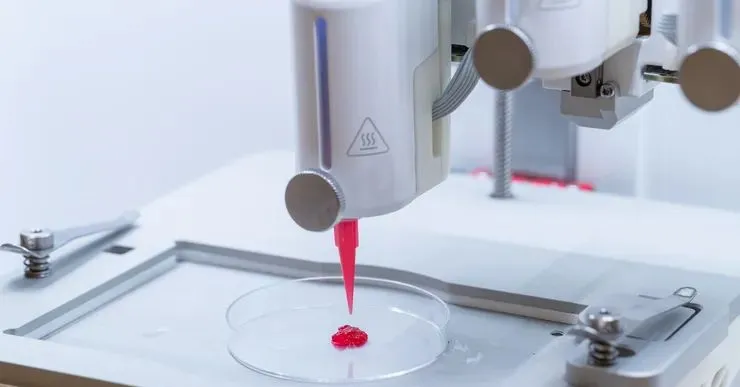
– Swedish researchers have developed two 3D bioprinting techniques to create vascularized, thick artificial skin that includes blood vessels.
– One technique uses a bio-ink called μInk, which contains fibroblasts on gelatin grains in a hyaluronic acid gel, allowing high-density cell structures to be printed.
– In mouse experiments, the printed tissue promoted dermal regeneration, collagen secretion, and new blood vessel growth, supporting long-term tissue integration.
– A second technique, REFRESH, enables flexible construction of durable, shape-memory blood vessels using hydrogel threads to ensure nutrient and oxygen delivery.
Treating severe burns and trauma often hinges on the body’s ability to regenerate skin, a process that has long presented major medical challenges. Traditional skin grafts only replace the outer epidermal layer, leaving scars and failing to restore full functionality. True skin regeneration requires rebuilding the dermis, the deeper layer rich with blood vessels and nerves—something that has remained out of reach until now.
Researchers in Sweden have pioneered a pair of innovative 3D bioprinting methods capable of producing thick, vascularized artificial skin. One technique generates cell-dense tissue, while the other constructs freely shaped blood vessel networks within the material. Both approaches, detailed in two recent studies published in Advanced Healthcare Materials, represent significant strides toward creating transplantable living skin.
Johan Junker, an associate professor at Linköping University and a plastic surgery specialist who led the research, emphasized the complexity of dermal regeneration. “We still don’t fully understand all the components of the dermis, which is why it can’t be grown in a lab from scratch,” he explained. “Our strategy is to provide the body with the essential building blocks and let it assemble the dermis naturally.”
The team developed a specialized bio-ink dubbed “μInk,” which contains fibroblasts—cells responsible for producing collagen, elastin, and hyaluronic acid—cultured on tiny gelatin microcarriers and suspended in a hyaluronic acid gel. Using a 3D printer, they layered this ink to form structured tissue densely packed with living cells.
In animal trials, grafts made from this bio-ink successfully integrated with host tissue. The fibroblasts not survived but also secreted collagen and other dermal components, while new blood vessels infiltrated the graft—a critical indicator of successful, lasting implantation.
The role of blood vessels cannot be overstated in tissue engineering. Without a functional vascular network, oxygen and nutrients fail to reach cells in the core of thicker tissues, leading to cell death and graft failure. To address this, the team introduced a second technology named REFRESH (Rerouting of Free-Floating Suspended Hydrogel Filaments).
This method uses hydrogel filaments—98% water-based gels—printed and arranged to form customizable vascular channels. These threads are remarkably durable, maintaining structural integrity even when knotted or braided, and possess shape-memory properties that allow them to rebound after compression. This flexibility enables the creation of robust, adaptable blood vessel networks essential for sustaining artificial tissues.
(Source: Wired)