Google Fitbit Air is comfy, but its AI coach hallucinates
▼ Summary
– The Fitbit Air is an ultra-minimal fitness tracker designed to compete with Whoop, focusing solely on data collection rather than functioning as a smartwatch.
– The device is notably small and lightweight, with the tracker puck being lighter than a typical single true wireless earbud.
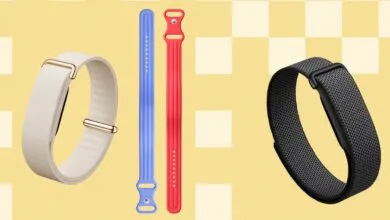
– Band swapping is simple and fluid, using a push-to-release system that is easier than Whoop’s slider, with multiple band options available.
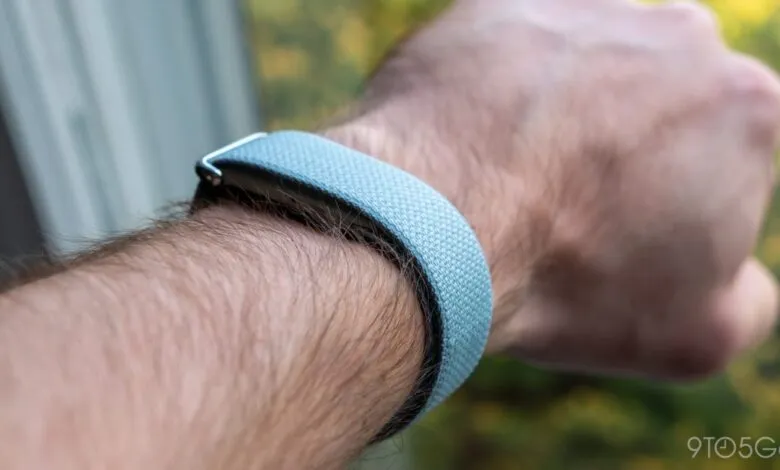
– The tracker is very comfortable to wear, especially during sleep, due to its lightweight design and strong vibration alarms.
– Google’s Health Coach AI feature is unreliable, as it hallucinated data in its first report by falsely claiming a 5.2-mile run, raising concerns about its $10 monthly cost.
What does a modern fitness tracker need to offer in 2026? With smartwatches now widely available at prices comparable to standard Fitbit devices, the space is crowded , especially for a company like Google that competes in both categories. The Fitbit Air reads like an acknowledgment from Google that Whoop, its most direct competitor, has been onto something with its minimalist, data-focused band that avoids acting as a wrist-mounted computer. So far, my early impressions of the device are positive, though I have some predictable reservations about its AI coach.
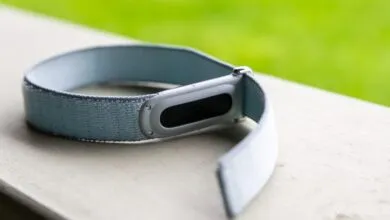
It should come as no surprise that the Fitbit Air is compact, but I was genuinely caught off guard by just how lightweight it feels the moment I opened the box. The tracker’s true size becomes even more apparent when you remove it from the default band. This little puck is so small, I struggled to find anything in my gadget collection that makes for an easy comparison. A single true wireless earbud likely outweighs it.
Swapping bands is refreshingly straightforward and, frankly, more intuitive than Whoop’s “Fast Link” slider mechanism. Instead of relying on metal prongs to secure the tracker, the Fitbit Air simply drops out of the band with a gentle push. The default Performance Loop band and the more stylish Elevated Loop both expose the tracker through a basic cutout, making removal even easier. On the sporty Active Band, the tracker is fully covered, though pushing it through the silicone barrier remains simple.
You can technically insert the Air into a band either way, but there is a correct orientation, and you will feel the difference when swapping. The proper fit feels noticeably more secure than the upside-down option, though you do not have to rely on instinct alone. A double-tap of the tracker activates Google’s battery indicator light, which shines through only one side of the band. If you do not see that light, you likely have the Air reversed , or, of course, the battery is simply dead.
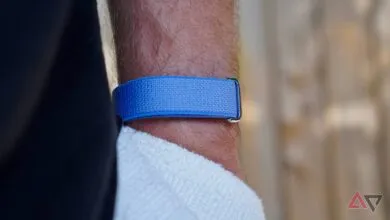
Once on your wrist, the Fitbit Air is surprisingly comfortable. I will need more time with all three bands to determine which one is truly the best and whether any are not worth buying, but so far, the ultra-lightweight design made for one of the most comfortable nights of sleep I have ever had while wearing a tracker. I barely noticed it on my wrist when I first woke up. However, if you rely on the built-in vibration alarms , which are decently strong , that will not apply.
Health Coach remains the Fitbit Air’s biggest question mark for me
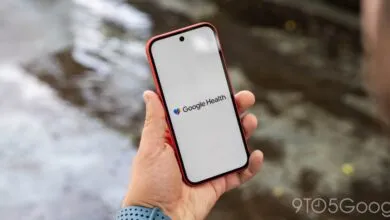
If there is one aspect of the Fitbit Air that makes me uneasy, it is Google’s Health Coach. Essentially a relaunch of Fitbit Premium, Health Coach seems designed to be the primary way most users interact with the tracker inside the app. A persistent chatbot button floats within the app, inviting you to ask your virtual coach anything about your fitness journey.
Unfortunately, I am already wary of trusting it. In my experience, AI fitness coaches tend to be unreliable, either making mistakes in their general output or, more often, delivering basic information in lengthy text blocks that mask shallow analysis. This morning, Health Coach did both. It suggested I take it easy after a poor night’s sleep (true!), a brief weightlifting session the day before (also true!), and a 5.2-mile run that followed my weightlifting (did not happen!).
Simply put, Google’s paid replacement for Fitbit Premium immediately began hallucinating, even admitting to having fabricated the data before asking if perhaps I was the one who forgot to log a run. Keep in mind, this was my very first report from the device , a terrible first impression. Even after the correction, the phantom run data continues to appear on the AI-powered home screen layout, despite no record existing in my account. That is not exactly a strong advertisement for a platform that costs $10 per month or $100 annually.
While I do not have high hopes for the AI features here , and honestly, that is nothing new , the rest of the package seems solid so far. I will have plenty more to say in a final review soon, but for now, it appears Google has nailed the basics with its ultra-minimal Whoop competitor. The Fitbit Air is comfortable, offers several band options, and even serves as a simple Pixel Watch substitute when the full smartwatch experience is unnecessary. But I would not recommend paying for Health Coach beyond Google’s trial period until we have a clearer picture of how often it will hallucinate.
(Source: 9to5google.com)