Google Weather App Discontinued on Android
▼ Summary
– Google is deprecating its dedicated fullscreen Weather app within the Google app, replacing it with a Google Search results page for weather queries.
– This change redirects the homescreen weather shortcut to a redesigned search page featuring the familiar “Froggy” card and a 10-day forecast carousel.
– The new search-based experience includes current conditions, hourly forecasts, and new details like Air Quality, alongside AI Overviews summarizing the weather.
– A key difference is the removal of the “View all details” button, with the fullscreen app being replaced by a page that includes standard web search results below the weather data.
– This migration is actively rolling out, though not yet complete, as Google consolidates its weather information into the Search product instead of maintaining a separate app.
Google is phasing out its dedicated Weather application on Android devices, shifting users instead to a weather-focused results page within Google Search. This change represents a significant move by the company to consolidate its services, directing all weather-related queries through its core search engine. The transition, which began gradually several months ago, is now accelerating, with many users finding their familiar homescreen shortcut now opens a web-based interface.
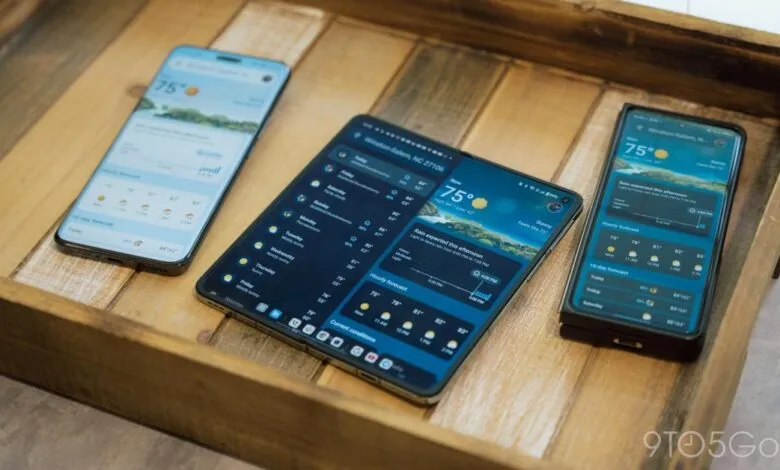
For years, Android users could tap a distinctive shortcut, a sun and cloud icon marked with a ‘G’, to launch a full-screen weather application. This standalone app provided a clean, dedicated interface. Upon opening, users were greeted by a friendly frog character set against a background reflecting current conditions, displaying key information like the current temperature, daily highs and lows, weather conditions, and the “feels like” temperature. A carousel showed the hourly forecast, and a detailed 10-day outlook was available with a simple tap. The app also organized current conditions into clear cards for wind speed, humidity levels, UV index, barometric pressure, and sunrise/sunset times. More granular data, presented in graph form for precipitation, wind, and humidity, was accessible within the hourly forecast details.
Recently, however, tapping that same homescreen icon no longer opens the traditional app. Instead, it launches a Google Search results page for the query “weather.” This redesigned search page incorporates many familiar elements but within a web framework. The cheerful frog graphic remains, but now serves a dual purpose, displaying current conditions alongside the hourly forecast. A tappable 10-day forecast carousel is present, accompanied by expandable sections for precipitation, wind, humidity, and a newly added air quality metric. Google also integrates AI-generated overviews to summarize the prevailing weather conditions succinctly.
Users who have been fully migrated to the new system have reported receiving a notification stating “The weather page has moved.” In this new experience, the option to “View all details” and access the old full-screen app has been removed. Scrolling down on the search results page reveals standard web links and information. The rollout appears to be in progress, with a growing number of devices being switched over in recent days, though the process is not yet complete for all users. This strategic shift suggests Google prefers to maintain a single, unified platform for weather information, choosing to enhance its Search product rather than support a separate, dedicated application.
(Source: 9to5 Google)