Google Explains “Bounce Clicks” in AI Overview Traffic Drop
▼ Summary
– Google’s Liz Reid claims AI Overviews reduce “bounce clicks” where users quickly return to search, while deeper readers still visit pages and increased query volume offsets ad revenue loss.
– Reid has made this argument since August 2024 in a blog post and interviews, but has never provided supporting data like charts, percentages, or year-over-year comparisons.
– Independent data shows significant traffic declines: Chartbeat found a roughly one-third drop in global publisher Google search traffic, and Seer Interactive reported a 61% drop in organic click-through rates for AI Overview queries.
– Pew Research found users clicked on results 8% of the time with AI Overviews versus 15% without, and Digital Content Next reported a median 10% year-over-year decline in Google search referrals across 19 publishers.
– Google has not shared internal data separating low-value clicks from other traffic, so Reid’s “bounce clicks” claim remains unverified and should be treated as a claim, not a finding.
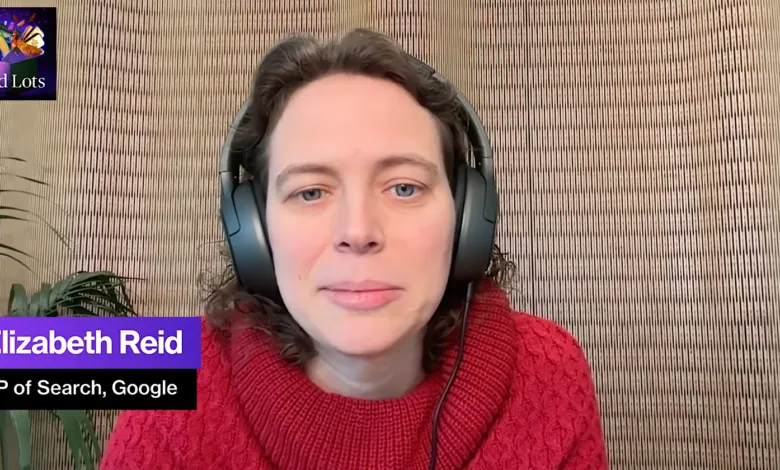
Google’s top search executive, Liz Reid, has once again framed the decline in publisher traffic from AI Overviews as a reduction in low-value visits, a narrative she has consistently promoted since last year. In a recent appearance on Bloomberg’s Odd Lots podcast, Reid argued that these overviews are cutting what she calls “bounce clicks” ,instances where users click a link only to quickly return to search results.
Speaking on the April 23 episode, Reid responded to questions from hosts Joe Weisenthal and Tracy Alloway about how AI Overviews impact publisher traffic and ad revenue. She explained that users who would have briefly visited a page for a single fact now get that information directly from the overview, eliminating the need to click through. Those who want in-depth content still visit the site. While she acknowledged fewer ad clicks for some queries, she claimed that increased overall search volume offsets the loss.
This argument mirrors points Reid made in an August 2024 Google blog post, where she stated that organic click volume remained “relatively stable” year-over-year and that “quality clicks” ,visits where users don’t quickly bounce,had actually risen. In an October interview with the Wall Street Journal, she used the term “bounced clicks” and said ad revenue with AI Overviews had held steady.
Despite these repeated assertions, Reid has not provided supporting data in any of these public appearances. Her August blog post lacked charts, percentages, or year-over-year comparisons. On Bloomberg, she told the hosts that Google tracks whether users return to search more often as a key signal, but offered no numbers. The interview did not include follow-up requests for evidence, and Google has not published data that would allow outside verification of the bounce-click distinction.
Independent data paints a different picture. A Chartbeat analysis featured in the Reuters Institute’s Journalism and Technology Trends and Predictions 2026 report found that global publisher Google search traffic dropped by roughly one-third, with Google Discover referrals falling 21% year-over-year across over 2,500 publisher websites.
Seer Interactive’s research showed that the organic click-through rate for queries with AI Overviews plummeted from 1.76% in 2024 to 0.61% in 2025,a 61% decline. Seer noted that these queries tend to be informational searches, which historically had lower click-through rates anyway.
A Pew Research Center study of 68,000 real search queries found that users clicked on results only 8% of the time when AI Overviews were present, compared to 15% when they were not. Meanwhile, Digital Content Next,a trade group whose members include the New York Times, Condé Nast, and Vox,reported a median 10% year-over-year drop in Google search referrals across 19 member publishers between May and June 2025. DCN CEO Jason Kint described the member data as “ground truth” on what was happening to publisher traffic.
Reid’s “bounce clicks” explanation attempts to answer the question raised by these data points, but it does so without offering its own evidence. That distinction matters when evaluating any public claim from a platform that controls the metrics. A business owner listening to Reid’s Bloomberg interview cannot determine whether AI Overviews are cutting only low-value clicks or reducing traffic across all query types. The independent data measures total clicks and click-through rates, not the specific subset Reid describes as low-value.
If Google has internal data separating bounce clicks from meaningful visits, it has not shared it in the eight months since the August blog post. Reid noted that Google measures how often users return to search,a signal that tracks the platform’s own retention. Publishers need a traffic metric, but Google has not provided one. Until it does, “bounce clicks” should be regarded as a claim, not a finding.
(Source: Search Engine Journal)