SteamOS Expands Its Reach in PC Gaming

▼ Summary
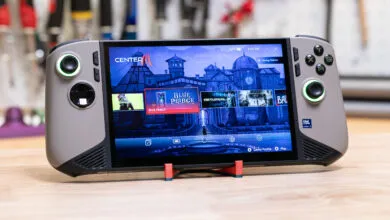
– Lenovo will launch a SteamOS version of its high-end Legion Go 2 handheld in June, expanding the OS’s presence beyond Valve’s own hardware.
– This follows Lenovo’s earlier release of a SteamOS-compatible, lower-end Legion Go S, which performed better than its Windows counterpart in tests.
– Valve has been expanding SteamOS compatibility, offering manual installation for AMD handhelds like the ROG Ally and labeling compatible software.
– The new SteamOS Legion Go 2 will feature high-end specs, including a Ryzen Z2 Extreme processor, but will start at a premium price of $1,199.
– SteamOS may soon expand to non-AMD devices, as Valve is developing an Arm-based version for its upcoming Steam Frame VR headset.
The gradual expansion of SteamOS continues to reshape the PC gaming handheld market, offering a compelling Linux-based alternative to Windows. This week at CES, Lenovo revealed plans to launch a version of its powerful Legion Go 2 handheld with Valve’s SteamOS pre-installed, set to arrive in June. This move signals growing momentum for the platform and hints at a future where SteamOS could extend its reach to hardware beyond just AMD-based systems.
This announcement is not entirely unexpected, given the trajectory of recent developments. Lenovo previously made headlines as the first major hardware manufacturer outside of Valve to adopt SteamOS, releasing a compatible version of its more budget-friendly Legion Go S nearly a year ago. Independent testing at that time revealed the SteamOS variant often delivered superior performance on popular games compared to its Windows counterpart running on identical hardware.
Valve has been actively working to broaden SteamOS adoption. Following the introduction of its SteamOS Compatible certification program last May, the release of SteamOS version 3.7 enabled manual installation on other AMD-powered handhelds, such as the Asus ROG Ally and the original Legion Go. The inclusion of the new Legion Go 2 into this ecosystem provides users who prefer SteamOS with a ready-made, high-performance option, eliminating the need to assemble a custom “Steam Machine” from individual components.
The upcoming SteamOS model will share the same robust specifications as its Windows-based sibling. It is expected to feature an AMD Ryzen Z2 Extreme processor, 32GB of LPDDR5X memory, and a vibrant 8.8-inch OLED display with a 1920×1200 resolution. This premium hardware comes with a significant price tag, starting at $1,199.
While SteamOS gains ground on AMD architecture, its compatibility has been notably absent from the broader world of devices using Arm processors. This limitation may soon be addressed. Valve’s forthcoming Steam Frame VR headset is reported to run a new iteration of SteamOS specifically engineered for its Arm-based hardware. This development opens the door to the possibility of future SteamOS versions that could support a wider array of devices, potentially including other handhelds or laptops built on Arm platforms.
(Source: Ars Technica)