Top PCIe 5.0 SSDs for Gaming in 2025: Must-Have Gen 5 Drives

▼ Summary
– The WD Black SN8100 is the top PCIe 5.0 SSD for gaming, offering outstanding speed, consistent performance, and competitive pricing for lower-capacity models.
– PCIe 5.0 SSDs were initially unpopular due to high costs and heat issues, but newer models like the SN8100 have improved significantly.
– The Crucial P510 is the best budget PCIe 5.0 SSD, balancing performance and affordability while outperforming PCIe 4.0 drives.
– The Corsair MP700 Elite excels in cooling, making it ideal for systems struggling with PCIe 5.0 SSD heat, though it sacrifices some speed.
– PCIe 5.0 SSDs are backward-compatible with PCIe 4.0 slots but will operate at reduced speeds, and they remain pricier than PCIe 4.0 alternatives.
Gaming PCs demand cutting-edge storage solutions, and PCIe 5.0 SSDs now deliver the speed and reliability that serious players need. While early models struggled with heat and pricing, the latest generation offers tangible benefits for those chasing peak performance. These drives aren’t just theoretical upgrades, they slash load times and handle massive game files with ease, making them worthy investments for high-end rigs.
Leading the pack is the WD Black SN8100, a powerhouse that redefines what’s possible in consumer SSDs. Its 14,000 MB/s sequential read/write speeds and exceptional 4K random performance leave older generations in the dust. SanDisk’s proprietary controller and 218-layer TLC NAND ensure consistency, while competitive pricing (outside the 4TB model) makes it accessible for enthusiasts. The single-sided design guarantees compatibility with most M.2 slots, and thermal management is surprisingly efficient for a Gen5 drive.
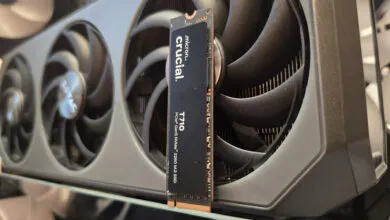
Budget-conscious builders shouldn’t overlook the Crucial P510, which balances cost and capability. Phison’s energy-efficient E31T controller and Micron’s 276-layer flash keep temperatures in check, though the lack of DRAM cache slightly limits sustained performance. Still, it outperforms PCIe 4.0 alternatives without breaking the bank.
Heat remains a concern for PCIe 5.0 adoption, but the Corsair MP700 Elite tackles this head-on. Its robust heatsink and optimized Phison/Kioxia components result in temperatures 32°C cooler than some rivals. While sequential speeds trail the SN8100, its random 4K throughput and stability make it ideal for systems with limited cooling.
Key considerations when upgrading:
- Capacity matters: Most PCIe 5.0 drives start at 1TB, with 4TB options carrying premium pricing.
- Backward compatibility: These SSDs work in older PCIe 4.0/3.0 slots but at reduced speeds.
- Cooling is critical: Even improved Gen5 models benefit from motherboard heatsinks or aftermarket solutions.
Beyond raw benchmarks, the real-world impact is undeniable. Games load noticeably faster, and storage bottlenecks vanish during asset-heavy scenarios. As prices stabilize, PCIe 5.0 SSDs are transitioning from luxury to mainstream, especially for builders future-proofing their systems.
For those still hesitant, PCIe 4.0 drives remain excellent value, but the performance delta with Gen5 is no longer negligible. Whether you prioritize speed (WD Black SN8100), affordability (Crucial P510), or thermals (Corsair MP700 Elite), there’s a PCIe 5.0 SSD tailored to your needs.
Testing methodology: We evaluate drives using synthetic benchmarks (ATTO, CrystalDiskMark) and real-world tasks like game installations and level loading. Thermal performance is stress-tested to identify throttling risks, ensuring recommendations reflect actual gaming conditions.
Final verdict: The WD Black SN8100 stands as the undisputed champion, but the P510 and MP700 Elite prove Gen5 technology is maturing rapidly. Whichever you choose, these drives represent the next evolution in gaming storage.
(Source: PCGAMER)