Biwin Black Opal NV7400 SSD Review: Speed & Performance Tested
▼ Summary
– The Biwin NV7400 SSD offers exceptional value with a $120 price for 2TB, delivering strong endurance and low temperatures despite middling 4K performance and variable NAND quality.
– SSDs stand out as a rapidly advancing tech sector, with prices consistently dropping, making the NV7400 a prime example of affordability in storage solutions.
– Biwin, a relatively new brand in Western markets, focuses on flash storage and has recently expanded into consumer SSDs, including the budget-friendly NV7400.
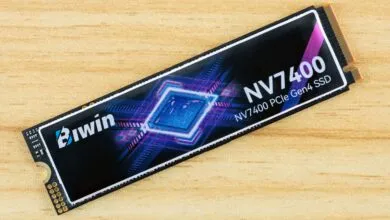
– The NV7400 features a DRAMless Maxiotek controller and either Micron or YMTC 232-layer TLC NAND, with advertised speeds of 7,400 MB/s read and 6,500 MB/s write.
– While the NV7400 excels in value and endurance, it lags in random 4K performance and synthetic benchmarks compared to competitors, making it ideal for budget-conscious users prioritizing cost over peak performance.
The Biwin Black Opal NV7400 SSD redefines budget storage with blazing speeds and unbeatable value, though it makes some compromises to hit that rock-bottom price. This 2TB PCIe 4.0 drive delivers where it counts, sequential performance and endurance, while keeping costs shockingly low. But is it the right choice for your needs? Let’s dive in.
At just $120 for 2TB, the NV7400 stands as one of the most affordable PCIe 4.0 SSDs available today. That translates to an almost unbelievable six cents per gigabyte, undercutting even budget favorites like the Crucial P310 or WD SN850X. For context, most drives in this category hover around eight to ten cents per gig. Biwin achieves this by leveraging a DRAMless Maxiotek MAP1602A Falcon Lite Gen4 controller and either Micron or YMTC 232-layer TLC NAND, though the exact NAND supplier varies, adding a layer of uncertainty.
Performance-wise, the NV7400 nearly hits its advertised 7,400 MB/s read and 6,500 MB/s write speeds in synthetic tests, landing at 7,370 MB/s and 6,336 MB/s respectively. These figures are impressive for the price, but random 4K writes lag behind competitors, averaging just 229 MB/s. That’s noticeably slower than most PCIe 4.0 or 5.0 drives, which typically exceed 300 MB/s. In real-world gaming, however, the difference is less pronounced. The drive posted a respectable 7.4-second load time in Final Fantasy XIV’s benchmark, proving it’s no slouch for everyday use.
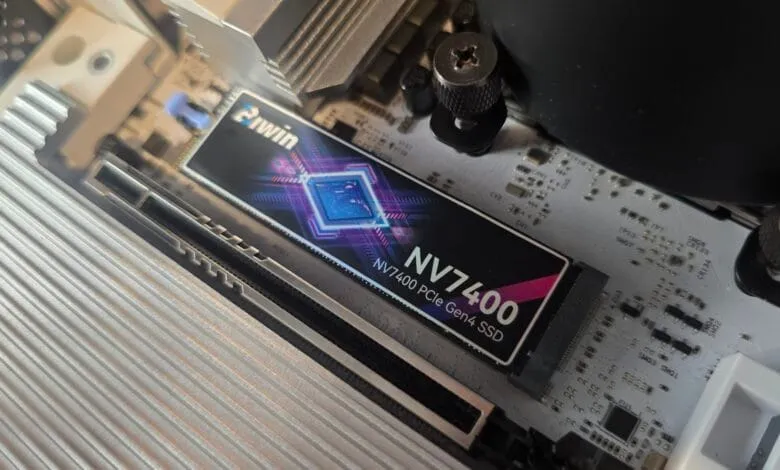
Where the NV7400 truly shines is thermals and endurance. Even under heavy loads, temperatures peaked at just 48°C, making it ideal for tight spaces like PS5 expansions or compact PCs. Its 2,000 TBW rating (terabytes written) also outclasses many pricier alternatives, ensuring long-term reliability.
So who should buy it? If you need a high-capacity secondary drive or a cost-effective upgrade for consoles, the NV7400 is hard to beat. But if snappy random writes or top-tier performance are priorities, alternatives like the Crucial P510 or Corsair MP700 Elite might be worth the extra cash.
Ultimately, the Biwin Black Opal NV7400 isn’t the fastest SSD on the market, but it doesn’t try to be. Instead, it delivers exceptional value, proving you don’t need to break the bank for solid PCIe 4.0 performance. Just keep an eye on which NAND version you’re getting.
(Source: PC Gamer)