Baldur’s Gate 3 Director: Public Company Model Is Broken
▼ Summary
– Michael Douse argues the problem isn’t high budgets but the public company model being broken in entertainment, which hinders connecting creators with audiences.
– George Broussard believes rising game development costs from millions to hundreds of millions have killed originality and risk-taking in AAA games.
– Broussard states high costs lead publishers to rely on bi-yearly sequels of top IPs and avoid new games due to financial risks.
– Douse suggests success requires everyone involved to share the same mission, which is rare, and blames traditional product pipeline personnel for the issues.
– Dan Houser commented that AI in gaming is not as useful as some claim, adding to the broader industry discussion on innovation and costs.
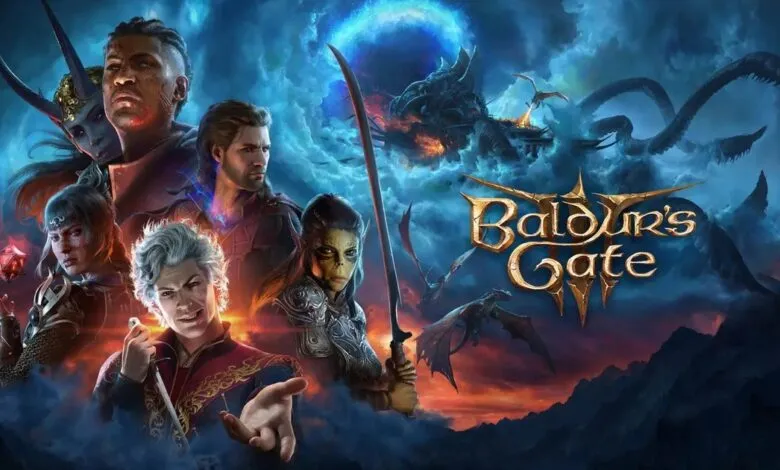
The director behind Baldur’s Gate 3 has weighed in on the state of modern game development, suggesting that while massive budgets don’t automatically produce poor games, the public company model is fundamentally broken for the entertainment industry. Michael Douse, publishing director at Larian Studios, responded to recent comments from industry veterans about the challenges facing major game development today.
Dan Houser, co-founder of Rockstar Games and writer for the Grand Theft Auto series, recently observed that the video game industry has become “overly focused on making money.” This perspective was quickly echoed by George Broussard, co-creator of Duke Nukem 3D, who added his own commentary on the situation. Broussard pointed to the dramatic inflation of development costs as the primary culprit, noting how budgets have skyrocketed from millions to hundreds of millions of dollars over the past two decades.
“Welcome to 2006,” Broussard tweeted in response to Houser’s interview. He explained that when game development costs jumped from the $3-5 million range around the year 2000 to $30 million during the Xbox 360 era, and then eventually reached the staggering $100-250 million range, the landscape for creative risk-taking fundamentally changed. According to Broussard, publishers simply cannot afford to take chances with such enormous sums at stake.
This financial reality, he argues, explains why major publishers repeatedly return to the same established franchises with biannual sequels rather than investing in original concepts. The sheer scale of investment required for modern blockbuster games has created an environment where financial safety takes precedence over innovation. Broussard noted this trend isn’t particularly new but has intensified with what he describes as “AAAA” tentpole games requiring massive financial commitments.
Douse offered a more nuanced perspective in his response. “I don’t think it’s actually true that big budget equals poor quality,” he stated. The real issue, according to the Baldur’s Gate 3 director, lies in achieving alignment among all stakeholders. When everyone involved shares the same creative vision and mission, exceptional games can emerge regardless of budget size. However, he acknowledges this unified approach occurs in only about one out of ten major projects.
The core problem, Douse suggests, rests with decision-makers entrenched in traditional product pipeline thinking. These individuals either fail to recognize changing audience dynamics or perceive innovation as threatening to established business models. Additionally, they often struggle to communicate these creative opportunities effectively to investors focused solely on returns.
Douse specifically highlighted how modern technology should theoretically make it easier than ever for creators to connect with their audiences directly. Yet the public company structure, with its quarterly earnings pressures and shareholder expectations, creates barriers that prevent this natural connection from flourishing. He characterized the situation as partly stemming from “dim-witted self-preservation” and partly from “genuine lack of vision and leadership.”
Meanwhile, Houser’s original comments also touched on another contentious topic in game development: artificial intelligence. The Rockstar co-founder acknowledged that while his team is experimenting with AI tools, the technology hasn’t yet reached the revolutionary potential that many companies claim. This measured approach stands in contrast to the industry’s broader enthusiasm for AI implementation across various development processes.
(Source: Games Industry)