▼ Summary
– Texas officials are urging residents to inspect pets and livestock and use pesticide bait after a New World Screwworm infection was confirmed in Mexico less than 70 miles from the US border.
– The New World Screwworm is a parasitic fly that lays eggs in wounds on warm-blooded animals, with larvae that burrow into and consume living flesh, creating deadly wounds.
– This fly was once endemic in the US and hindered the livestock industry until a successful eradication program using sterile male flies eliminated it from the country by around 1966.
– The eradication effort continued southward, pushing the fly out of Mexico and Central America, with Panama maintaining a barrier at the Darién Gap until a breach in 2022 allowed the flies to move north.
– The current threat is escalating, with a case found in Veracruz in July and the most recent, closest case confirmed in Sabinas Hidalgo, Nuevo León, bringing the fly near the border.
Residents of Texas are being urged to carefully inspect their pets and livestock following a confirmed case of the flesh-eating New World Screwworm detected just 70 miles from the United States border. Authorities are emphasizing the immediate application of pesticide bait as a critical protective measure. This alarming development has put agricultural and wildlife officials on high alert due to the parasite’s devastating potential.
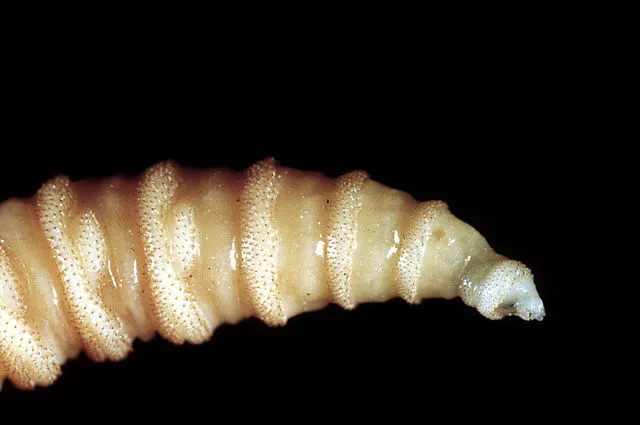
The New World Screwworm is a particularly gruesome parasitic fly. It targets warm-blooded animals, depositing hundreds of eggs into even the smallest of wounds or openings. The larvae that hatch possess a horrifyingly unique characteristic: they resemble screws, and they behave like them, boring and twisting deep into the host’s tissue. As they voraciously consume living flesh, they create grotesque, expanding wounds that are often fatal for livestock and wildlife.
This aggressive pest was once a major scourge within the United States, causing significant damage to the livestock industry. A landmark eradication program launched in the 1950s, which relied on releasing sterile male flies and rigorous monitoring, successfully pushed the population southward. The U.S. was declared free of the screwworm by 1966, and Mexico achieved a similar victory in the 1980s. The effort continued, and by 2006, the parasite had been eliminated from Central America. Panama served as a final barrier, maintaining a fly-free zone at the Darién Gap along the Colombian border. This defensive line was compromised in 2022, allowing the screwworms to begin their northward advance.
The situation has escalated rapidly. In July, Mexican health officials identified an infection in Veracruz, approximately 370 miles from the border. The threat level increased substantially this week when Mexico’s National Service of Agro-Alimentary Health, Safety, and Quality (SENASICA) confirmed a new case in Sabinas Hidalgo, Nuevo León. This location marks the closest known infestation to the United States, dramatically heightening concerns about a potential cross-border spread.
(Source: Ars Technica)