Find Hub ‘Mark as Lost’ adds biometric lock, hides Quick Settings
▼ Summary
– Android 17 introduces biometric authentication for Find Hub’s Mark as lost feature, hides Quick Settings, and disables new Wi-Fi/Bluetooth connections.
– Remote Lock and Theft Detection Lock are now enabled by default on Android 17 devices globally, with extended protections to Android 10+ in select markets.
– Android 17 reduces PIN/password guess attempts and increases wait times between failures, and adds IMEI access via the lock screen on Android 12+.
– Advanced Protection on Android 17 restricts accessibility services, disables device-to-device unlocking and Chrome WebGPU, and integrates scam detection for chat notifications.
– Android 17 enables carriers to disable 2G by default, and Google partners with banks for verified financial calls that end spoofed calls automatically.
At The Android Show, Google unveiled a fresh wave of security and privacy upgrades for its mobile platform, with Android 17 taking center stage.
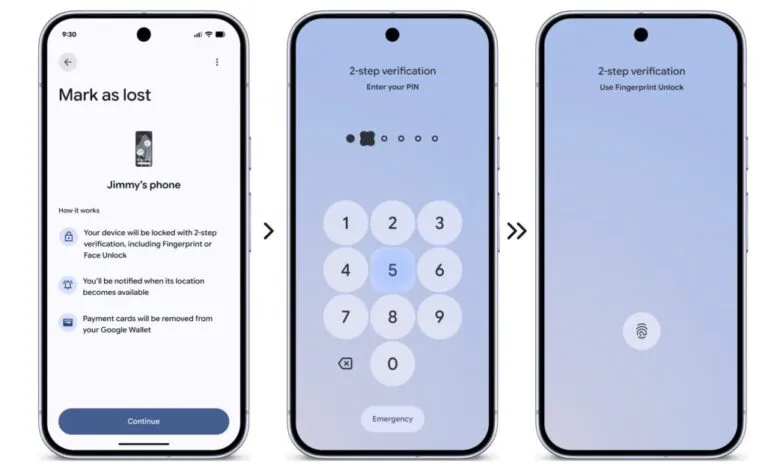
The Find Hub ‘Mark as lost’ feature now requires biometric authentication in addition to a passcode or PIN. Once a device is marked as lost, Quick Settings are hidden and new Wi-Fi or Bluetooth connections are blocked, making it harder for unauthorized users to tamper with the device.
On Android 17, supported devices have dramatically reduced the number of PIN or password guesses allowed before a lockout. The wait times between failed attempts have also been lengthened, adding another layer of brute-force protection.
Remote Lock and Theft Detection Lock are now enabled by default on all new, factory-reset, or upgraded Android 17 devices globally. In high-demand markets such as Argentina, Chile, Colombia, Mexico, and the UK, these protections are being extended to any device running Android 10 or higher.
To help recover lost phones, a device’s IMEI can now be accessed directly from the lock screen on Android 12 and above. Law enforcement, manufacturers, and mobile carriers can use this unique identifier to quickly verify ownership and return the device. Users can disable this feature at any time in settings.
Advanced Protection on Android 17 introduces several new controls: it removes accessibility service access from apps not explicitly labeled as accessibility tools, disables device-to-device unlocking, turns off Chrome WebGPU support, integrates scam detection for chat notifications, and adds Android Enterprise support.
For Chrome on Android users with Safe Browsing enabled, Google will now evaluate APK downloads for known malware and block the download before it starts.
Live Threat Detection already monitors app behavior for suspicious activity. New alerts now cover SMS forwarding and accessibility abuse. A new dynamic signal monitoring feature analyzes app-system interactions for known suspicious patterns in real time. This will be enabled on Android 17, with the full range of protections rolling out in the second half of 2026. This allows the system to warn you when an app changes or hides its icon, launches from the background, or misuses accessibility permissions. It can also push down rules dynamically to defend against emerging threats.
Android OS verification on Android 17 checks that your device is running an official, widely distributed build of the operating system.
Android 17 also lets carriers disable 2G by default, shielding users from legacy vulnerabilities in areas where 2G infrastructure is no longer maintained.
Google is collaborating with select banks and financial institutions on verified financial calls. When you receive a call that appears to be from your bank, Android asks the app to confirm the call. If the app says no call is being made, the system automatically ends the call. Banks can also designate certain numbers as inbound-only, so any incoming call from those numbers is ended immediately. This feature will roll out in the coming weeks for Revolut, Itaú, and Nubank customers on Android 11 and above, with wider availability later this year.
(Source: 9to5google.com)