Can a Seattle firm capture 15,000 years of solar wind in 4 hours?

▼ Summary
– The Sun produces helium-3 during nuclear fusion, which escapes into the solar wind and bombards celestial bodies like the Moon over billions of years.
– Because the Moon lacks a magnetic field and atmosphere, its surface soil traps helium-3 ions, resulting in higher concentrations than on Earth.
– Scientists believe helium-3 could eventually provide energy through fusion reactions, though it currently has practical uses in cooling and medical research.
– Geologist Harrison Schmitt is a notable proponent of lunar mining, viewing helium-3 as a potentially profitable material to extract and return to Earth.
– Companies such as Interlune are interested in mining operations, but preliminary studies are needed to determine the physical feasibility of extracting helium-3 from lunar regolith.
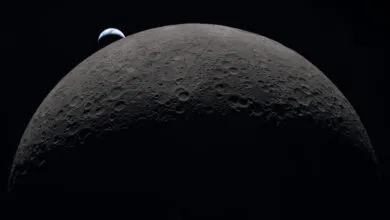
Helium-3 mining on the Moon represents a frontier where ancient solar history meets modern energy ambition. The Sun generates this rare isotope during its nuclear fusion processes, and a portion of it escapes into space as part of the solar wind. Unlike Earth, which is protected by a magnetic field and thick atmosphere, the Moon lacks any such defenses. Consequently, for billions of years, this stream of charged particles has bombarded the lunar surface directly.
The lunar regolith, or soil, has absorbed these helium ions over eons. While the ions penetrate only slightly into individual soil grains, meteorite impacts have periodically churned the surface, mixing some of the resource just below the top layer. Although concentrations are low,typically ranging from 10 to 20 parts per billion in titanium-rich soils that retain the ions best,the density is significantly higher than anywhere on Earth. This scarcity makes the Moon one of the few plausible locations for profitable extraterrestrial mining.
Practical Applications Beyond Fusion
While the long-term dream involves using helium-3 for clean nuclear fusion energy, immediate commercial viability lies in other sectors. Geologist and Apollo 17 astronaut Harrison “Jack” Schmitt has been a prominent advocate for the material’s potential. He notes that near-term applications include cooling materials to ultra-low temperatures, supporting medical research, and enabling neutron detection technologies. These uses establish helium-3 as a critical commodity with existing demand, separate from the more distant goal of fusion power generation.
This economic reality has attracted interest from several private enterprises, including the Seattle-based company Interlune. The firm aims to extract helium-3 from the lunar surface, but the logistical challenges are immense. Before deploying full-scale industrial extractors to sift through tons of regolith, engineers must first validate the physical practicality of the operation. Determining whether the extraction process can yield enough material to justify the cost is the essential next step in turning this scientific curiosity into a viable industry.
(Source: Ars Technica)