Xbox Dismantles Future to Rebuild an Unreachable Past
▼ Summary
– Fallout was created at Interplay in the 1990s because the publisher was distracted by other projects, allowing a small team to develop a post-apocalyptic RPG with moral greyness and player consequences without proper oversight.
– The team rejected high fantasy, instead creating a setting that combined 1950s culture and futurism with a post-apocalyptic world where some humans survived in vaults while others struggled in an irradiated wasteland.
– Xbox CEO Asha Sharma announced a major restructure in July, leading to 3,200 job cuts and the departure of studios like Double Fine and Arkane Lyon, signaling a shift away from funding independent creative studios.
– Xbox is now focusing on its strongest, older franchises like Halo and Gears of War rather than incubating new ideas, but layoffs at studios like Bethesda and id Software are damaging the teams needed to sustain these series.
– The article argues that without supporting strange, creative projects from studios like Double Fine and Arkane Lyon, Xbox risks having no new hit franchises to replace aging ones when they eventually fail.
Nearly a decade ago, a story was passed down from those who were there, and it’s worth revisiting now. Fallout was born almost by accident, a product of its publisher’s neglect. During Interplay’s chaotic 1990s heyday, the studio was a noisy, cliquey environment reminiscent of high school. The team that would create Fallout was like the AV club on the periphery, given a vague mandate to adapt a tabletop ruleset. Lead producer Tim Cain would send out emails saying, “I’m in Conference Room Two with a pizza,” and anyone interested could join on their own time to brainstorm.
The group quickly dismissed high fantasy. They toyed with time travel and generation ships, but eventually settled on a setting that combined elements of both. A post-apocalyptic world steeped in 1950s culture and futurism, where a fraction of humanity survived in vaults while the rest scraped by in an irradiated wasteland. This concept was never formally pitched to Interplay’s leadership. The publisher was distracted by sports games, an online division, and a new Dungeons & Dragons license. While no one was watching, the Fallout team infused their game with moral ambiguity and a commitment to tracking player consequences. It simulated drug addiction, allowed players to blow up NPCs with dynamite, and introduced the militant hoarders of the Brotherhood of Steel. The result was a decidedly odd RPG, and only after it became an unexpected hit did Interplay recognize Fallout as a valuable property.
There is no chance a series like Fallout could be kickstarted at Xbox today. Yes, CEO Asha Sharma is clearly interested in continuing the blockbuster franchise that Fallout has become; a recent Bloomberg report indicated that Obsidian’s planned sequel to Avowed had been canceled in favor of another Fallout. But whatever Xbox’s next Fallout might have been,the oddity that thrives without oversight and unexpectedly becomes beloved,died on July 6, when Sharma announced “the most significant restructure in Xbox history.”
Over what will be a painful and fearful year for Xbox employees, 3,200 people are set to leave the company. Sixteen hundred have already lost their jobs, and four studios have been let go. Double Fine and Compulsion will return to independent status; Ninja Theory and Undead Labs have found new homes. A fifth studio, Arkane Lyon, will likely be handed off to a new owner. The alternative, too grim to consider, is that Lyon will meet the same fate as its Austin counterpart, cut down like the Sycamore Gap tree.
If Xbox wants to find the Fallouts of tomorrow, it needs to incubate strange new ideas.
The reasoning behind both the acquisition and departure of these studios is fairly clear. For a long time, under former CEO Phil Spencer, the prevailing Xbox strategy was to fuel Game Pass with the widest possible variety of irresistible games. During this push to make Xbox a subscription company, even something as wonderfully esoteric as Obsidian’s Pentiment had its place, signaling that Game Pass was home to both bombastic shooters and monkish murder investigations.
But Game Pass hasn’t quite worked out, and Xbox’s priorities now resemble those of a traditional big-budget publisher. “It is neither possible nor desirable to own every great independent studio,” Sharma said. “We have also learned that we are not the best home for every type of studio; in a typical year, we lost 64 cents for every dollar we invested.”
Nobody expects Xbox to steer unprofitable studios through the games industry’s most dramatic downturn in decades (though it could, were Microsoft not funneling billions into its AI furnace and chasing never-ending growth for shareholders). Still, Sharma has made an overcorrection. Funding developers like Double Fine and Arkane was not a favor or a subsidy, but an investment in new ideas that Xbox desperately needs.
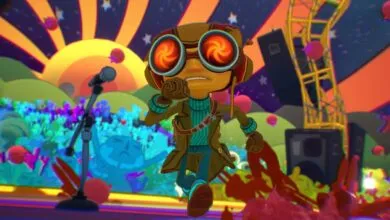
These studios have proven themselves to be dizzyingly creative. In its history, Double Fine has only made two sequels,Costume Quest 2 and Psychonauts 2,amid a wildly original catalog that includes a sentient lighthouse simulator, a body-swapping Metroidvania, an XCOM-style riff on feudal genealogy, and an RTS tribute to heavy metal album art.
Arkane Lyon, meanwhile, is widely acknowledged as one of the medium’s leaders in dense, engrossing world design. That’s evident to anyone who has played Dishonored, Deathloop, or Dark Messiah of Might and Magic. Arkane’s worldbuilding has combined industrial Victoriana and bohemian witch covens, subarctic fishing villages and immortal party people. These unlikely mashups have felt grounded and believable, much like Fallout did when Cain’s team married Atomic Age kitsch to wasteland horror.
Not all of Double Fine or Arkane’s games have been breakout hits. In fact, most haven’t. But if Xbox wants to future-proof its output, to find the Fallouts of tomorrow, it needs to incubate strange new ideas. To take the relatively inexpensive risks that, over the long run, can produce behemoth franchises.
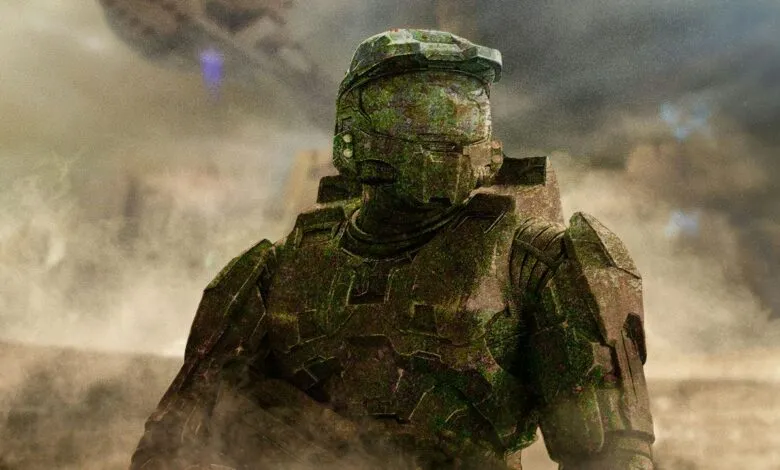
Instead, it appears to be doubling down on series that are more than two decades old. Few would disagree that Halo’s best days are behind it; the very existence of Halo: Campaign Evolved is tacit acknowledgement of that fact. Gears of War: E-Day looks like chunky, old-fashioned fun, but the novelty of having straightforward cover shooters back in the age of live-service will not hold forever. The original creators of these games have long since moved on, and their successors are beholden to old formulae. Eventually, these ancient husks will disintegrate into dust, and Xbox will be left with nothing new to turn to.
Eventually, these ancient franchises will disintegrate into dust, and Xbox will be left with nothing new to turn to.
“We are shifting from a planning model primarily centered on what’s next for each independent studio to one that focuses on our strongest franchises,” Bethesda head of studio Jill Braff wrote in a recent email to staff. “From there, we’ll align the right talent, technology, and resources across the organisation to deliver on those priorities.” It’s a statement that provides a glimpse into Microsoft’s new mindset: a return to the dying days of the Xbox 360, driven by top-down mandates, and intended to ensure the company’s hardware is backed up by killer apps.
Even by its own stated goals, however, Xbox seems to be setting itself up to fail. Inarguably, one of Bethesda’s strongest franchises is The Elder Scrolls. Yet in the wake of Sharma’s layoffs, “as much as half” of the team behind The Elder Scrolls Online is gone. What’s more, over 50 employees at Bethesda Game Studios have been let go, an outcome that will have a “substantial and cascading effect” on the making of The Elder Scrolls 6, according to multiple employees at the studio.
Meanwhile, id Software has been so dramatically drained of talent that one laid-off worker told GamesBeat they were “not convinced there is a viable way forward.” If Xbox is to double down on venerable series like Doom and Quake, you would imagine it might need the help of the developers who have successfully reinvented Doom on three separate occasions since the millennium. Are these the acts of somebody throwing resources behind sure bets?
Sharma’s talk of streamlining, simplifying, and flattening Xbox’s organization more closely resembles the startup mentality of Silicon Valley, a worldview that values mobility over stability. It echoes Elon Musk, whose typical approach is to yank wires out of the machine and discover afterwards whether any of them were essential. It’s not a way of thinking that necessarily belongs in the big-budget game business.
Listen to developers, and they’ll tell you that great games are built by teams with a shared shorthand and institutional knowledge that can only be fostered over long years in each other’s company. Every time an outfit like id Software or Bethesda Game Studios is wracked by layoffs, that bond is damaged, and the scars show in subsequent projects.
If Obsidian is now beginning work on its first Fallout game in a decade and a half, it does so at a disadvantage, minus a quarter of its staff. The studio has long produced great work under dire circumstances, and will likely do so again. Over the course of its fraught history, uncertainty and instability have sadly been the norm rather than the exception.
But as for the franchises that will follow Fallout, the ones that will ensure Xbox can survive for another two decades and sell its consoles far into the future, it’s unclear where they’ll come from. The incubation chambers are broken, and nothing new grows.
(Source: IGN)