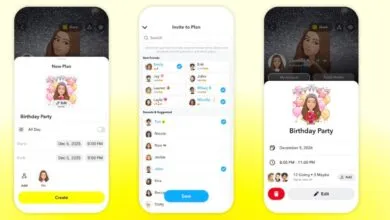
Snapchat Launches Event-Planning Features to Rival Partiful

▼ Summary
– Snapchat is launching Snapchat Plans, a new feature suite designed to help users create, share, and manage real-world events with friends.
– The platform allows hosts to send invitations, track attendance details like time and location, and manage RSVPs directly within one-on-one chats.
– This move positions Snapchat to compete with dedicated event apps like Partiful and Apple’s Invites as young users seek better tools for organizing get-togethers.
– Users can organize various gatherings such as birthdays or study sessions, with features including guest lists, reminders, and a profile section to view all plans.
– The initiative reflects a broader trend of Gen Z prioritizing in-person connections and aims to reduce missed social opportunities caused by lost messages.
Snapchat has officially entered the event-planning market with the launch of Snapchat Plans, a new tool designed to streamline how users organize real-world gatherings. The feature set allows individuals to create, share, and manage events directly within the app, consolidating invitations, schedules, locations, and attendee lists into a single, cohesive interface. This move signals a strategic shift from purely digital communication toward facilitating physical meetups, aiming to capture the growing demand for structured social coordination among younger demographics.
The platform is positioning itself as a direct competitor to Partiful, a widely used digital invitation service that has gained traction as young users increasingly prefer dedicated apps over messy group chats or scattered social media posts. Snapchat’s entry into this space mirrors broader industry trends, following Apple’s own debut of an Invites app last year, which similarly empowers users to craft custom digital invitations for various occasions. By offering these tools, Snapchat aims to reduce the friction often associated with organizing get-togethers, whether they are birthday parties, sports matches, study groups, or casual weekend hangouts.
Creating an event, referred to as a “Snapchat Plan,” is straightforward. Hosts can assign a title, select a specific date and time, and invite up to 200 friends. Each invitation is delivered personally through a one-on-one chat thread, ensuring higher visibility than broadcast messages. Recipients can respond using three distinct statuses: “Going,” “Maybe,” or “Can’t Go.” To enhance usability, Snapchat has introduced a dedicated “My Plans” section on user profiles. This hub provides a quick overview of upcoming, current, and past events. Furthermore, viewing a friend’s profile now reveals shared events, fostering easier coordination among mutual contacts.
Hosts retain significant control once an event is live. They can monitor attendance in real-time, extend invitations to additional guests, and modify event details as necessary. Attendees benefit from full transparency regarding the guest list and the ability to update their RSVP status at any time. Additionally, the system sends automated reminders one hour before the scheduled start time, helping to ensure punctuality and engagement.
This expansion reflects Snapchat’s broader evolution. While the company has long been a staple in online social interaction, it is now actively working to influence how people connect in person. This aligns with the Gen Z preference for authentic, face-to-face interactions over virtual exchanges. As noted in the company’s announcement, the goal is to eliminate common organizational pitfalls.
“No more missed get-togethers because of buried messages, lost details, or forgetting to create an invitation,” the company stated in its blog post. “Snapchat Plans make it easier to organize these special in-person moments with your friends.”
To maintain exclusivity and privacy, all Snapchat Plans are invite-only, ensuring that only those explicitly added by the host can view or join the event.
(Source: TechCrunch)