Vertical Aerospace doubles test fleet with second VX4 as certification nears
▼ Summary
– Vertical Aerospace’s second full-scale VX4 prototype completed its first piloted flight.
– The company aims to accelerate certification by conducting repeated test flights, not just a single first flight.
– The new prototype is designed to help convince regulators of the aircraft’s safety and reliability.
– The test flight took place with a pilot on board, marking a key milestone for the aircraft.
– Vertical Aerospace is based in Bristol and focuses on developing electric air taxis.
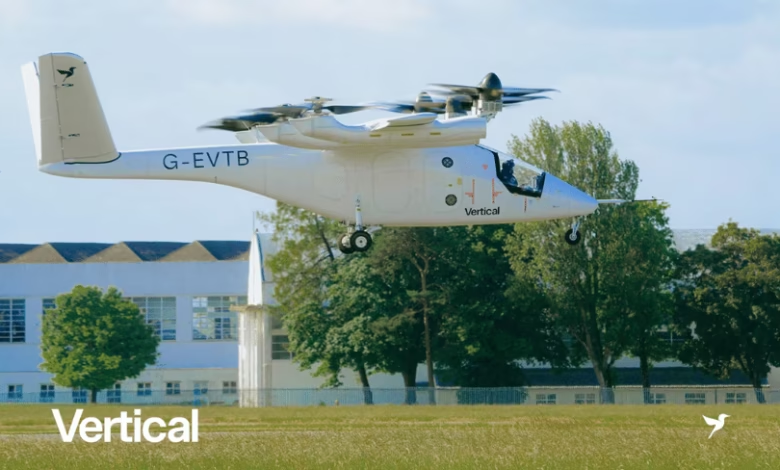
Building an electric air taxi isn’t about a single spectacular flight. It’s about proving you can do it safely, time and again, until regulators sign off. Vertical Aerospace is accelerating that process by doubling its test fleet. The Bristol-based company announced on Tuesday that its second full-scale prototype has completed its first piloted flight, marking a major step toward certification.
This new VX4 aircraft joins an existing test unit, effectively doubling the company’s flight-test capacity. With two prototypes airborne, Vertical can gather more data, refine performance, and demonstrate reliability faster than with a single vehicle. The company believes this is critical as it pushes toward type certification from aviation authorities.
The latest prototype incorporates lessons learned from earlier testing. Engineers focused on improving aerodynamics, battery performance, and flight stability. The aircraft performed a controlled takeoff, hover, and landing during its maiden flight, with the pilot reporting smooth handling throughout.
Vertical Aerospace is among a handful of companies racing to commercialize electric vertical takeoff and landing (eVTOL) aircraft. The goal is to launch short-range urban air taxi services within the next few years. Doubling the test fleet now signals confidence in the VX4 design and a push to meet regulatory milestones on schedule.
With two aircraft now flying, the company can run parallel test campaigns. That means more hours in the air, more data for engineers, and a clearer path toward the day when passengers can book a flight in an electric air taxi.
(Source: The Next Web)