Harbinger Unveils Compact Electric & Hybrid Work Trucks
▼ Summary
– Harbinger, an LA-based EV startup, has unveiled its second vehicle: a medium-duty work truck called the HC Series Cab, available as an all-electric or hybrid model.
– The company is diversifying its business beyond truck chassis, having started selling energy storage products and acquiring autonomous vehicle software company Phantom AI.
– Harbinger has raised significant funding, securing a $100 million Series B in January 2025 and a $160 million Series C in November, and has attracted customers like FedEx and THOR Industries.
– CEO John Harris argues that EVs and hybrids make commercial sense in trucking due to lower total ownership costs and less maintenance, despite headwinds in the passenger EV market.
– The company is vertically integrated, with in-house suppliers for components like batteries and motors, which allows it to build new business lines and create a more stable, diversified company.
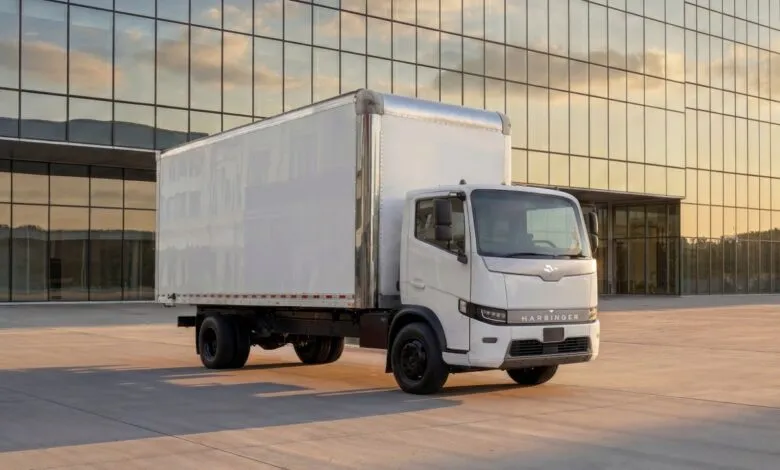
A new contender is entering the commercial vehicle space with a focus on versatility and efficiency. Harbinger, an electric vehicle startup based in Los Angeles, has just introduced its second model: a compact, medium-duty work truck designed for fleets. The new HC Series Cab will be offered in both all-electric and range-extended hybrid configurations, with the hybrid version boasting an impressive range of up to 500 miles. The company highlights the truck’s practical design, which includes easy cab access, a tight turning radius for urban maneuverability, and a flexible chassis ready for various upfits like cargo boxes or flatbeds. Pricing details have not yet been released.
John Harris, Harbinger’s co-founder and CEO, stated that the platform was engineered to solve long-standing fleet compromises. “For too long, fleets have had to compromise between payload, maneuverability, range and onboard capability,” Harris said. He believes their new truck outperforms traditional diesel options by leveraging electrification and a hybrid system to enable more effective work in the field.
Since its founding in 2022, Harbinger has maintained a rapid pace. The company secured a $100 million Series B funding round in January 2025, followed by an even larger $160 million Series C in November. This financial backing has supported the rollout of its initial, larger truck chassis, which has already attracted commercial clients like FedEx and THOR Industries. Those chassis also offer the choice between pure electric and hybrid powertrains.
Harbinger’s strategy extends beyond just manufacturing trucks. The company is actively building a more diversified business portfolio. This began in January with the launch of energy storage products, landing Airstream as its inaugural customer in that segment. In February, Harbinger made its first acquisition by purchasing the autonomous vehicle software firm Phantom AI. This push into new areas is a calculated move to build resilience.
“The more we diversify revenue sources, the better kind of long-term, stable company we build,” Harris explained in a recent interview. He believes this approach makes the company more tolerant of the volatile swings often seen in the U.S. market. While the consumer EV sector faces challenges, Harris is confident in the commercial trucking application. He points to the lower total cost of ownership and reduced maintenance needs as key reasons electric and hybrid systems are a logical fit for fleet operators.
Although Harbinger has not publicly disclosed its 2025 revenue, its first year selling the larger chassis, Harris indicated that the company’s sales were a “multiple” of the entire electric truck market’s size in 2024. A significant part of Harbinger’s model is vertical integration. The company has developed its own internal supply chain for critical components, which now also function as standalone business units.
“We built these verticals of what I think of as our own in-house suppliers,” Harris noted. “We have a battery supplier, which we now sell from. We have a motor supplier, which we’ll now sell from. We have a suspension supplier. We have an axle supplier. All these things are Harbinger suppliers.” This structure not only controls quality and cost but also creates multiple avenues for generating revenue and pursuing new business opportunities as the company grows.
(Source: TechCrunch)