Nicolas Sauvage bets on AI’s boring but crucial side

▼ Summary
– Nicolas Sauvage, founder of TDK Ventures managing $500 million across four funds, believes it takes four years for the best investment bets to become obvious.
– In 2020, Sauvage invested in AI chip startup Groq, now valued at $6.9 billion, which focused on inference and designed its chip by building the compiler first.
– Sauvage pitched and received approval from TDK headquarters to build a corporate venture fund with the mandate to identify the next big thing for TDK and what might kill it.
– TDK Ventures’ portfolio includes technologies like solid-state grid transformers and sodium-ion batteries, selected by identifying bottlenecks four years out and finding founders working on them.
– Sauvage is currently watching physical AI for robots with specific jobs, a potential CPU renaissance for orchestration, and China’s rapid hardware prototyping as a bottleneck signal.
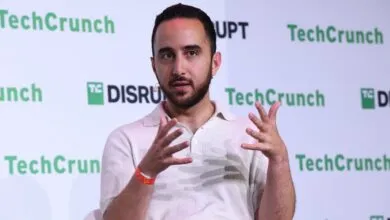
Nicolas Sauvage has a simple thesis: the best investments take about four years to seem completely obvious. He shared that perspective on stage last week at StrictlyVC’s San Francisco event, co-hosted by TDK Ventures, the corporate venture arm he founded in 2019. Today, that arm manages $500 million across four funds, and its standout bet so far is the AI chip startup Groq, valued at $6.9 billion in its last funding round this past fall.
Back in 2020, long before the generative AI boom made infrastructure plays fashionable, Sauvage cut a check to Groq. The company was founded by Jonathan Ross, one of the original engineers behind Google’s Tensor Processing Units. From day one, Groq focused on inference , the heavy computational work that happens every time a model responds to a query. Ross built his chip by designing the compiler first, stripping down the architecture until, as Sauvage puts it, “you can’t remove one part and have it still work.” It may have seemed niche, but Sauvage saw a clear asymmetry. Unlike consumer hardware, which hits a ceiling, demand for inference compounds with every new application and model. He couldn’t have predicted that demand would explode this year, driven by AI agents that make dozens of calls where a single query once sufficed.
Still, Ross got lucky too. A Japanese electronics giant best known for magnetic tape isn’t the most obvious venture partner. Sauvage himself calls TDK Ventures’ existence “very unlikely.” After attending two Stanford lectures , one arguing for corporate VC, one cataloguing its failures , he pitched the idea to TDK headquarters. He’s French, joined TDK through an acquisition in Silicon Valley, and admits, “I’m not Japanese. I don’t speak Japanese; I don’t live in Tokyo.” But he refused to take no for an answer, and eventually got the green light to build a fund answering one question: What’s the next big thing for TDK, and what might kill it?
The portfolio he’s assembled since then includes technologies that have become far more interesting to VCs over the past year: solid-state grid transformers, sodium-ion batteries for data centers, and alternative battery chemistries that bypass the geopolitical fragility of lithium and cobalt. The discipline behind every bet is the same: identify the bottleneck four years out, then find the founders already working on it.
So what’s next? Sauvage is watching physical AI closely , not all of robotics, but robots with a highly specific job. His portfolio includes Agility Robotics, which focuses on the mundane but critical task of moving things around warehouses facing labor shortages. Another company, Swiss-based ANYbotics, builds ruggedized robots for environments too hazardous for humans. The through-line is clarity: these robots don’t try to do everything. They do one hard thing reliably.
Sauvage also sees the compute stack shifting again. GPUs dominated training, the parallel computation of teaching a model. Inference chips like Groq’s are reshaping what happens when that model speaks , faster, cheaper, at scale. Now he argues that CPUs are due for a renaissance. They’re not the most powerful or fastest chips, but they’re the most flexible, ideal for the branching logic of orchestration. When an AI agent delegates tasks, checks progress, and loops back across dozens of steps, something has to manage the choreography. That something increasingly looks like a CPU.
Then there’s China. A recent report from Eclipse, a venture firm he follows, documents what Sauvage calls “vibe manufacturing” , the rapid, AI-assisted iteration of physical hardware prototyping, mirroring what vibe coding did for software. Chinese manufacturers, the report found, are compressing the design-build-test cycle for physical products in ways Western supply chains can’t yet match. For Sauvage, it’s a bottleneck signal, and he’s already moving on it with TDK Ventures’ investments. One remaining unsolved problem, he says, is dexterity. Models are improving fast enough that physical AI feels inevitable, but the physical fluency to match is still missing. The countries and companies that figure out how to iterate on atoms as fast as others iterate on code will hold a manufacturing advantage. That’s the wave Sauvage is positioning TDK Ventures for today.
(Source: TechCrunch)