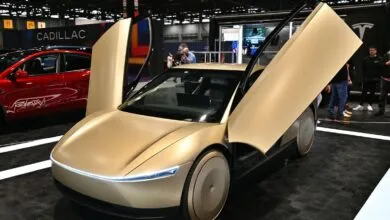
Tesla Ditches FSD One-Time Purchase, Goes Subscription-Only
▼ Summary
– Tesla is discontinuing the standalone purchase of its Full Self-Driving (FSD) feature and will only offer it as a monthly subscription starting February 14th.
– This marks a major shift from marketing FSD as a one-time “appreciating asset,” which once cost up to $15,000 and is now $8,000 or a $99/month subscription.
– The change occurs as Tesla faces slipping sales and precedes its earnings report, with growing the FSD subscription base being a key condition for CEO Elon Musk’s approved pay package.
– Musk’s past predictions of FSD enabling a profitable robotaxi network remain unfulfilled, with current limited, supervised trials in only two cities.
– Tesla faces regulatory criticism, including a California DMV ruling that its “Full Self-Driving” name is misleading because the system requires active driver supervision.
Tesla has made a significant change to how customers can access its advanced driver-assist technology. The company is discontinuing the one-time purchase option for its Full Self-Driving (FSD) software, shifting entirely to a subscription-only model. This strategic pivot arrives during a period of declining vehicle sales and ongoing questions about the timeline for its promised autonomous robotaxi network.
The announcement, made by CEO Elon Musk, marks a dramatic departure from Tesla’s long-standing sales approach. For years, FSD was marketed as a premium, one-time upgrade that owners were encouraged to buy early, with Musk famously suggesting its value would increase over time, transforming vehicles into appreciating assets. The price once reached $15,000 before being reduced to $8,000 for a permanent license. The subscription, priced at $99 per month, will now be the sole method of obtaining the system.
Musk did not provide a specific reason for the change, which comes just ahead of the company’s upcoming earnings report. The move does, however, tie directly into the ambitious performance targets linked to his recently approved compensation package. A core condition for Musk to receive potential payouts worth up to a trillion dollars is expanding the FSD user base, with a requirement to secure 10 million active subscribers.
This subscription push contrasts sharply with past promises. Early on, Musk assured customers that buying FSD upfront was a smart investment because the software’s capabilities, and its price, would only go up. He envisioned a future where the technology would become so advanced that Tesla owners could generate income by adding their cars to a fully autonomous robotaxi fleet. While the price did initially climb, it ultimately fell, and the robotaxi vision remains largely unrealized.
Progress toward that autonomous future has been slow. Last year, Musk projected that half of the U.S. population would have access to Tesla robotaxis by the end of 2025. The current reality is far more limited, with only a small number of company-operated vehicles, equipped with safety drivers, available in select cities like Austin and San Francisco. This cautious rollout differs from competitors like Waymo, which operates driverless vehicles in some areas.
The shift to subscriptions also presents practical challenges for existing owners. Many older Tesla vehicles lack the necessary computing hardware to run the latest FSD software and would require a costly retrofit, a process Musk himself has described as “painful.” Furthermore, Tesla continues to face regulatory scrutiny over the FSD name. Authorities, including California’s Department of Motor Vehicles, have ruled that marketing the system as “Full Self-Driving” is misleading, as it requires constant driver supervision and does not make the vehicle autonomous.
(Source: The Verge)