Who Is AI Nostalgia Slop Actually For?
▼ Summary
– Generative AI videos are flooding the internet, featuring idealized, nostalgic depictions of the 1980s and 1990s with anachronistic details and dreamlike visuals.
– These videos often use deepfakes of celebrities like Fred Rogers in absurd scenarios, created with tools like OpenAI’s Sora, and are widely viewed despite their poor quality.
– OpenAI benefits from this content by promoting its technology and normalizing AI-generated videos as entertainment through its easy-to-use Sora app.
– The content is criticized as unimaginative and formulaic, reflecting the decline of monoculture and failing to deliver on the promise of democratizing creative art.
– AI-generated videos are seen as a fleeting trend designed to generate hype, lacking lasting value and quickly becoming tiresome due to their sheer volume and repetitive nature.
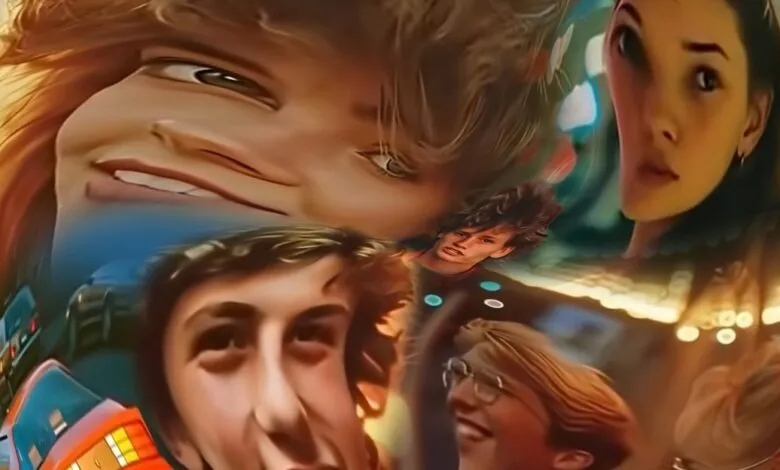
A wave of artificially generated videos has recently flooded social media, featuring strangely perfect-looking teenagers reminiscing about the supposed golden age of the 1980s and 1990s. These AI creations, with their flawless skin and era-appropriate hairstyles, are set against dreamy backdrops of suburban neighborhoods and classic automobiles. The soundtrack typically includes songs like “Everybody Wants to Rule the World” or music inspired by vintage video games. The overall effect feels peculiar, almost like listening to someone boast about their high school glory days.
The appeal of this content lies in its ability to tap into a collective fascination with bygone decades, particularly for younger audiences who never lived through them. Their lack of firsthand experience makes it easier to overlook the odd inconsistencies and anachronisms that generative AI often introduces. Yet these videos present a sanitized, idealized version of history where everyone appears attractive, diversity is scarce, and characters possess an uncanny awareness of modern-day anxieties. This form of nostalgia constructs a fantasy world for those who prefer not to engage with the complexities of actual history.
Curiously, many of these clips feature beloved figures like Fred Rogers placed in absurd situations, rapping with Tupac, flirting with Marilyn Monroe, or displaying an arsenal of firearms. While these deepfakes remain unconvincing and often bear the watermarks of tools like OpenAI’s Sora, they have spread rapidly across platforms. The high view counts suggest that, whether driven by curiosity, disgust, or indifference, audiences keep watching. This engagement likely aligns with the goals of companies promoting these AI video applications.
From a business perspective, the strategy behind saturating the internet with Sora-generated material is clear. This content serves to normalize AI-generated media and positions clocking into what some call the “slop factory” as a form of entertainment. The recently launched Sora app simplifies video creation to typing a few sentences, reinforcing the idea that these platforms are revolutionary tools for unleashing creativity. Tech firms want to be seen as the source of a new artistic movement, one that empowers people to express themselves in previously impossible ways.
High-profile creators such as Jake Paul, Snoop Dogg, and Shaquille O’Neal have embraced, or been paid to promote, this narrative. They encourage followers to believe that consuming this type of content is trendy. However, spending even a short time watching these videos reveals a startling lack of imagination and humor. The concepts rarely evolve beyond asking what might happen if a deceased celebrity did something outrageous.
These videos reveal as much about the limitations of current generative AI as they do about the decline of a shared cultural experience. In the past, so-called monoculture meant that large audiences consumed the same television shows and films, but that era also concentrated creative control in the hands of a small, homogenous group. The internet broke down those barriers, offering alternative avenues for artistic distribution.
Many AI developers claim their technology democratizes art, yet browsing platforms like the Sora app shows users mostly rehashing the same tired prompts. Endless variations on themes like “celebrity pulled over for drunk driving” dominate the feed, encouraging repetition over originality. This raises the question: where is the genuinely compelling AI-generated content?
Beyond executives and investors who profit directly from this trend, it’s unclear who the intended audience really is. Some suggest the absurdity targets Generation Z and Alpha, who sometimes embrace “brainrot” as part of their online identity. But the humor falls flat without recognizing the real people being digitally impersonated. Without that context, jokes about Fred Rogers become creepy, and depictions of Stephen Hawking turn distasteful.
Enthusiasts argue that AI can produce meaningful artwork, but the current output feels formulaic and engineered for viral sharing rather than authentic expression. While these videos may accumulate millions of views, high numbers alone don’t indicate lasting cultural value. Claiming that AI clips of Jeffrey Epstein represent the future of entertainment insults the intelligence of younger viewers, implying they can’t discern quality or don’t deserve content that earns their attention.
We’re repeatedly assured that the technology is improving and that quality AI creations are imminent. But how long must we wait, and how much more investment is required, before this tools produce something truly memorable? For now, the trend comes across as a flashy distraction designed to generate excitement around generative AI. The novelty is already fading under the weight of its own volume. Once the next shiny AI trend emerges, it’s likely everyone will forget this era of algorithmic slop ever existed.
(Source: The Verge)