Humanoid Robot Bubble Will Burst, Warns Top Roboticist
▼ Summary
– Rodney Brooks warns that current massive investments in humanoid robot startups are a waste of money.
– He is highly skeptical of the approach of training robots using videos of human tasks, calling it “pure fantasy thinking.”
– A major obstacle is the inability of robots to match the sophisticated touch capabilities of the human hand, which has thousands of specialized receptors.
– Full-sized walking humanoid robots are dangerous due to the immense energy required to stay upright, making falls a significant safety hazard.
– Brooks predicts successful future robots will have wheels, multiple arms, and specialized sensors, abandoning the human form entirely.
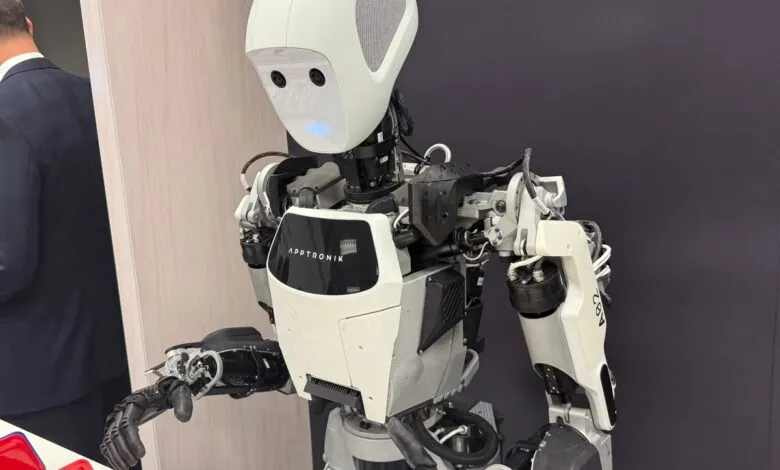
A leading voice in robotics is sounding a significant alarm for the technology sector, cautioning that the current surge of investment in humanoid robots is heading for a major disappointment. Renowned roboticist Rodney Brooks, a co-founder of iRobot and former MIT professor, argues that the billions of dollars flowing into startups focused on creating human-like machines are largely being misspent. He views the ambitious goals of companies such as Tesla and Figure with deep skepticism, especially their methodology of training robots using video footage of people performing tasks.
Brooks recently labeled this specific training technique “pure fantasy thinking.” His critique centers on the immense biological complexity that engineers are attempting to replicate. He highlights the human hand as a primary example, an instrument equipped with roughly 17,000 specialized touch receptors. Current robotic technology does not possess anything remotely comparable to this level of sophisticated sensory input. While machine learning has driven remarkable progress in areas like speech and image recognition, those advances were built upon a long-established foundation of data capture methods. For the critical sense of touch, Brooks emphasizes, “We don’t have such a tradition for touch data,” creating a fundamental data deficit that is incredibly difficult to overcome.
Another major hurdle is the issue of safety. A full-sized, bipedal robot must constantly expend a tremendous amount of energy simply to remain balanced and upright. The consequences of a failure are not trivial. If one of these heavy machines falls, it becomes a dangerous object. The laws of physics present a sobering reality; a robot that is merely twice the size of current models would contain eight times the amount of potentially harmful energy during a collapse.
Looking toward the future, Brooks forecasts that truly successful robots designed for human environments will likely look very different from people. He anticipates that within the next 15 years, effective machines will probably utilize wheels for stable mobility, feature multiple arms for specialized tasks, and be equipped with advanced, purpose-built sensors. This practical design would abandon the inefficient and hazardous pursuit of a human form. For now, Brooks is convinced that the vast sums of money being invested are essentially funding costly research experiments that lack a viable path to widespread, affordable commercial production.
(Source: TechCrunch)