The Future of Humanoid Robots: Are We There Yet?
▼ Summary
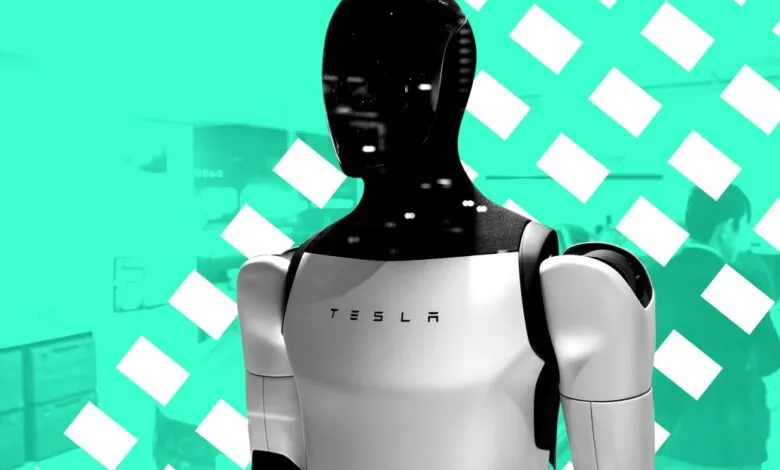
– A viral video shows Tesla’s Optimus robot falling, highlighting a history of staged or teleoperated demonstrations that fuel skepticism about the true autonomy of such humanoids.
– There is a significant global investment rush into humanoid robots, with major tech companies and Chinese state-backed initiatives pouring resources into development.
– Despite impressive promotional videos, actual viable use cases remain limited, as many demos are staged, scripted, or rely on remote human operation.
– Advances in AI, particularly large language models, are driving progress by enabling more generalized understanding, but a key challenge is gathering the vast real-world physical data needed for training.
– While hardware costs are decreasing, leading to more affordable models, concerns about a potential investment bubble persist due to the gap between hype and genuine, autonomous functionality.
The journey toward a future filled with humanoid robots is marked by equal parts dazzling promise and comical reality. While companies from Tesla to Chinese startups showcase increasingly sophisticated bots, a significant gap remains between staged demonstrations and truly autonomous, reliable machines. This tension defines the current moment, where billions in investment collide with the stubborn challenges of real-world functionality. The spectacle of a robot tumbling over or moving at a glacial pace serves as a humbling reminder that for all the hype, the technology is still finding its footing.
My own fascination often leans toward those bloopers. There’s a peculiar comfort in watching a Tesla Optimus unit, tasked with handing out water bottles, suddenly knock them over and collapse backward like a marionette with its strings cut. It’s a moment that lays bare the artifice. This wasn’t an isolated incident; Tesla has a history of using costumed dancers or remotely operated suits to present a vision of autonomy that doesn’t yet exist. This pattern fuels healthy skepticism, especially when figures like Elon Musk forecast armies of millions. The field of robotics is no stranger to cycles of exaggerated excitement followed by sobering reality checks.
Yet, something feels different this time. A genuine gold rush is underway. Tech titans including Nvidia, Amazon, and Microsoft are pouring resources into humanoid development, joined by a vibrant ecosystem of specialists like Boston Dynamics and Figure AI. China has made embodied AI a national priority, directing state investment and corporate might toward becoming a global leader. The public face of this push is undeniably compelling: robots competing in Olympic-style games, dancing, or even engaging in staged combat. Startups like 1X are already taking pre-orders for models priced for early adopters, promising to handle domestic chores from folding laundry to washing dishes.
However, these impressive showcases often mask fundamental limitations. Many demos are carefully scripted, occur in controlled environments, or rely on hidden human operators using VR rigs for remote control. The idea of a robot assistant becomes less appealing when you realize it may require a stranger to virtually pilot it inside your home. The core obstacle is a lack of the rich, varied data needed to train robots for the unpredictable nature of our world. While large language models for text were built on vast swathes of internet data, teaching a machine to physically interact requires different information, examples of how objects move, feel, and behave. Companies are now engaged in a massive, sometimes absurd-seeming effort to gather this data, from having employees wear sensor suits to deploying semi-autonomous bots into real homes to learn from remote operation.
Hardware costs are dropping, particularly in China, making some models more accessible and enabling wider deployment. This creates a potential feedback loop: more robots in the wild generate more data, which leads to better, more capable robots. But serious questions about viable use cases persist. China’s own economic planners have warned of a potential “bubble,” noting the disconnect between massive investment and the absence of clear, widespread applications beyond research and niche hobbies. For the average person, the value proposition remains unclear. Why invest tens of thousands in a fragile, limited machine when existing services can perform the same tasks more reliably?
The path forward hinges on genuine autonomy. Breakthroughs in AI that enable flexible, generalized understanding are crucial for robots to navigate unstructured spaces. Some researchers are even exploring using AI to generate synthetic training environments. The industry stands at a crossroads. It must move beyond glossy promotional videos and prove these machines can operate independently and usefully. Until then, the public is left to wonder if we are on the cusp of a revolution or simply enjoying another entertaining, and ultimately fleeting, wave of technological spectacle. One thing seems certain: as long as development continues, there will be no shortage of those wonderfully humbling fail videos to keep us grounded.
An entire cottage industry is emerging to support this boom, with data labelers around the world being paid to perform tasks like folding towels while wearing cameras, meticulously creating the datasets robots need to learn. Meanwhile, research from labs like Google DeepMind explores using AI to create virtual worlds for training, reducing the reliance on hard-to-capture real-world data. For those who share an appreciation for robotic missteps, recent history offers no shortage of material, from awkward stage debuts to clumsy public demonstrations.
(Source: The Verge)