ROV for Coral Reefs Wins IEEE’s Top Scholarship
▼ Summary
– Coral reefs are vital to marine ecosystems but over 80% have been bleached due to rising ocean temperatures and pollution, threatening global marine biodiversity.
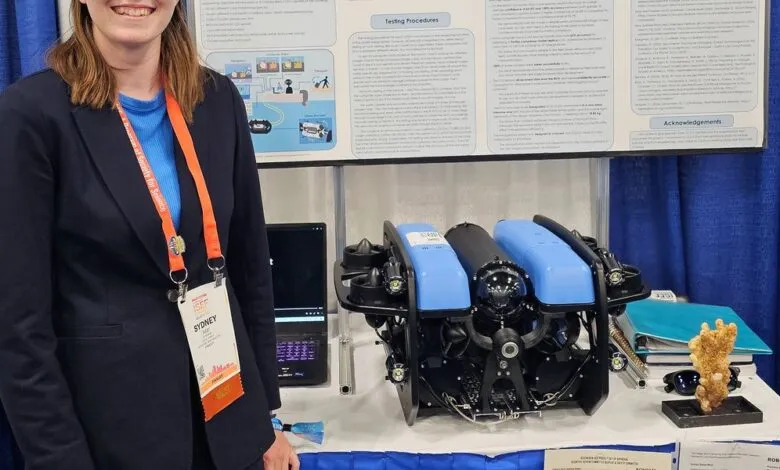
– High school student Sydney West designed an ROV named Cnidaria, equipped with computer vision and sensors to identify coral species, detect anomalies, and collect water samples for reef research.
– West won the IEEE Presidents’ Scholarship of $10,000 for her project, which was showcased at the International Science and Engineering Fair and aims to support coral researchers.
– Fay Salim al-Mahrouqi developed a hybrid AI system to enhance CT images and classify fibrosis patterns for earlier diagnosis, inspired by her grandfather’s late-diagnosed pulmonary fibrosis.
– Kayley Xu created a wearable stethoscope array using beamforming to capture multiple body sounds simultaneously, addressing limitations of traditional stethoscopes and aiming for affordability.
Coral reefs represent some of the most biologically diverse ecosystems on Earth, yet they face unprecedented threats from climate change and human activity. According to the U.S. National Oceanic and Atmospheric Administration, more than 80% of the world’s coral reefs have suffered bleaching, placing marine biodiversity at serious risk. In response to this crisis, a young innovator has developed a technological solution aimed at supporting reef conservation efforts.
Sydney West, a recent high school graduate from Washington state and incoming mechanical engineering student at the University of Hawai’i at Manoa, designed a remotely operated vehicle (ROV) named Cnidaria to assist in coral reef research and monitoring. Her project earned the prestigious IEEE Presidents’ Scholarship, which includes a $10,000 award distributed over four years of undergraduate study and a complimentary IEEE student membership. The scholarship recognizes outstanding high school projects that demonstrate expertise in engineering or related technical fields.
Cnidaria integrates computer vision and advanced sensors to identify coral species, detect abnormalities, collect water samples, and record environmental data such as temperature and conductivity. The ROV’s modular design allows researchers to easily adapt its systems for various scientific needs. West plans to further enhance the vehicle with a Doppler velocity log for improved navigation and data accuracy.
Looking ahead, West aims to launch a business providing ROV refurbishment, parts, training, and support for marine researchers. She believes her work can reduce logistical challenges and allow scientists to focus more intently on their conservation efforts. After completing her degree in mechanical engineering, she intends to pursue graduate studies in marine biology, combining technical knowledge with ecological insight to strengthen her impact in the field.
In addition to West’s achievement, other young engineers were recognized by IEEE. Fay Salim al-Mahrouqi from Oman received second place for her AI-driven system designed to improve the detection of pulmonary fibrosis. Her project was inspired by personal loss and aims to reduce misdiagnosis by enhancing CT image clarity and applying machine learning to identify disease patterns. She hopes to eventually commercialize her technology and expand its use in medical settings.
Third place went to Kayley Xu from California, who developed a wearable stethoscope array capable of isolating and identifying multiple internal body sounds simultaneously. Her device uses beamforming technology and a flexible circuit board to improve diagnostic accuracy while remaining affordable. Xu’s innovation emerged from her own experience with pneumonia and aims to make medical auscultation more accessible, especially in underserved regions.
Each of these young inventors emphasizes the importance of resilience and continuous learning. West encourages aspiring engineers to embrace challenges and persist through obstacles, noting that determination is essential for meaningful innovation. Similarly, al-Mahrouqi reminds students that failure is a natural part of the discovery process, and Xu highlights the value of grit and creativity in solving real-world problems.
These projects illustrate how emerging engineers are applying technology to address critical environmental and health issues, demonstrating that the next generation of innovators is already making significant contributions to global well-being.
(Source: Spectrum)