Anthropic Partnership Makes Salesforce’s Interface Optional
▼ Summary
– Salesforce has launched Claudeforce, an expanded partnership with Anthropic that integrates its enterprise software directly into the Claude AI interface.
– The new product allows users to query CRM data, update records, and run workflows through natural language conversations without accessing the traditional Salesforce UI.
– This move reflects a strategic shift where Salesforce prioritizes its underlying data and metadata over the user interface as its primary source of long-term value.
– Built on the Headless 360 architecture, the integration ensures that existing security permissions and business rules are inherited by the AI assistant.
– While initially targeting sales teams, future updates will include marketing, service, and commerce capabilities to reshape how businesses interact with their martech stacks.
Salesforce is shifting its strategic focus from user interfaces to data infrastructure, announcing a deepened partnership with Anthropic that makes the traditional Salesforce CRM interface optional. Dubbed Claudeforce, this integration embeds Salesforce’s core data and workflows directly into Anthropic’s Claude AI model. The initial release, Salesforce in Claude, allows users to query customer relationship management (CRM) data, update records, review deals, and execute workflows without ever opening the standard application. Launching with 37 prebuilt sales skills for select pilot customers, the product plans an open beta in September, with marketing, service, and commerce capabilities slated for rollout in the coming months.
This move signals a fundamental rethinking of enterprise software value. Rather than competing on screen real estate or user experience, Salesforce is positioning its long-term worth around the underlying customer data, business rules, permissions, and workflows. By decoupling utility from the interface, the company aims to become the indispensable backend engine for AI-driven operations rather than just a frontend tool.
Redefining the Application Value Proposition
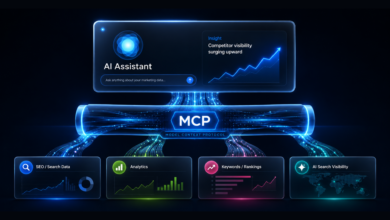
The architecture behind Claudeforce builds upon Headless 360, a framework Salesforce introduced in March that enables AI agents to access data via APIs and Model Context Protocol servers. While Headless 360 was largely developer-focused, Claudeforce packages this capability for everyday business users. An administrator establishes the connection once, and the integration inherits existing Salesforce security protocols. If a user lacks permission to view or edit a specific record in Salesforce, Claude cannot bypass those restrictions either. Consequently, all actions processed through the AI still adhere to established business logic and governance standards.
Currently, the tool targets sales professionals who can converse with Claude to prepare for meetings, assess pipeline health, and manage CRM tasks. This conversational approach replaces the need to navigate complex menus and dashboards. While marketing features are not yet live, early demonstrations suggest a future where users can describe their informational needs and have Claude dynamically construct custom views, eliminating the reliance on static, predesigned dashboards.
The AI as the New Interface
This shift challenges conventional thinking about martech stacks. Much of current operational friction involves switching between applications to retrieve data, configure processes, and generate reports. An AI interface capable of integrating seamlessly with these systems could centralize these activities, reducing the need to manually toggle between disparate tools. In this scenario, the underlying platforms do not vanish; instead, their role evolves. Data integrity, API accessibility, and business logic become the critical assets, as they provide the necessary fuel for AI agents to perform meaningful work.
Salesforce CEO Marc Benioff has pushed back against predictions of a “SaaSpocalypse,” arguing that frontier AI models rely on robust CRM systems rather than replacing them. “This SaaSpocalypse narrative has been such nonsense,” Benioff told CNBC. “Frontier models depend on CRM. They don’t replace it. Salesforce is first and foremost in the data business.”
To support this ecosystem, Salesforce is also embedding Claude more deeply into its own suite. Claude will serve as the default reasoning model for Agentforce Vibes and Agentforce Coworker, and will eventually become the standard across Slack. However, the company distinguishes these internal uses from Claudeforce. Agentforce is designed for autonomous interactions and customer engagement, whereas Salesforce in Claude is intended to assist employees in their daily tasks through natural language commands.
Shifting Cost Models and Consumption
A significant implication of this partnership lies in how organizations will pay for these services. Customers will be charged for Claudeforce activity through a headless consumption model, with costs tied to API access levels based on their Salesforce edition. Separately, companies must contract with Anthropic for Claude usage fees. This structure hints at a broader transformation in software pricing as AI agents become primary consumers of martech tools.
Traditional SaaS pricing is largely driven by human licenses and seat counts. As AI agents begin making API calls and executing workflows autonomously, API and AI consumption will likely constitute a larger portion of total costs. For marketing operations teams, this means evaluating platform value differently. A system may see reduced human interaction through its interface while simultaneously generating substantial backend usage as agents continuously retrieve data and automate processes. Although Claudeforce currently focuses on sales, the precedent is clear: the value of enterprise software increasingly depends on what AI can securely accomplish using its data, rather than how much time humans spend navigating its screens.
(Source: MarTech)