Engineering AI for Real-World Impact
▼ Summary
– Product engineering teams are adopting layered AI systems with strict verification and human accountability to manage high physical risks from failures in design or manufacturing.
– The top near-term investment priorities for these leaders are predictive analytics and AI-powered simulation, which provide clear feedback for auditing and proving ROI.
– While 90% of leaders plan to increase AI investment in the next 1-2 years, most increases are modest (up to 50%), focusing on optimization and near-term ROI over multi-year transformation.
– The primary measurable outcomes prioritized for AI are sustainability and product quality, as these are visible to customers and regulators, over competitive or internal operational metrics.
– The report is based on a survey and expert interviews, and it was produced by MIT Technology Review’s custom content arm, with human-led research and writing.
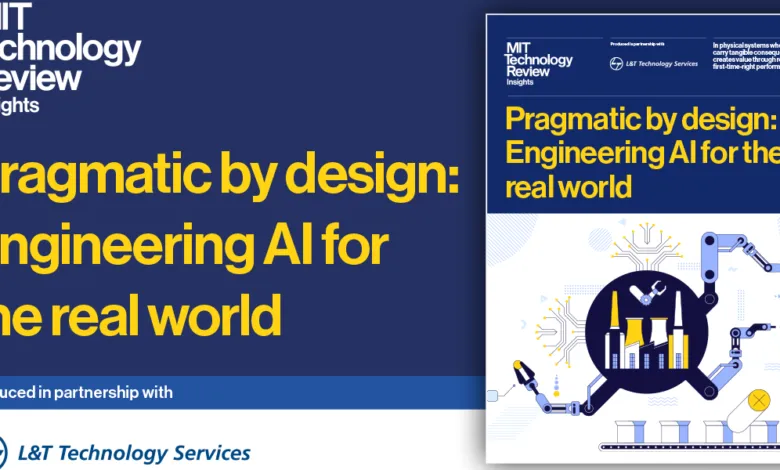
A new study reveals how product engineering teams are strategically implementing artificial intelligence to achieve tangible, measurable results, focusing on safety, governance, and clear return on investment. The research, based on a survey and expert interviews, highlights a cautious yet determined approach to scaling AI within physical products and manufacturing processes.
Where product engineers are using AI to directly inform physical designs, embedded systems, and manufacturing decisions, the stakes are exceptionally high. A software bug can be patched, but a failure in a physical product or production line can pose serious real-world risks. Consequently, engineering leaders are moving away from general-purpose AI systems. Instead, they are adopting layered AI systems with distinct trust thresholds, where verification, governance, and explicit human accountability are mandatory safeguards.
The research identifies clear investment priorities for these teams. Predictive analytics and AI-powered simulation and validation are the top near-term investment priorities. A majority of surveyed leaders selected these capabilities because they provide clear feedback loops. These tools allow companies to rigorously audit AI performance, streamline the process for regulatory approval, and definitively prove return on investment. Building gradual, demonstrable trust in these AI tools is seen as an imperative step.
Investment is certainly growing, but the pace is measured. Nine in ten product engineering leaders plan to increase their AI investment over the next one to two years. However, the increases are generally modest. The largest group, 45% of respondents, plans a boost of up to 25%. Nearly a third aim for an increase between 26% and 50%. Only 15% are planning a more aggressive step-change of 51% to 100%. This data underscores a dominant philosophy: the focus for product engineers is on optimization over innovation. The preferred strategy involves pursuing scalable proof points and near-term ROI rather than embarking on risky, multi-year transformation projects.
When it comes to measuring success, external and tangible outcomes take precedence. Sustainability and product quality are the top measurable outcomes for AI in product engineering. These results are highly visible to key stakeholders like customers, regulators, and investors. They are prioritized above competitive metrics such as time-to-market and innovation, which were rated of medium importance. Internal operational gains, including cost reduction and workforce satisfaction, ranked at the bottom of the list. Ultimately, what matters most are real-world signals like defect rates and emissions profiles, not internal engineering dashboards. This outward focus ensures AI initiatives deliver value that is both concrete and credible.
(Source: Technology Review)