SpaceX challenges Amazon satellite altitude to FCC

▼ Summary
– SpaceX accuses Amazon of launching satellites into orbits 50-90 km higher than authorized, violating its orbital debris mitigation plan.
– Amazon denies any violation or safety risk, noting it used SpaceX as a launch partner for a similar altitude last year.
– Amazon claims SpaceX only objected after moving its own Starlink satellites into nearby altitudes, and changing parameters would cause months of delay.
– Both companies have a history of using FCC proceedings to delay each other’s satellite launch projects.
– SpaceX cited a 2021 Amazon FCC filing stating satellites would launch near 400 km, alleging this shows the current higher launches are unauthorized.
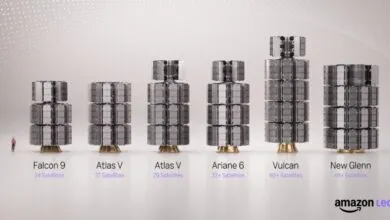
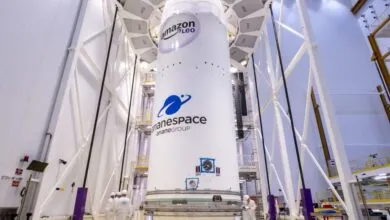
In a recent filing with the Federal Communications Commission, SpaceX has formally challenged the launch practices of its competitor Amazon, alleging that the company’s Project Kuiper satellites are being deployed at unauthorized altitudes that create a serious orbital debris risk. The Starlink operator contends that Amazon and its launch provider Arianespace are placing satellites roughly 50 to 90 kilometers higher than their license permits, a move SpaceX calls negligent and one that needlessly elevates the danger of collisions with other spacecraft.
Amazon, which is building its own low-Earth orbit constellation to rival Starlink, firmly rejected the accusation. The company stated that its launch parameters comply fully with regulatory requirements and do not pose a safety hazard. Amazon also pointed out that SpaceX itself facilitated a similar launch altitude for Amazon satellites last year when serving as a launch partner, suggesting the complaint is strategically timed only after SpaceX moved its own Starlink satellites into adjacent orbital regions.
The dispute highlights the increasingly crowded and contentious arena of satellite broadband. Both corporations have a history of using FCC regulatory processes to potentially delay each other’s projects. Amazon noted that altering the flight profile for a recent launch would have set its schedule back by months, implying that SpaceX’s objection is a tactical maneuver. Furthermore, Amazon informed the FCC that it had previously disclosed the very launch altitudes SpaceX is now contesting.
SpaceX’s letter to the commission cited Amazon’s own 2021 application, which stated that Kuiper satellites would initially be deployed at or near 400 kilometers before being raised to their operational orbits between 590 and 630 kilometers. SpaceX argues that by dispensing satellites significantly above that 400-kilometer mark, Amazon is violating its approved orbital debris mitigation plan and creating what it terms “unmitigable collision risks.” The company warns this practice jeopardizes other operational systems and even inhabited spacecraft.
The regulatory backdrop adds another layer to the conflict. FCC Chairman Brendan Carr recently criticized an Amazon petition aimed at denying a SpaceX request to launch up to a million satellites, a stance that Amazon may view as indicative of a favorable relationship between the regulator and SpaceX leadership. This latest filing ensures the high-stakes rivalry over satellite internet dominance will remain a heated topic before federal officials as both mega-constellations continue their expansion.
(Source: Ars Technica)