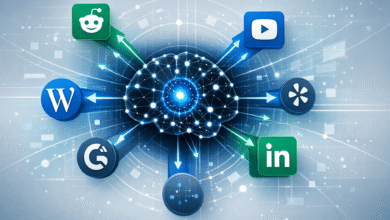
Amplify Your Content Across Every Marketing Channel
▼ Summary
– Content amplification is the strategic distribution of content across multiple channels to extend reach and impact, distinct from simply repurposing content by changing its format.
– A core benefit is creating a data-led feedback loop, where performance metrics from amplified content (like clicks and shares) inform future content creation and distribution decisions.
– Effective amplification improves discoverability across search engines, social platforms, and AI answer engines, increasing the chances target audiences encounter the brand.
– Key strategies include amplifying content based on performance thresholds, emphasizing brand differentiation, leveraging niche communities, and sharing positive earned media or user-generated content.
– Successful implementation requires syncing data sources, defining success metrics by funnel stage, and using tools to identify and distribute high-performing content efficiently.
Sharing your content across multiple platforms is not just a good idea; it’s becoming a fundamental requirement for marketing success. According to recent industry analysis, strategically distributing content across channels ranks among the top five marketing trends. The most successful brands understand that the goal is intelligent amplification, not merely copying and pasting the same post everywhere. This approach maximizes the return on your investment in owned media, earned coverage, and user-generated content by extending its reach and impact through deliberate distribution frameworks.
Content amplification is the strategic process of distributing content across various marketing channels, such as social media, your website, email, and paid ads, to increase its visibility, drive engagement, and enhance discoverability. It’s distinct from simple repurposing, which changes a content piece’s format. Amplification focuses on scaling the distribution of proven content to create a powerful, data-informed feedback loop. In modern marketing models, this stage is crucial: performance data like clicks, shares, and conversions directly informs future content creation and personalized outreach. This is especially vital as audience discovery now happens across social platforms and AI-powered search tools, not just traditional search engines.
The benefits of a strong amplification strategy are significant. It generates richer marketing data, reaches entirely new audience segments, and improves your brand’s discoverability everywhere your customers are looking. A core advantage is the creation of a data-led feedback loop. By analyzing which content naturally earns the most engagement, marketers can identify their top-performing assets, often following the 80/20 rule where 80% of impact comes from 20% of efforts. You can then strategically amplify those winners with paid support, letting real audience signals guide investment instead of guessing.
Amplification also extends your reach to new audiences. The average social media user is active on over six different platforms monthly. To meet them, you need to distribute content in formats suited to each channel. This doesn’t mean blasting identical posts everywhere. It means reviewing your best-performing content and thoughtfully adapting it for different platforms. For instance, a top TikTok video could be remixed into an Instagram Reels series to capture an Instagram-only audience and gather new engagement data.
Furthermore, a multi-channel presence boosts your visibility in both search and AI discovery. By amplifying engaging content across the web, you create multiple touchpoints. This increases the odds of appearing not only in Google search results, which now frequently include social posts, but also as citations in AI answer engines like ChatGPT or Perplexity. Distributing key information from a popular blog post as short-form FAQ videos, for example, makes it more likely to be sourced by these tools.
Implementing amplification does come with challenges. Marketers often face confusion over which tools deliver the best return on investment amid a sea of AI and automation options. Another common pain point is the difficulty of tying amplification efforts directly to revenue due to the multi-touch nature of modern customer journeys. There’s also a struggle to effectively adapt content for different channels without resorting to a generic, checkbox approach that reduces engagement.
Effective strategies for deciding what to amplify generally fall into four categories. First, amplify content based on clear performance thresholds. When a blog post hits 5,000 views or a Pinterest pin gets 100 shares, that’s your signal to amplify it to your email list or another social channel. This leverages organic momentum and lets data guide your efforts. Second, focus amplification on content that emphasizes your brand’s unique differentiators. In a crowded market, generic content fails to generate strong loyalty or recognition. Use AI to help maintain a consistent, personalized brand voice across all amplified touchpoints.
Third, share your validated content within relevant niche online communities, like Reddit forums or private Facebook groups. The feedback from these spaces provides invaluable audience insights. Finally, actively amplify any positive earned media, such as press features or influencer endorsements. Sharing this third-party validation on your owned channels builds tremendous trust.
On social media specifically, tactics include encouraging user-generated amplification with clear calls-to-action, resharing user-generated content, actively engaging with comments to boost algorithmic visibility, and using retargeting ads to follow up with users who have already shown interest.
Several tools can streamline this process. An all-in-one platform like HubSpot’s Content Hub helps teams create, manage, and distribute content with AI assistance, centralizing performance data to identify what’s worth amplifying. For understanding what truly drives revenue, an attribution platform like SegMetrics is essential for connecting multi-channel efforts to sales. Social listening tools like BuzzSumo allow you to monitor trends and competitor content to time your amplification perfectly, while scheduling tools like Later make it easy to redistribute high-engagement posts across platforms.
Measuring success requires a clear framework. Start by syncing all your data sources, CRM, analytics, social pixels, into a single view. Next, define success metrics based on the funnel stage: reach and shares for top-of-funnel content, click-through rates for mid-funnel, and revenue attribution for bottom-funnel. Use your consolidated data to identify which content has above-average engagement or conversion rates, then amplify those assets. Finally, review the performance of your amplification to refine your future content creation and distribution plans, closing the loop.
Real-world examples show these principles in action. The activewear brand Popflex amplifies user feedback from social media directly into product development, creating a transparent feedback loop. Canva excels at amplifying trendy, helpful content in platform-specific ways while leveraging influencer partnerships. The apparel brand Forme builds trust by amplifying earned media, like celebrity endorsements, and real customer stories across its channels.
Common questions include how much to spend on paid promotion for amplification. There’s no fixed rule; ad spend should be balanced between testing new content, running evergreen campaigns, and boosting already-proven assets. When resharing content, consider each platform’s content lifespan and rotate tailored versions across channels weekly or monthly. Avoid gating content when your goal is broad, top-of-funnel reach; reserve gated offers for retargeting campaigns aimed at lead generation.
The landscape has moved far beyond issuing a simple press release. Earning attention now requires a strategic, data-informed approach to making your best content work harder across every channel. With the right frameworks and tools, you can scale your marketing impact more intelligently and efficiently.
(Source: Hubspot blog )