Master the First Step to a Successful Enterprise AI System
▼ Summary
– Many companies have rushed into generative AI but seen pilots fail, creating a demand for solutions that deliver measurable outcomes.
– Mistral AI’s methodology for success begins with identifying a single, strategic “iconic use case” that serves as a blueprint for broader AI transformation.
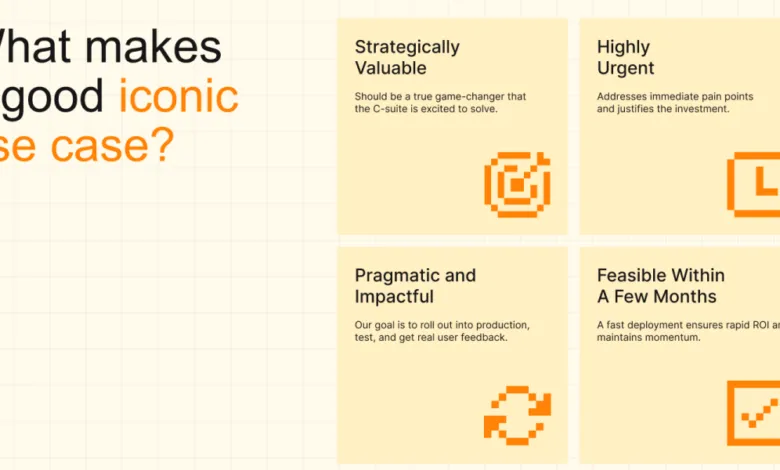
– An ideal first use case must meet four criteria: it must be strategically valuable, urgent, impactful, and feasible for a quick return on investment.
– Projects to avoid include moonshots, future investments, tactical fixes, quick wins, blue sky ideas, and hero projects, as they typically lack a balanced mix of the four key criteria.
– After a successful first deployment, the momentum and learnings are used to scale AI transformation across the organization, but this entire process depends on correctly choosing that initial use case.
Many companies have experienced the disappointment of generative AI pilots that fail to translate into real business value. The shift is now toward designing systems that deliver measurable outcomes from the start. Achieving this requires a disciplined, strategic beginning, focusing on a single, powerful application that can demonstrate clear impact and build momentum for broader transformation.
The journey begins by pinpointing what we call an iconic use case. This is not just any project; it’s the foundational initiative that creates a blueprint for future AI success across the organization. Selecting the right starting point is what separates a transformative program from a collection of disjointed experiments that go nowhere.
At Mistral AI, we guide partners through a rigorous selection process based on four essential criteria: the use case must be strategic, urgent, impactful, and feasible.
A strategic use case addresses a core business process or enables a completely new capability. It should be a game-changer, not merely an incremental optimization. Leadership must see its potential to excite the board and the C-suite. For instance, a basic internal HR chatbot is a simple utility. In contrast, an external-facing banking assistant that can answer questions, block cards, execute trades, and identify sales opportunities transforms customer support into a strategic revenue-generating asset.
The initiative also needs to be urgent, solving a critical business problem that teams care about right now. It must justify the significant time investment required from stakeholders and directly alleviate immediate pain points for users.
Impact is measured by pragmatism. The shared goal from day one is deployment into a real production environment. This allows testing with actual users to gather feedback and iterate. We avoid the “graveyard of fancy demos” by ensuring prototypes are stable, supported by proper governance, and ready for real-world evaluation from the outset.
Finally, the project must be feasible. Among several urgent projects, the best choice delivers a quick return on investment to maintain crucial momentum. We look for initiatives where a prototype can be live in weeks and a full production solution within three months. Getting a working model in front of end-users rapidly is key to validating direction and making necessary pivots.
In practice, uncovering this ideal use case requires cutting through the complexity of enterprise operations. Through collaborative workshops with subject-matter experts and end-users, we evaluate potential candidates. This process often reveals common project types that fail to meet all four criteria:
Ambitious “moonshot” projects capture the imagination with their transformative potential, yet they often stumble on a fundamental business hurdle: a clear path to a swift return on investment. These grand visions, while inspiring, can consume significant resources without delivering the concrete, near-term value needed to sustain organizational buy-in and funding. The journey from a compelling idea to a deployed, value-generating solution requires a disciplined and pragmatic approach, beginning with a single, well-defined mission.
The critical first step is moving beyond broad ambition to pinpoint an iconic initial use case. This is not merely a pilot or test, but a strategic application chosen for its high visibility, clear business impact, and operational feasibility. It serves as the foundational proof point for the entire initiative. The selection criteria are deliberate: the case must be bold enough to galvanize stakeholder support, address an urgent enough business pain to secure necessary resources, and remain pragmatic enough to achieve tangible and measurable results within a reasonable timeframe. This focused start transforms the effort from a collection of scattered experiments into a coordinated, strategic journey.Once this flagship application is clearly defined, the focus shifts decisively to validation and deployment. This phase involves concrete groundwork, including initial exploration of relevant data sources, identification of the required technical infrastructure, and precise scoping for the first pilot. The goal is to de-risk the project by confirming feasibility and aligning expectations before significant development begins. This stage transitions naturally into a collaborative building phase, where applied AI specialists work side-by-side with partner teams. Together, they design, develop, and deploy the initial solution, ensuring it is tailored to real-world workflows and needs.
A core tenet of this collaborative model is active knowledge transfer. The objective extends beyond delivering a functional tool, to empowering the internal partner teams with the understanding and skills needed to operate, maintain, and iterate on the solution independently. This builds internal capability and ensures the project’s benefits endure long after the initial deployment team has moved on. It shifts the dynamic from a one-time vendor delivery to fostering genuine, sustainable innovation within the organization.The successful launch of this first application creates a powerful and self-reinforcing cycle. The demonstrated value, accrued learnings, and proven methodology from the iconic use case generate organizational momentum and credibility. This success becomes the fuel for identifying and rolling out subsequent AI solutions. Teams across the business, having witnessed a real-world win, are more likely to engage and propose new opportunities. The process, having been proven once, can be refined and repeated, evolving into a scalable transformation blueprint for the entire enterprise.
Ultimately, the entire trajectory of an organization’s AI ambition hinges on that initial, deliberate step. Choosing the right starting point establishes a foundation of credibility, operational knowledge, and stakeholder confidence. It demonstrates that AI can move from theoretical power to practical profit. By prioritizing a single, well-chosen application that balances inspiration with execution, companies can build the momentum necessary for broader transformation, turning lofty moonshot aspirations into a ladder of successive, grounded successes.(Source: Technology Review)