Review: We’re All Going to the World’s Fair
▼ Summary
– This article reviews Jane Schoenbrun’s film We’re All Going to the World’s Fair, contrasting it with her newer release Teenage Sex and Death at Camp Miasma.
– The plot follows Casey, a lonely teenager participating in an online ritual called the World’s Fair Challenge that involves self-harm and surreal transformations.
– Unlike typical coming-of-age stories, the film focuses on Casey’s search for belonging in an online world rather than sexual awakening.
– A mysterious character named JLB interacts with Casey, adding layers of voyeurism and potential grooming to the narrative’s unsettling tone.
– The reviewer praises the movie’s use of body horror and ambiguity, noting its availability on streaming platforms like Criterion Channel and Kanopy.
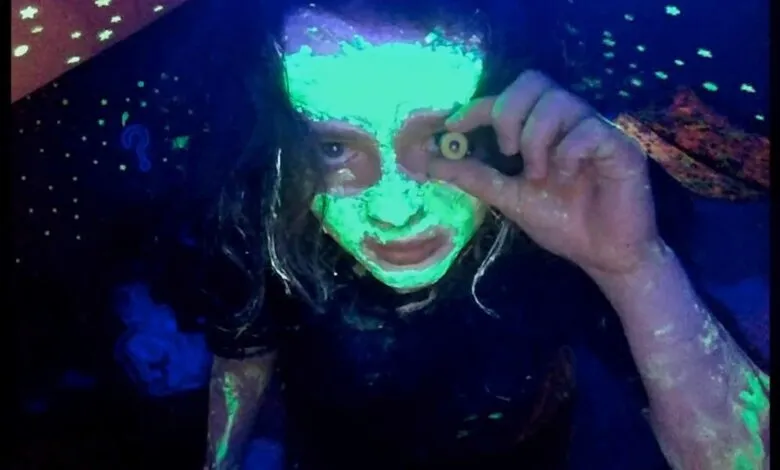
Jane Schoenbrun’s debut feature, We’re All Going to the World’s Fair, remains a haunting exploration of isolation and digital identity. While the director’s newer work, Teenage Sex and Death at Camp Miasma, currently captivates audiences in theaters, revisiting this 2021 Sundance favorite offers a stark contrast in tone and impact. The film centers on Casey, a deeply isolated teenager who participates in the World’s Fair Challenge, an internet-based ritual that blends augmented reality gaming with visceral horror.
Casey performs the challenge from her bedroom, staring unblinkingly into her webcam while engaging in self-harm, such as repeatedly pricking her skin with pins. This intimate, claustrophobic perspective transforms standard horror tropes into something profoundly unsettling. The challenge promises a metamorphosis, urging participants to report symptoms like turning into plastic or becoming Tetris pieces. However, beneath the creepypasta aesthetics lies a poignant narrative about a girl desperate for connection. Her father is merely a disembodied voice shouting in the background, and she has no peer interactions, relying entirely on online uploads to document her perceived transformation.
Unlike many coming-of-age stories that focus on sexual discovery, this film sidesteps the sexualization of its protagonist. Instead, it examines the search for belonging within an extremely online world. The only other significant presence is JLB, a middle-aged man who warns Casey of impending danger. Their dynamic introduces a layer of predatory tension, suggesting grooming behavior that enhances the film’s voyeuristic atmosphere.
The movie thrives on its uncomfortable ambiguity, refusing to clarify whether Casey’s experiences are supernatural, psychological, or fabricated. While it may not achieve the surreal campiness of later works like I Saw the TV Glow, it stands out as an original indie achievement that repurposes body horror to reflect modern alienation. For those interested in viewing this unique cinematic experience, We’re All Going to the World’s Fair is available to stream on the Criterion Channel, Kanopy, and Hoopla.
(Source: The Verge)