Trump-backed crypto firm sells Chinese AI his admin blocks

▼ Summary
– Trump-linked crypto firm World Liberty Financial helps back WorldClaw, a Hong Kong platform reselling AI models from Chinese companies blacklisted by the US government.
– WorldClaw offers roughly 90 AI models, about 43 from Chinese firms, including Alibaba, Baidu, Z.ai, DeepSeek, and Moonshot, alongside models from OpenAI and Anthropic.
– Customers can pay for WorldClaw using World Liberty Financial’s USD1 stablecoin, potentially profiting the Trump family, which holds about a 38% stake in the venture.
– The arrangement clashes with the administration’s policy of restricting Chinese AI, creating a direct conflict between public policy and private interest.
– World Liberty and WorldClaw say they operate independently, and the White House maintains Trump holds no conflicts of interest, though the episode highlights tensions between stablecoin-based commerce and US export controls.
A crypto venture tied to Donald Trump and his family is financing a platform that resells artificial intelligence from Chinese companies blacklisted by the U.S. government, a setup that clashes with the administration’s own push to cut off China’s AI sector.
Reuters reported on Monday that World Liberty Financial, the Trump-linked crypto firm, backs WorldClaw, a Hong Kong-based service providing access to models from developers Washington has flagged as security risks.
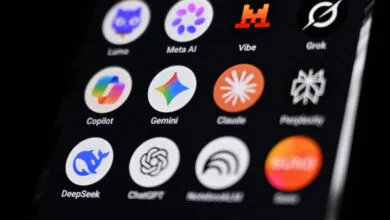
WorldClaw advertises a catalog of roughly 90 AI models, with about 43 sourced from Chinese companies. These include Alibaba and Baidu, both designated by the Pentagon as aligned with China’s military, and Z.ai, which faces U. S. Commerce Department export restrictions. The lineup also features DeepSeek and Moonshot, two labs American officials have accused of building their systems on stolen U. S. technology. Models from OpenAI and Anthropic sit on the same shelf.
The financial structure is what turns an ordinary AI reseller into a political flashpoint. Customers can pay for WorldClaw using USD1, World Liberty Financial’s dollar-pegged stablecoin, and each transaction stands to benefit the venture, in which the Trump family reportedly holds a stake of around 38%.
In plain terms, the president’s family could profit from Americans purchasing access to the Chinese AI that his own government is working hard to exclude. That is the heart of the discomfort. The administration has made countering Chinese AI a central pillar of policy, from export controls on advanced chips to public accusations that Chinese labs are copying American models at industrial scale.
A Trump-branded venture positioned to gain from selling those same models is, at minimum, an unusually direct collision between public policy and private interest. The tension is not theoretical: the harder the administration pushes to restrict a given Chinese lab, the more valuable a seamless way to buy its models quietly becomes.
World Liberty and WorldClaw reject that framing. The two say they operate independently of one another, and that listing an AI model does not amount to endorsing its developer, any more than an app store vouches for every app it carries. The White House has repeatedly maintained that Trump acts only in the public interest and holds no conflicts of interest, a position it restated in response to the reporting.
World Liberty Financial has become the most lucrative and most scrutinized of the family’s crypto ventures. It has drawn attention both for the scale of money involved and for the unusual company it has sometimes kept, and the president’s crypto holdings have swelled into the billions on paper even as ethics lawyers warn about the fading line between the family business and the office he holds.
The firm has lately pushed deeper into the mainstream too, winning preliminary U. S. approval for a national bank charter tied to the same USD1 stablecoin that now doubles as a payment rail for WorldClaw.
The WorldClaw arrangement crystallizes a tension the crypto and AI booms keep producing: rules written in Washington, money made everywhere else. Stablecoins move value across borders with almost no friction, and a reseller in Hong Kong can offer a restricted Chinese model to a buyer in Ohio in a few clicks. Export controls were built for shipping containers and data centers, not for a checkout page settled in a president-linked token.
None of this is unlawful on its face, and WorldClaw is far from the only route to a Chinese model. But the optics are striking, and the episode will sharpen an already loud argument about whether the Trump family’s crypto empire can sit comfortably alongside the powers of the presidency. For now, the same government trying to wall off Chinese AI has a first family placed, however indirectly, to take a cut when Americans buy it regardless.
(Source: The Next Web)