Claude Cowork launches on web and mobile

▼ Summary
– Anthropic expanded Claude Cowork, a knowledge-work agent, from desktop to web and mobile in beta for Max subscribers.
– The Dispatch feature uses a persistent thread to route tasks to Claude Code or Cowork, allowing work to continue even with the laptop closed.
– Usage data from 1.2 million sessions shows business process work (33.4%) and content creation (16.4%) dominate, while coding accounts for only 8.7%.
– The move reflects a broader industry pivot from chatbots to task-oriented platforms, with competitors like OpenAI and Google pursuing similar strategies.
– Anthropic warns that giving a phone remote control of a desktop agent poses security risks, urging users to trust every app in the chain.
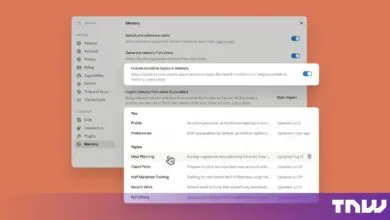
Anthropic has taken its Claude Cowork agent beyond the desktop, rolling it out on web and mobile in beta form , initially for Max subscribers. Originally launched as a desktop-only app in January, the tool is now designed to follow users across devices, allowing them to start a task on a laptop, check progress via phone, and retrieve the final output even when the computer is closed.
The key innovation is a feature called Dispatch, which maintains a single persistent thread that intelligently routes each request. Development work goes to Claude Code, while knowledge work is handled by Cowork. Instead of showing every step, Claude sends back only the result. This design positions Cowork less as a coding assistant and more as an administrative partner that runs quietly in the background, alerting users only when a decision is needed. As Anthropic puts it, the agent manages the “work around the work.”
This move reflects a broader industry shift away from standalone chatbots and toward tools embedded in actual workflows. OpenAI is pursuing a similar strategy with Codex, turning its coding tool into a general-purpose enterprise platform for non-developers. For both labs, the long-term bet is that market dominance will depend less on chatbot quality and more on owning the environment where tasks are executed. Startups are also crowding the space , Viktor recently raised $75 million to embed an AI coworker directly into Slack and Teams.
Anthropic has been steadily expanding Claude’s presence across office software, from integrating into Microsoft Word to large-scale deployments like KPMG, which put Claude in front of 276,000 employees. Google is pushing the same agenda with its Gemini Spark agentic assistant.
New usage data from Anthropic challenges the assumption that AI agents are primarily for coding. The company analyzed 1.2 million anonymized sessions from over 600,000 organizations during the last two weeks of May. The largest category, at 33.4%, was business process work , tasks like reconciling spreadsheets and building reports, common in finance, HR, and administration. Content creation and copywriting followed at 16.4%, while software development accounted for just 8.7%. Anthropic frames this as evidence that everyday business tasks, not coding, are where AI is making the biggest impact.
While the desktop app remains the hub for deep work with local file and browser access, the web and mobile expansion opens the door to users who never installed it. However, giving a phone remote control over a desktop agent introduces security risks. A manipulated instruction or phishing link could trigger irreversible actions on a machine. Anthropic’s own guidance advises users to connect these agents only if they trust every app in the chain , a caution worth taking seriously as offices fill with autonomous helpers.
(Source: The Next Web)