Did Google Demote Listicles?

▼ Summary
– The article challenges the assumption that listicles are obsolete, citing recent data on their citation rates and search engine treatment.
– Research indicates that while ChatGPT and Google have recently demoted self-serving listicles, they remain prevalent in organic search results.
– The author defines a listicle as an article where discrete, reorderable items form the core content, distinguishing it from sequential tutorials.
– A large-scale analysis of 60,000 US-English queries was conducted to determine the current presence and performance characteristics of listicles.
– This first memo addresses the frequency and detectability of listicle demotions, with subsequent findings on optimal strategies to be published later.
The State of Listicles in Search
The debate over whether listicles are dead has intensified as brands have increasingly relied on them for SEO and AI citation influence. While some experts argue that Google began demoting self-serving roundup pages in early 2026, empirical data suggests a more nuanced reality. Recent research indicates that while specific types of listicles face penalties, the format remains a dominant force in search results when it aligns with user intent.
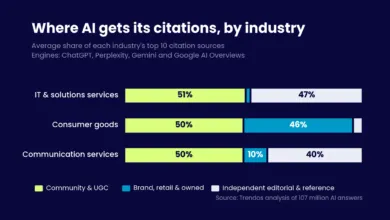
Data from Lily Ray, Nick Haigler, and Glen Allsopp highlights that listicles accounted for 43.8% of citations in ChatGPT answers across a sample of 26,283 URLs. Concurrently, several SaaS brands reported significant drops in organic visibility following updates in January 2026. However, despite these shifts, listicles continue to appear frequently in SERPs. To understand the current landscape, I analyzed 60,000 US-English desktop queries across 15 verticals using SE Ranking. This dataset comprised 5.32 million organic-result rows collected during a 47-hour window in August 2026.
Defining the Format
Confusion often stems from misclassifying content types. A listicle is defined as an article where the list constitutes the primary content. It features discrete, comparable items,such as tools, ideas, or examples,that can be reordered without breaking logical flow. Each item typically receives its own heading and self-contained treatment. In contrast, sequential tutorials, such as “How to set up Asana,” are not listicles because later steps depend on earlier ones.
The study classified results based on titles, snippets, URLs, and website types. It distinguished between numbered lists and unnumbered editorial roundups, excluding product grids, directories, forums, video pages, single-item reviews, and step-by-step guides. The classification pipeline achieved high precision, though manual reviews were conducted to ensure accuracy regarding website ownership and content quality.
Visibility and Intent Alignment
The analysis reveals that Google does not impose a universal penalty on listicles. At least one listicle appeared in the top 10 for 55.1% of queries and in the top three for 32.3%. Furthermore, 85.9% of SERPs contained at least one title with a broad list cue, such as “best,” “top,” or “alternatives.”
However, presence is heavily dependent on query intent. When users explicitly ask for options, ideas, or comparisons, listicles dominate. For explicit-list queries, the rate of appearing in the top three rose to 54.5%, compared to just 10.2% for implicit category or comparison queries. Informational queries that did not request a list saw a listicle appearance rate of only 12.1%. This suggests that Google prioritizes listicles primarily when they directly satisfy a request for multiple options.
Publisher vs. Brand Performance
While listicles are prevalent, there is evidence of preferential treatment toward independent publishers over self-promoting brands. Nearly half of the listicles in the top 10 came from publishers rather than known brands or vendors. In direct matchups, publishers won 54.0% of the time against brand-authored listicles.
Publishers also demonstrated stronger conditional rankings. When a publisher’s listicle appeared in the top 10, it averaged position 3.76. In comparison, government, academic, and nonprofit sites averaged 4.48, while brands or vendors averaged 4.65. The domain distribution was highly fragmented, with the top 10 domains accounting for only 18.3% of listicle leadership, indicating a long-tail market rather than a monopoly by a few major players.
Trends Since January 2026
To assess potential demotions, I compared a fixed subset of 2,400 queries and 24,000 search results between January and August 2026. The results showed substantial changes, with only 52.5% of queries retaining the exact same URL at position one.
The share of listicles in the top position decreased slightly, falling from a range of 18.9% to 20.2% in January to 15.1% to 15.6% in August. Similarly, the top-three range dropped from 35.9% to 39.0% to 32.0% to 33.0%. Despite this apparent decline, 62% of vendor-authored listicles gained estimated organic traffic since January, with the median page gaining 38%. This suggests that while overall volume may have shifted, well-executed self-promoting listicles are still capturing value.
Vertical-Specific Dynamics
Listicle prevalence varies significantly by industry. Occurrence in the top 10 ranged from 42.0% in entertainment and gaming to 67.2% in beauty and fashion. B2B software saw a rate of 62.5%, while travel was lower at 49.3%.
Brand-specific listicles showed even greater variance. They appeared in the top 10 on 46.2% of B2B software SERPs, but only 3.3% in food and 6.2% in travel. This disparity supports the theory that B2B companies are aggressively optimizing listicles for AI search citations, whereas consumer-oriented verticals rely less on this tactic.
Competition from Reddit and YouTube
Even successful listicles face intense competition for user attention. 92% of SERPs containing a top-10 listicle also featured Reddit or YouTube. Both platforms appeared together on 53% of those pages. This fragmentation means that while a listicle may retain its ranking, it may suffer reduced click-through rates due to alternative sources satisfying the user’s need.
Reddit holds a distinct advantage in organic placement. It appeared in the top 3 on 70.7% of pages where it ranked in the top 10, averaging position 3.31. YouTube, conversely, averaged position 6.62 and had a median position of 7. Reddit outperformed YouTube on 84.5% of pages where both were present.
YouTube gains significant reach through non-organic placements. Video boxes and AI Overview citations added 20.7 percentage points of reach beyond organic top-10 rankings. Reddit’s gain from these features was only 2.1 percentage points.
Platform dominance also shifts by vertical. Reddit led in 11 of 15 verticals, including travel (+40.6 percentage points) and finance (+21.9). YouTube led in four verticals: food (+40.8), health (+19.1), home and DIY (+15.1), and beauty and fashion (+6.1). This pattern indicates that Reddit is stronger for research and comparison, while YouTube excels in areas requiring visual demonstration or instruction.
Conclusion: Are They Dead?
Google has not eliminated listicles but has systematically refined their presence. The slight decrease in top-position shares and the preference for publisher content suggest a targeted adjustment against low-quality or overly self-promotional formats. The flood of AI-generated listicles likely triggered these adjustments, emphasizing quality and velocity in spam algorithms.
However, listicles remain effective when they match explicit user intent. The challenge now lies in the shrinking click opportunity caused by the dominance of AI Overviews, Reddit, and YouTube. For brands considering this format, success depends on providing genuine value and supporting claims with credible evidence, such as verified reviews or grid positions, rather than relying solely on placement manipulation.
(Source: Search Engine Land)