Why 25% Efficiency No Longer Impresses
▼ Summary
– The author argues that fully automating business tasks with AI is a scam, as human-led AI that combines efficiency with judgment delivers the best results.
– The article warns that AI is being marketed with false urgency and binary choices, pushing people to replace responsibility with prompts.
– A 25% efficiency gain from AI is often dismissed as failure, but the author says it provides a real competitive edge if used properly.
– The main problem is not AI itself but broken expectations, where anything short of full automation is seen as inadequate.
– The author emphasizes that AI is a multiplier, not a replacement, and requires thinking, editing, and accountability to work effectively.
If you’ve spent any time on LinkedIn or X, you’ve probably seen my sarcastic replies to some of the most absurd claims floating around. “100% automate your SEO.” “Fully automate your content calendar.” “Run your business with AI while you sleep.” At this point, I’m just waiting for AI to do my dishes. (Please let that be real.) But beyond the jokes, there’s a more significant conversation unfolding about what AI can and cannot do.
During a recent chat with Rob Wormley, a sharp GTM consultant, we started by geeking out over AI’s cool capabilities. It’s fast, useful, and when deployed wisely, it genuinely boosts your performance. Yet, our talk quickly pivoted. Across different projects, we kept circling back to three uncomfortable truths: Skip AI entirely, and you miss obvious efficiency gains. Rely on it completely, and you’re courting quality disasters and legal risks. The only sustainable approach is a middle path , human-led AI. It’s not flashy or easy to sell, but it delivers.
What’s the real issue with going all-in on AI? I’ve said it before: “AI optimization is the biggest scam of 2026.” Not because the technology itself is flawed, but because of how it’s marketed. Scrolling through social media, you’ll see the same tired pitch: a Rolex-wearing, Lamborghini-driving, broccoli-haired bro promising to automate your entire business with a single prompt. Just comment “win,” and your problems vanish. Don’t believe me? Hold your breath and watch one of those reels. (Warning: cringe alert!) Sorry if that fried your brain. If you’re one of those folks commenting to get their “get rich overnight” solution, please unsubscribe.
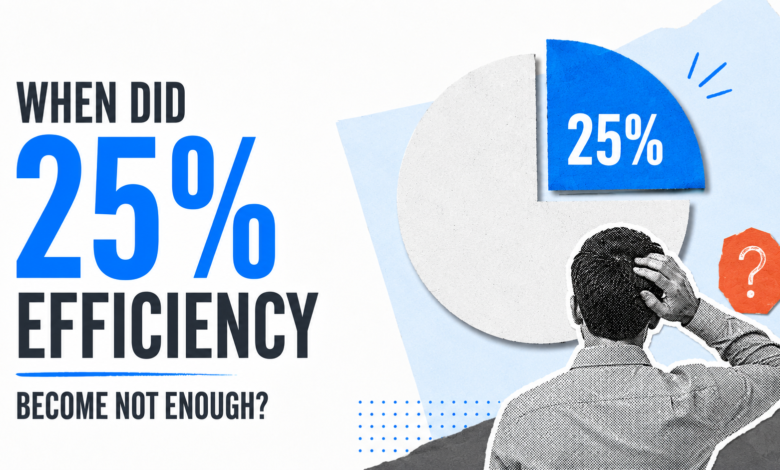
Let me be clear: this isn’t an anti-AI rant. It’s an anti-broken-expectations rant. Somewhere along the way, a 25% efficiency gain stopped being a victory and became a failure. We’ve completely lost the plot.
Take a redirect mapping project. A task that once required three hours of manual, tedious work now takes just 30 minutes with AI. That’s a massive productivity gain. But today? It gets side-eyed because it wasn’t fully automated. Or consider content creation. Writing something thoughtful, original, and maybe even vulnerable used to take hours. Now, with AI for structure and outlining, you can finish in an hour with better clarity. It still demands skill, a point of view, and delivers a superior product. Yet, somehow, that’s still not enough.
Then comes the real insanity. Instead of hiring a skilled person to QA, guide, and maximize AI’s output, the instinct is to cut that role entirely and tell Claude to “just handle it.” No oversight, no accountability , just vibes and prompts. We’ve moved from using tools to improve output to expecting them to replace responsibility. Anything short of that is labeled a failure.
Why does the “easy button” sell so well? AI has never been an all-or-nothing decision. It’s a spectrum. But the marketing suggests full automation is the only option, creating a false binary. Every scroll reminds you that you’re “doing it wrong,” “missing out,” or about to become irrelevant. “SEO is dead, GEO now! Adapt or get left behind.” It’s the same playbook: manufacture urgency, push people to react instead of think. And the delivery? It feels like a used car pitch , high energy, big promises, zero substance. “Trust me, this one prompt replaces your entire team.” It works because it taps into a real desire: people don’t just want to improve their workflow; they want to escape the hard parts entirely.
Here’s the part nobody wants to hear: the version of AI that actually works still requires you to think. You must guide it, challenge it, edit it, and take responsibility for what gets published or implemented. It’s not passive or hands-off. Human-led AI is where the real gains live. You move faster, cut busywork, and achieve better outputs more efficiently. But you’re still in the driver’s seat, making decisions and accountable when things go wrong. That’s exactly why it doesn’t sell. There’s no fantasy in it , no “set it and forget it,” no promise that prompting replaces strategy. It’s just better work, done faster, by someone who knows what they’re doing. That’s much harder to fake.
This isn’t an AI problem; it’s a human one. It’s about the expectation that anything short of full automation isn’t good enough. If it doesn’t replace your job, run your business, and print money while you sleep, it gets dismissed. Not evaluated, not tested , just written off. That mindset guarantees misuse. It pushes people to skip thinking, judgment, and accountability, turning a powerful tool into a shortcut, then a crutch. AI didn’t create this behavior; it exposed it. Until that expectation shifts, most people won’t get the upside they’re chasing.
AI is a multiplier, not a replacement. The people winning aren’t avoiding the work. They’re using AI to move faster while still thinking and making decisions. A 25% gain isn’t failure , it’s an edge, if you actually use it. So, choose: human-led AI, or the scam artists selling you the automated solution to “building the future.” Your call.
(Source: Search Engine Land)